Ad Blocker Detected
Our website is made possible by displaying online advertisements to our visitors. Please consider supporting us by disabling your ad blocker.
You may not realize that most portable power stations under 100Wh typically don’t need airline approval, yet larger units can require carrier consent. We understand the rules can be nuanced, and this matters for your trip plans. We’ll break down what counts as a portable power station, how to pack, and what to declare at security, so you can travel confidently without surprises—but there are specifics you’ll want to check before you fly.
Key Takeaways
- Most portable power stations under 100 Wh typically require no airline approval, but always verify with your carrier.
- Larger units (above 100 Wh up to 160 Wh) may need airline consent or may be restricted.
- Pack the power station in carry-on luggage with terminals protected and documentation available for screening.
- Batteries should be carried in carry-on only (not checked) and kept in transparent bags or original packaging when possible.
- Declaring high-capacity packs and following watt-hour labeling and security guidelines helps prevent delays.
Is Your Power Bank Flight-Ready? What Counts as a Portable Power Station
Whether you’re traveling with a power bank or a portable power station, it’s essential to know what qualifies as a portable power station for air travel. We define a portable power station as a compact device that stores energy and provides DC or AC output for external devices. When evaluating eligibility, consider capacity, form factor, and safety certifications. Portable chargers meeting airline guidelines and battery chemistry standards typically fall into permitted categories, provided they comply with watt-hour (Wh) limits and connector types. We advise checking airline-specific restrictions before packing. Our guidance emphasizes clear labeling, proper packaging, and avoiding damaged units. By understanding these criteria, you can prepare confidently. Remember to review packaging, maximize safety, and keep documentation accessible for inspections.
Battery Types, Capacities, and Which Are Allowed on Planes
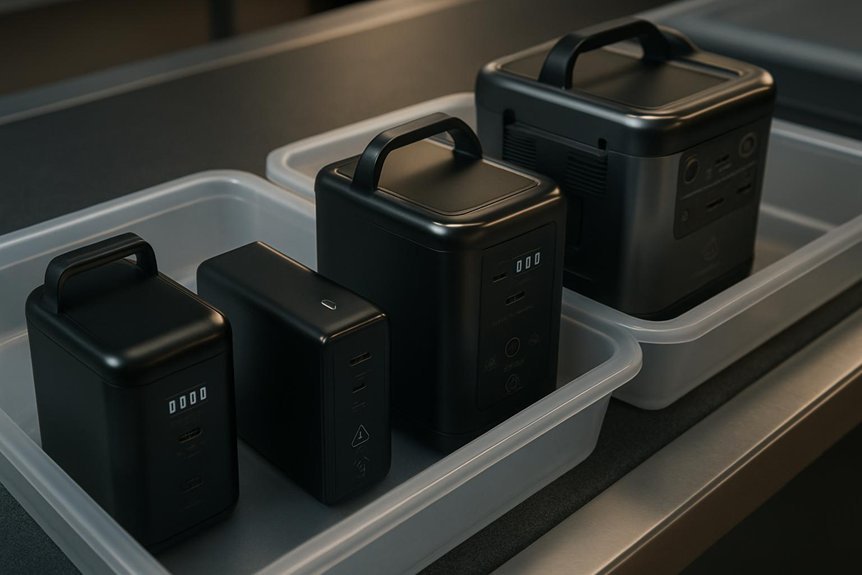
WhatBattery types and capacities are permitted on planes, and how do they differ in safety terms? We explain briefly: lithium ion batteries up to 100 watt-hours are generally allowed in carry-on with airline approval, while those above 100 and up to 160 watt-hours may be restricted or require airline consent. Non‑rechargeable lithium metal batteries typically face stricter limits. Battery chemistry determines fire risk, thermal runaway potential, and containment requirements, influencing policy decisions. We distinguish primary (non-rechargeable) from secondary (rechargeable) cells and note that some devices integrate multiple cells. Capacity limits vary by airline policies and jurisdiction, so always verify before packing. We emphasize compliance, labeling, and safe handling, since penalties apply for violations. If in doubt, consult airline policies and product specifications.
TSA and Airline Rules: Carry-On vs Checked, and What You Must Declare
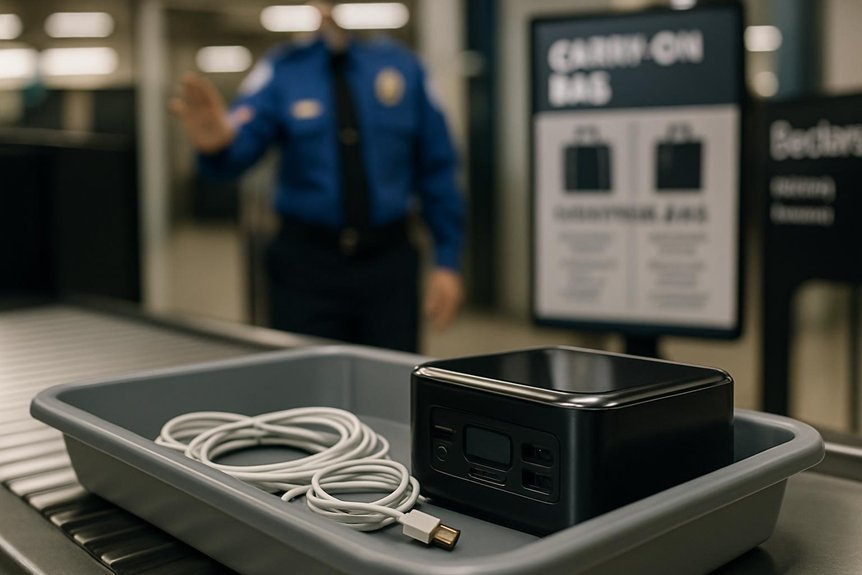
Do TSA and airline rules change when you fly with portable power? We explain the distinction between carry-on and checked bags, and what you must declare. In our guidance, spare batteries and portable power stations generally face strict carry-on restrictions, with formal declarations often required for permitted items. We emphasize checking the device’s watt-hour rating and ensuring terminals are protected to prevent shorts. We also note that certain devices may be prohibited in checked luggage, while others require separate screening or risk assessment. For travelers seeking protection, travel insurance can supplement accident or loss coverage, and airline lounges may offer assistance and information before your trip. Clear preparation prevents delays and supports smooth security processing.
Can You Bring Portable Power Stations in Carry-On or Checked Bags?
We explore how carry-on restrictions and battery safety rules affect portable power stations. We outline what bags can carry these devices and what requires declaration or special treatment. We invite you to ponder these criteria as you plan your packing and travel.
Carry-On Restrictions
Carry-on restrictions for portable power stations vary by carrier, but there are common rules you’ll want to know before packing. We outline practical guidance to help with portable charging and battery transport, ensuring compliant travel.
- Check watt-hour (Wh) limits and labeling requirements before packing
- Keep spare batteries in carry-on only, with terminals protected
- Pack devices to prevent accidental activation and short circuits
- Follow airline and country-specific rules for lithium content
We’ll emphasize preparation, documentation, and how to present your device at security. By understanding these carry-on restrictions, you minimize delays and avoid confiscation. If you’re unsure about a specific model, contact your airline ahead of time. Our goal is to help you travel confidently with your portable charging gear while maintaining safety and compliance.
Battery Safety Rules
Battery safety is the core of packing portable power stations for travel. We approach this topic with clear rules that apply to both carry-on and checked bags, prioritizing safety for all passengers. We begin by noting that lithium-ion batteries must meet capacity limits and be stored in approved containers to minimize risk. We avoid loose connections and ensure terminals are protected to prevent short circuits. In practice, we advise carrying essential devices with a spare battery only when permitted by the airline, and we always declare any high-capacity packs. This is not merely compliance; it reflects battery etiquette in crowded cabins, reducing potential incidents. Finally, understand that improper handling can affect airline fuel safety and overall flight integrity.
Watt-Hours, Charge Limits, and Other Capacity Rules You Should Know
Do watt-hour limits and charge caps shape what you can bring? Yes, they set practical boundaries for portable power on flights. We summarize key thresholds and how they affect planning, usage, and packing. Understanding these figures helps you avoid delays and confusion at check-in.
- Watt-hours (Wh) thresholds for carry-on and checked baggage
- Battery equivalents and how to convert cell chemistry into total capacity
- Charge caps per device and per passenger, including exemptions for certain equipment
- Charging etiquette and solar compatibility considerations during travel
We aim for precise guidance that prioritizes safety, efficiency, and compliance. By knowing these limits, you can optimize your power setup, minimize risk, and maintain smooth travel. If you rely on solar panels, verify compatibility and airline-specific rules before packing.
How to Pack, Declare, and Move Through Security Without Delays
We’ll cover how to pack portable power stations, ensure you declare the battery type correctly, and move through security efficiently. We’ll provide practical steps to minimize delays while complying with rules and safeguarding your device. Let’s start with clear, concise guidance that helps you prepare, declare accurately, and pass security smoothly.
Pack Portable Power Stations
Packing portable power stations for air travel requires careful adherence to airline and security rules. We’ll guide you on safe packing practices that minimize hassles and delays while respecting portable charging norms and airline restrictions. Follow these steps:
- Pack batteries and power stations in carry-on bags only, with terminals protected.
- Keep spare units in original packaging or use insulating caps to prevent short circuits.
- Carry documentation for lithium content if requested by security or the airline.
- Separate high-capacity devices for inspection, cooperating with screeners and providing any needed information.
Declare Battery Type Properly
As you prepared and packed portable power stations, you now need to declare the battery type clearly to security and airline personnel. We explain the procedure concisely to avoid delays. When labeling, specify portable charging devices and identify the battery chemistry involved, such as lithium-ion or lithium-polymer. Include any relevant details from manufacturer documentation, including watt-hour rating and cell type, to support screening decisions. Keep documentation accessible and organized, ideally with a printed card or sticker on the device itself. Be prepared to answer questions about usage, recharging, and storage rules. Accurate declarations help security officers assess risk quickly and maintain compliance with airline policies. Clear communication reduces holds, returns, and unnecessary inspections for portable charging devices.
Navigate Security Screening Efficiently
Arriving at security with portable power stations requires preparation and clear communication. We outline practical steps to move efficiently through screening while respecting travel etiquette and avoiding delays or extra airline fees.
- Pack devices in a transparent bag, accessible for inspection, and declare battery type clearly.
- Separate high-capacity units from smaller devices to streamline tray placement and minimize hold-ups.
- Follow TSA or carrier guidelines on watt-hours, transport limits, and recharging policies to avoid surprises.
- Ask courteous questions if unsure about procedures, and comply promptly to reduce congestion and risks of delays.
Practical Tips to Travel With Power Stations: Avoid Confiscation and Stay Charged
Do portable power stations pose risk at security checkpoints, and how can travelers minimize delays while staying charged? We approach this topic with practical guidance that keeps you informed and compliant. First, verify device classification and watt-hour rating; most airline-friendly models under 100Wh require no airline approval, while larger units may need carrier consent. Pack batteries in carry-on only, with terminals protected to prevent short circuits. During screening, declare the power station and present documentation if requested. Maintain easy access to charging cables and compact adapters to reduce handling time. Practice charging etiquette by unplugging when not in use and avoiding bulky extensions that hinder security lanes. Plan carging stops at reliable outlets, and label your gear clearly to support efficient processing.
Frequently Asked Questions
Are Spare Power Banks Allowed in Checked Bags?
Yes, spare power banks are not allowed in checked bags; carry them in your personal item or carry-on, following portable aisles guidelines, and ensure compliance to limit battery liability while boarding and during transit.
Do Lithium Batteries Require Protective Cases During Travel?
Yes, lithium batteries require protective cases during travel. We emphasize lithium safety and protective cases to prevent shorts and damage; we advise packing them in accordance with airline rules and keeping devices in carry-on. We’ll help guarantee compliance.
What Power Station Sizes Are Prohibited on Planes?
We must follow travel restrictions that limit lithium battery power, so larger power stations aren’t allowed; smaller models may be permitted with proper battery safety measures and airline approval. We’ll help you verify specifics before travel.
Can I Fly With Solar-Powered Portable Chargers?
We can’t guarantee approval; portable charging devices with solar panels aren’t universally permitted. We advise checking airline rules, packaging batteries safely, and complying with restrictions for solar travel. Please verify specifics with your carrier before you fly.
Do Airline Rules Differ by Country or Carrier?
We can say airline policy does vary by country differences and carrier. Surprisingly, about 60% of international flights restrict lithium devices differently; we adapt guidance accordingly, clarifying airline policy and country differences for you with careful consistency.
Conclusion
We’ve walked through the rules, tips, and best practices so you can travel with portable power stations confidently. In short, yes—but only within watt-hour limits, with proper labeling, and by sticking to carry-on where required. Think of it like a trusted companion: prepared, compliant, and secure. To grab attention, consider this analogy: your pack is a passport for power. Plan ahead, declare when needed, and you’ll avoid delays and keep devices ready to charge.