Ad Blocker Detected
Our website is made possible by displaying online advertisements to our visitors. Please consider supporting us by disabling your ad blocker.
We often assume that larger capacity power stations are inherently better for all applications, but this perspective overlooks critical design trade-offs and specific use cases. To truly determine which type suits your needs, we must analyze how capacity, portability, and features align with your energy demands. The nuances of these differences can considerably impact performance, yet many overlook these factors when choosing a power solution. Understanding these distinctions is essential for making an informed decision.
Key Takeaways
- High capacity stations offer longer runtimes and support heavy loads, ideal for extended use and critical applications.
- Compact units prioritize portability, quick recharge, and are suitable for short-term or light device powering.
- Battery chemistry and charging technology determine overall capacity, durability, and application suitability of each station type.
- Larger stations tend to be heavier and bulkier but provide more power, while smaller units are lightweight and easily portable.
- Choosing between them depends on energy needs, portability requirements, and budget considerations.
How Do High Capacity and Compact Power Stations Differ in Design?
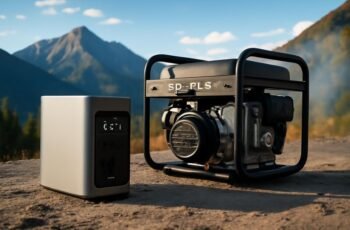
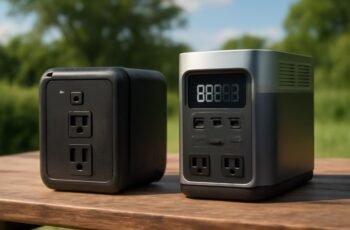
While both high capacity and compact power stations serve the purpose of portable energy supply, their designs are fundamentally different to optimize for distinct use cases. High capacity units typically utilize large-scale battery chemistries, such as lithium-ion or lithium-polymer, to maximize energy density and longevity. These configurations support extended usage and heavy loads but require advanced charging technology, often involving faster chargers or multiple input options to handle larger energy inflows efficiently. Conversely, compact power stations prioritize lightweight design and simplified battery chemistries, often employing smaller lithium-ion cells optimized for quick, frequent charging cycles. Their charging technology focuses on rapid, user-friendly rechargeability, emphasizing portability over extended runtime. These foundational differences in battery chemistry and charging technology directly influence each station’s capacity, durability, and suitability for specific applications.
Which Use Cases Are Best Suited for High Capacity Power Stations?
High capacity power stations excel in scenarios requiring prolonged energy supply, such as extended emergency backup and continuous operation of large equipment. Their ability to sustain high loads over time makes them ideal for critical infrastructure and industrial applications. Understanding these use cases helps determine when investing in a high capacity system is most justified.
Extended Emergency Power Backup
Have you ever considered which emergency scenarios demand the sustained power output only high-capacity portable power stations can provide? These stations excel in extended backup situations, such as prolonged outages or off-grid emergencies, where consistent power is critical. Their large battery capacity ensures longer operating times, supporting essential devices and small appliances. Solar compatibility enhances their utility by enabling recharging through renewable sources, extending operational duration without grid access. Additionally, battery longevity plays a crucial role, as high-capacity units are designed for durable, repeated cycles, maintaining performance over time. This makes them ideal for scenarios requiring dependable, long-term power, where compact solutions fall short. Overall, high-capacity power stations are best suited for extended emergency backup, due to their ability to sustain critical loads over prolonged periods.
Large Equipment Operation
Large equipment operation often requires sustained power delivery that exceeds the capacity of standard portable units. High capacity power stations are essential for such applications, especially when integrating renewable energy sources, which demand consistent and reliable energy flow. These stations support continuous operation of heavy machinery, critical for construction, manufacturing, or research environments. Battery longevity is a key consideration here, as prolonged use necessitates durable batteries with minimal degradation over time. The ability to handle high loads without sacrificing efficiency makes high capacity units ideal for large equipment. They guarantee stable voltage, reduce downtime, and optimize renewable energy utilization, which aligns with sustainability goals. Overall, high capacity power stations are indispensable for large equipment operations that demand robust, long-lasting, and renewable-compatible power solutions.
What Are the Advantages of Choosing a Compact Portable Power Station?
The primary advantages of choosing a compact portable power station lie in its ease of transport and space-efficient design. These features facilitate quick deployment in various settings, making it ideal for mobile or emergency applications. By minimizing size without substantially sacrificing power, they offer a practical solution for users with limited storage options.
Ease of Transport
Because portability is a key factor for many users, choosing a compact portable power station offers significant advantages in ease of transport. Its lightweight design enhances mobility, allowing users to carry it effortlessly across various environments. Additionally, reduced size contributes to better handling and storage, making it ideal for outdoor activities or emergency situations. Compact units often feature optimized battery longevity, ensuring consistent performance despite smaller form factors. Solar compatibility further enhances transport versatility by enabling off-grid charging, reducing reliance on traditional power sources. The combination of ease of movement, durable construction, and flexible charging options makes compact power stations highly suitable for users prioritizing mobility without compromising essential features.
Space-Saving Design
How does a space-saving design benefit users seeking portability? It minimizes physical footprint, enabling easier transport and storage without sacrificing essential features. Compact models typically feature an aesthetic appeal that appeals to users valuing modern, sleek equipment, enhancing brand reputation through visual appeal. The following table illustrates the spatial efficiency:
| Feature | Benefit |
|---|---|
| Slim Form Factor | Fits in tight spaces, lightweight |
| Vertical Orientation | Maximizes vertical storage |
| Integrated Handles | Facilitates one-handed carry |
| Minimal Footprint | Reduces clutter, easy to store |
| Modular Components | Simplifies packing and setup |
This design focus supports portability while maintaining technical performance, making compact power stations ideal for on-the-go use and reinforcing brand image through innovative, space-efficient solutions.
How Do Battery Capacity and Runtime Impact Your Power Station Choice?
When selecting a portable power station, understanding the relationship between battery capacity and runtime is essential, as these factors directly influence overall performance and usability. Higher battery capacity generally extends runtime, allowing devices to operate longer without recharging. However, this also impacts battery longevity; larger batteries may degrade more slowly if designed for ideal charging efficiency. Conversely, a compact station with lower capacity offers quicker recharge times but limited runtime, making it suitable for short-term or emergency use. Balancing battery capacity with charging efficiency ensures reliable power delivery and maintains battery health over time. Ultimately, evaluating your energy needs against these parameters helps determine whether a high-capacity or compact station aligns best with your specific application.
What Factors Should You Consider When Evaluating Portability?
Evaluating portability involves analyzing multiple technical factors that influence how easily a power station can be transported and used across different environments. Two critical considerations are battery longevity and charging speed. Battery longevity determines how durable the unit remains over repeated use and impacts its overall practicality for extended use in remote locations. A longer-lasting battery reduces the need for frequent replacements or recharges, enhancing portability. Charging speed also plays a crucial role, as faster charging allows for quicker turnaround times between uses, minimizing downtime during transit or outdoor activities. Additionally, these factors influence how manageable the device is during travel, with lighter, more efficient models offering superior convenience. Ultimately, balancing battery longevity and charging speed ensures that a power station remains functional, reliable, and easy to transport.
How Do Price, Size, and Weight Influence Your Decision?
Price, size, and weight are critical factors that directly influence our decision-making process when selecting a portable power station. A thorough price comparison helps identify models that balance cost with performance, guaranteeing value without overspending. Size and weight considerations are equally essential; compact units are easier to transport but may offer limited capacity, while larger stations provide more power at the expense of portability. We analyze these factors to match specific use cases, whether for outdoor adventures or emergency backup. By evaluating the trade-offs between price, size, and weight, we can optimize our choice for efficiency and practicality. This analytical approach guarantees that we select a power station aligned with our specific needs and budget constraints, avoiding unnecessary compromises.
Which Features Make a Power Station More Versatile and User-Friendly?
Features that enhance a power station’s versatility and user-friendliness are essential for maximizing its practical value. Key to this are advanced battery technology, which offers higher energy density, faster charge cycles, and longer lifespan, ensuring reliable performance across diverse applications. Equally important are flexible charging options, such as AC wall outlets, car chargers, and solar compatibility, which provide convenience and adaptability in various environments. A user-friendly interface, including clear display panels and multiple output ports, simplifies operation and expands device compatibility. Robust build quality and lightweight design contribute to portability without sacrificing durability. Together, these features enable a power station to serve a broader range of needs, making it more adaptable, efficient, and easy to use in both routine and emergency scenarios.
How Can You Determine Which Power Station Meets Your Power Needs?
Choosing the right power station requires a clear understanding of your specific energy demands and usage scenarios. To determine the best fit, we analyze battery technology, focusing on capacity, cycle life, and recharge rates, which directly impact longevity and reliability. We also consider how well the station supports renewable integration, such as solar input, to enhance sustainability and off-grid independence. For higher power needs, a station with advanced lithium-ion or solid-state batteries provides better efficiency and durability. Additionally, matching the power station’s output options with your device requirements ensures peak performance. By evaluating these technical factors—battery chemistry, renewable adaptability, and output specifications—we can accurately identify a power station that aligns with both short-term power needs and long-term energy goals.
Frequently Asked Questions
How Long Do High Capacity and Compact Power Stations Typically Last With Repeated Use?
High capacity and compact power stations typically last through 500 to 1,500 charging cycles, with battery longevity decreasing gradually over time; proper maintenance and avoiding deep discharges extend their effective lifespan with repeated use.
Are There Specific Brands Known for Reliable High Capacity or Compact Power Stations?
Ever wondered which brands excel? We’ve found that brands like Goal Zero and Jackery lead in reliability, often offering capacity upgrades, making them ideal choices for durability and performance, especially in high-capacity or compact models.
Can a Compact Power Station Be Upgraded for Higher Capacity Later?
Yes, some compact power stations feature a modular design, allowing for upgrade potential by adding batteries or components. However, compatibility and capacity limits vary, so we recommend checking specific models for upgrade options before purchase.
What Maintenance Is Required for High Capacity Versus Compact Power Stations?
We monitor battery lifespan and charging cycles regularly, ensuring proper storage and avoiding overcharging. High capacity stations demand more maintenance due to larger batteries, while compact units require less frequent checks but still benefit from careful handling.
How Do Safety Features Differ Between High Capacity and Portable Power Stations?
We find that high capacity stations emphasize advanced battery technology for safety, with robust overcharge and thermal protections, while compact models prioritize charging efficiency safety features, including surge protection and automatic shutdowns, to guarantee user safety during operation.
Conclusion
Ultimately, whether we lean toward high capacity or compact power stations, the choice hinges on our specific needs—be it prolonged, heavy-duty use or quick, portable solutions. Ironically, the more features and capacity we desire, the more complex and less portable our options become. It’s a delicate balance: optimizing performance without sacrificing convenience. In the end, understanding our unique energy demands guarantees we select a system that’s both efficient and adaptable—even if that means accepting a bit of compromise.