Ad Blocker Detected
Our website is made possible by displaying online advertisements to our visitors. Please consider supporting us by disabling your ad blocker.
Did you know real-world usable capacity often falls well short of nominal ratings under load and temperature? We’ll unpack how to evaluate a portable power station with precise, testable criteria—capacity derating, surge and inverter specs, port real-world limits, and safety features—so you can compare models confidently. If you’re aiming for dependable runtime and safe operation, there are critical checks and practical tests that will influence your choice. Let’s start with what truly matters for your setup.
Key Takeaways
- Capacity and real-world performance: verify usable energy at 50–100% load and understand derating, heat impact, and capacity under typical use.
- Output options and device compatibility: map outlets (AC, USB-C/PD, USB-A, 12V) to your devices with clear wattage ceilings and surge ratings.
- Battery chemistry and safety: compare LiFePO4, NMC, and solid-state; prioritize thermal management, cell balance, protective circuits, and safety features.
- Thermal management and long-term health: assess cooling, temperature tolerance, calendar aging, and impacts on runtime and reliability.
- Verification and testing: expect repeatable benchmarks, real-world benchmarks, charging speed from multiple sources, and stable performance under load.
What a Portable Power Station Is and When You’ll Need One
A portable power station is a self-contained energy device that stores electrical power in an internal battery and delivers it through multiple outlets or USB ports. We define its purpose by capacity, output options, and real-world use cases, then map those factors to user requirements. We’ll assess scenarios: camping, remote worksites, emergency backup, and mobile events, emphasizing predictable performance and reliability. We consider rated wattage, surge capability, and inverter type to ensure compatibility with common devices. We discuss safety domains, including portable safety practices, ventilation, and temperature tolerance, without delving into chemistry details. We also note battery longevity implications tied to charge cycles and depth of discharge, guiding purchase decisions toward systems with robust protection circuitry and clear performance specs. In short, match specs to needs for dependable, efficient, portable power.
How Battery Chemistry Affects Safety, Efficiency, and Longevity
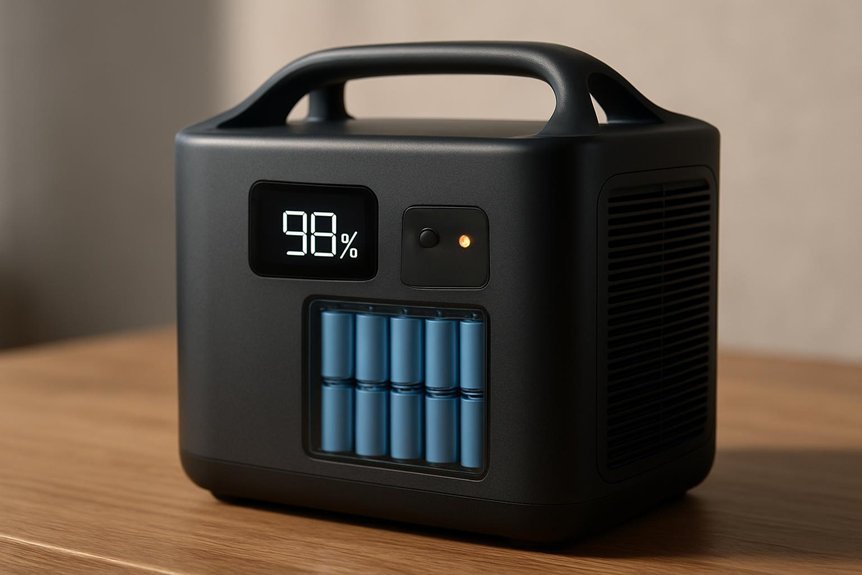
How does battery chemistry shape safety, efficiency, and longevity in portable power stations? We analyze how chemistries influence risk profiles, charge efficiency, and cycle life. Lithium iron phosphate, lithium nickel manganese cobalt, and solid-state variants each present distinct safety considerations, thermal behavior, and degradation paths. We emphasize rigorous cell balance, thermal management, and protective circuits to mitigate hazards. Our goal is to translate chemistry into practical reliability, not jargon.
| Property | Impact |
|---|---|
| Thermal stability | Determines runaway risk and cooling needs |
| Cycle life | Affects longevity and replacement cost |
| Energy density | Influences portability and heat generation |
| Safety considerations | Guides BMS complexity and enclosure design |
| Charge efficiency | Impacts runtime and charging time |
Power Outputs and Outlets: What You’ll Actually Use
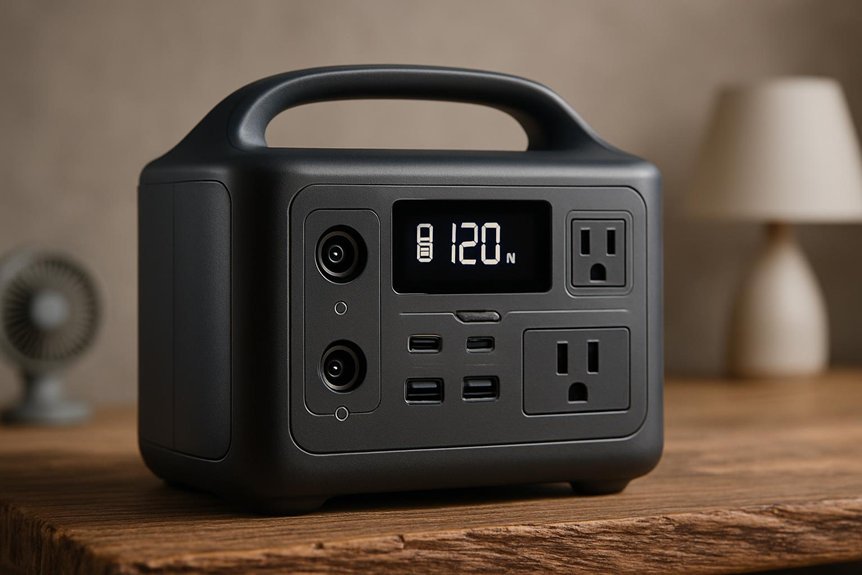
What power outputs do you actually need from a portable power station, and how do outlets map to real-world devices? We approach this by aligning continuous and peak loads with outlet types and ratings. We compare AC, USB-C, USB-A, and 12V DC options, noting that device peak draw governs surge compatibility and breaker behavior. We prefer clear wattage ceilings for each outlet channel and emphasize simultaneous use scenarios to avoid overloading. When selecting portable outlets, we prioritize outlets with standardized peak current ratings and compatible voltage ranges, plus intuitive labeling for burdened loads. We also assess inverter efficiency and warm-up times, since these affect real-world performance. In summary, match outlet capability to anticipated loads and ensure surge compatibility across your essential gear.
Capacity vs. Real-World Run Time: Sizing for Your Gear
From our look at power outputs and outlets, we now match those capabilities to real-world run times. We approach capacity planning by translating rated watt-hours into usable duration for typical loads, not just specs. We differentiate peak versus steady-state demand, then estimate how long a unit sustains essential devices under various duty cycles. Our method begins with the lowest common denominator—the device(s) you’ll power most—and scales up for ancillary gear. We factor inverter efficiency, temperature, and NC/PCM protections that erode usable capacity. By combining device runtimes with battery chemistry realities, we present a realistic expectation—runtime realism—for planning your trips or emergencies. In short, size your pack to actual consumption, not theoretical maxs, and document margins for unpredictable draws.
Recharging Speed and Input Options That Save You Time
Fast recharging is essential when you’re balancing capacity with uptime, so we evaluate input options and charging speeds in concrete terms. We compare recharging speed across sources, quantify wattage, and map how ports allocate power to prevent bottlenecks. Our approach prioritizes practical, repeatable measurements over marketing claims, ensuring you understand true recovery time. We assess input options for versatility, compatibility, and safety, including AC, USB-C PD, DC auto, and solar where applicable. By framing scenarios like on-site resets or off-grid maintenance, we reveal how input options translate to real-world readiness. Our goal is predictability, not guesswork, so you can optimize recharge cycles and stay productive.
Fast recharging aligned to real-world uptime with practical, repeatable input benchmarks.
- Recharging speed benchmarks by source and port
- Input options compatibility and safety considerations
- Recovery time implications for field workflows
Build Quality, Portability, and Durability You Can Trust
We assess build quality and portable durability against standardized criteria to ensure you receive consistent performance under field conditions. We’ll compare materials, joinery, and enclosure integrity to verify long-term reliability and resistance to impact, vibration, and moisture. Our focus is on how these factors translate to practical trust and measurable durability in real-world use.
Build Quality You Trust
How durable is a portable power station in real-world use? We approach build quality with a measured, technical lens, focusing on reliability, materials, and assembly. We assess enclosure rigidity, connector tolerances, and thermal paths to minimize deformation or failure under stress. Durability testing informs how components behave across cycles, drops, and climate variation, while transfer safety ensures that power-sharing and charging routines don’t introduce risk during use. Our evaluation balances rugged construction with practical weight and handling, aiming for predictable performance rather than marketing claims.
- Rugged enclosure and reinforced corners
- Precise connectors, robust switches, and secure latches
- Consistent thermal management and safe charging interactions
Portable Durability Standards
Portable Durability Standards align build quality, portability, and durability into a single evaluative frame. We examine how a unit withstands real-world use by prioritizing structural integrity, weight distribution, and seam reliability, not just initial specs. Our focus is on durability testing that mirrors field conditions—vibration, temperature cycling, drop scenarios, and connector fatigue—to reveal meaningful performance ceilings. We assess materials and assembly methods, seeking evidence of robust bonding, corrosion resistance, and crash-worthy casings. Material certifications matter, signaling adherence to recognized standards and supplier quality plans that reduce risk over time. We want portable power stations that preserve performance after repeated cycles and rough handling. When criteria align with durable construction and verifiable certification, you gain confidence in long-term reliability and safer portability.
Hidden Specs to Check and Practical Tests You Can Perform
We’ll start by clarifying the hidden specs we should verify, such as efficiency ratings, thermal limits, and battery chemistry disclosures, to avoid overpromising on real-world performance. We’ll outline practical performance tests that expose true capability, including sustained load tests, runtime under representative profiles, and charger/AC input behavior across conditions. We’ll also review battery health indicators and cycle data to gauge long-term reliability and expected lifespan.
Hidden Specs Revealed
Hidden specs often reveal the true capability of a power station beyond marketing claims, so we’ll focus on what to verify and how to test it. We examine efficiency curves, peak output, and thermal limits to judge real performance under load. Practical tests validate these numbers, ensuring endurance and reliability in field use. We prioritize reproducible methods, clear measurements, and conservative interpretation to avoid overstating capability. Hidden specs and practical tests together reveal usable capacity, conversion losses, and sustained output during heat buildup.
- Verify rated vs. real-world capacity under load
- Test peak surge handling and thermal response
- Assess output stability with varying input and accessory loads
Practical Performance Tests
Practical performance tests translate hidden specs into real-world expectations, so we focus on repeatable methods that reveal how a power station behaves under load. We design tests that quantify efficiency, response time, and thermal rise under representative workloads, avoiding guesswork about peak capacity. Our approach includes step-loading: incrementally increasing current to observe voltage sag, current limit behavior, and protection triggering. We compare USB-C, AC, and DC outputs under simultaneous draws to reveal port-specific ceilings. We measure runtime at 50%, 75%, and near-full loads to map the usable energy envelope, noting any derating or fan engagement. We document temperature trajectories and recovery after load removal, ensuring results are reproducible. In this context, practical tests expose performance characteristics, while hidden specs guide test scopes.
Battery Health Indicators
Which hidden specs matter most for battery health, and how can we verify them through practical tests? We assess battery health via real-world capacity, age-related degradation, and indicator accuracy. Accurate indicators reflect charge state, remaining cycles, and thermal behavior, guiding safe usage. We probe health with controlled discharge tests, calendar aging considerations, and calibration checks to ensure the indicator aligns with actual SOC.
- Capacity check: compare rated capacity to measured output under standard load
- Calibration test: verify SOC and SOH match multimeter or external meter readings
- Thermal and cycle verification: monitor temperature rise and cycle count versus spec
These steps help verify battery health and indicator accuracy, enabling informed decisions and safer, longer-lasting portable power stations.
Frequently Asked Questions
How Noisy Is the Fan During Peak Use?
We’ll note that peak-fan noise depends on thermal load; the noise level rises with heat. Our analysis: fan design, thermal management, and battery chemistry determine RPM and acoustic output during peak use.
Can It Run a Refrigerator or CPAP Nonstop?
We can run a refrigerator or CPAP nonstop with proper sizing and peak current margins; reliability testing confirms endurance, while cost comparison weighs long-term value against upfront price to guide our choice.
Are There Hidden Costs for Warranty and Service?
Yes, there can be hidden fees and strict warranty terms. We’ll scrutinize coverage gaps, service escalation, and total cost of ownership, alerting you to exclusions and renewal traps before you commit to any plan.
Does It Support Pass-Through Charging Safely?
We can use pass-through charging, but it must be designed with load and charging isolation for pass through safety. Our assessment weighs battery chemistry, charger topology, and thermal management to prevent overheat, overcharge, or instability.
How Easy Is It to Replace Internal Fuses or Parts?
We can replace internal fuses and parts, but it varies by model; we’ve seen modular units with accessible components. For reliability maintenance, use replacement components and documented service procedures, and weigh warranty implications before attempting DIY fixes.
Conclusion
We compare the glossy spec sheet to the real-world gut check, noting that nameplate capacity often hides derating under heat or continuous load. If we can’t verify sustained output and thermal behavior, the numbers lie still. We demand clear run-time at 50–100% loads, honest cycle life, and safe charging with robust protection. In short, power-station claims must prove practicality, not just promise precision; performance must match use, or the device isn’t the right tool for our needs.