Ad Blocker Detected
Our website is made possible by displaying online advertisements to our visitors. Please consider supporting us by disabling your ad blocker.
Lithium-ion chemistry offers high energy density and light weight, but it demands careful charging control and robust protection to manage parasitic reactions. LiFePO4 trades some energy density for exceptional thermal stability and longer life, with safer decomposition behavior in faults. We analyze how these traits shape performance, safety margins, and suitability for devices, home storage, or mobility. If you’re weighing packs for a particular application, these nuances set the framework for a reasoned choice, and they’ll become clearer as we unpack the trade-offs.
Key Takeaways
- Lithium-Ion typically offers higher energy density and lighter weight than LiFePO4, enabling longer runtimes for the same size.
- LiFePO4 provides superior thermal stability, safety, and longer cycle life, with safer decomposition behavior.
- Both use graphite anodes, but Li-Ion cathodes are usually cobalt/nickel-based, while LiFePO4 uses an iron phosphate cathode.
- Charging protocols differ: Li-Ion requires precise charging; LiFePO4 tolerates wider fault margins and is more forgiving.
- Real-world choices balance energy density, safety, cycle life, cost, and application needs (phones vs. stationary storage vs. e-bikes).
Li-Ion vs LiFePO4: Core Chemistry and How It Matters
Li-Ion and LiFePO4 batteries differ fundamentally in chemistry, which drives their performance, safety, and lifecycle profiles. We examine core chemistry to compare electrode materials, redox couples, and stability windows. In Li-Ion, layered cobalt or nickel-containing cathodes enable high energy density but demand robust electrolyte formulations to manage parasitic reactions. LiFePO4 uses a olivine-structured cathode with phosphate groups, offering remarkable thermal stability and safer decomposition behavior, albeit lower energy density. The anode chemistry typically centers on graphite in both chemistries, yet lithium intercalation kinetics differ due to lattice structure and particle size. These distinctions translate into core performance metrics, including voltage profiles, cycle life, and rate capability. Understanding these elemental differences helps us predict suitability for specific applications and operating regimes.
Energy, Weight, and Power: What Reads the Real Difference
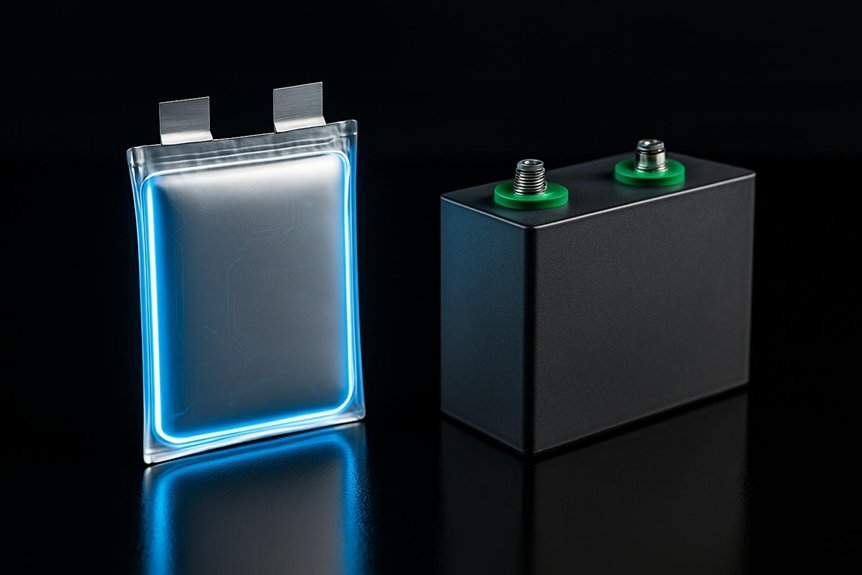
The differences in chemistry we discussed above directly shape energy, weight, and power metrics, guiding how Li-ion and LiFePO4 cells perform in real-world use. We focus on how energy density translates to range and payload, how weight impacts system efficiency, and how available power governs acceleration and duty cycles. In practice, Li-ion typically delivers higher energy density, enabling longer runtimes, while LiFePO4 courts higher cycle life and stability under heavy discharge. This tradeoff defines total system performance, not just cell specs.
- energy density versus cycle life tradeoffs
- mass-to-output efficiency across discharge profiles
- impact of chemistry on peak and sustained power delivery
Safety, Lifespan, and Thermal Performance Explained
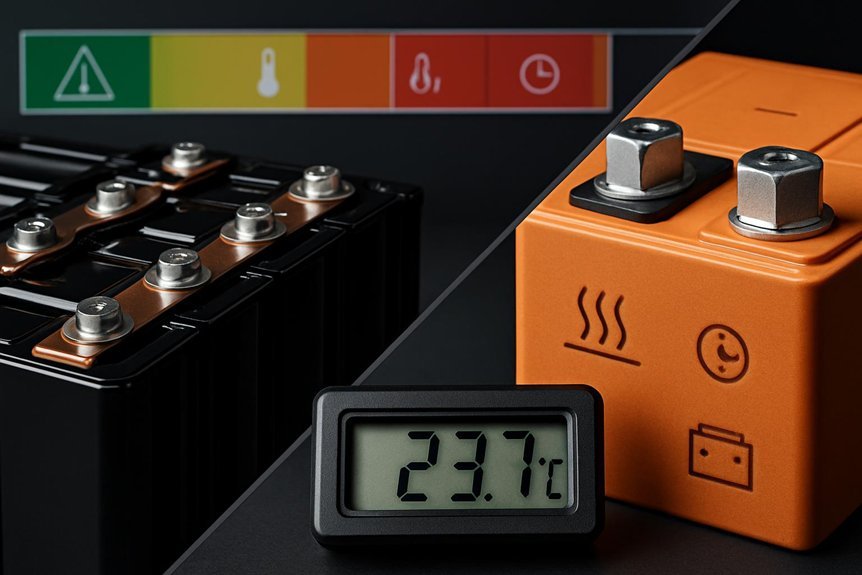
What governs safety, lifespan, and thermal performance in lithium-based chemistries? We assess cells, modules, and systems through failure modes, management, and material limits. Our focus is on intrinsic chemistry, thermal runaway thresholds, and charging strategies that minimize risk while maximizing longevity. Lifespan responds to cycle count, depth of discharge, and calendar aging, moderated by thermal management and protection schemes. Thermal performance hinges on heat generation, dissipation paths, and enclosure design. We address safety myths and charging norms with precise guardrails, not anecdote, to avoid overconfidence or fear. Below, a compact framework clarifies interactions.
| Category | Parameter | Impact | Practical takeaway |
|---|---|---|---|
| Safety | Protection circuitry | Reduces fault propagation | Always enable proper BMS, fuses |
| Lifespan | Cycle life, DoD | Determines usable cycles | Use moderate DoD, cool temps |
| Thermal | Heat generation | Governs limits | Design for adequate cooling |
Use Cases by Need: Phones, Home Storage, and E-Bikes
Do you pick the right chemistry by market and use case? We’ll map needs to chemistry performance, focusing on phones, home storage, and e-bikes, with an eye on tech performance and charging protocols. Our aim is precision, not fluff, to guide informed choices without overspecification.
- Phones: prioritize energy density, cycle life, and rapid charging compatibility; Li-ion variants often win on compactness and sustained discharge curves.
- Home storage: emphasize safety margins, thermal stability, and long-cycle reliability; LiFePO4’s thermal resilience and longer calendar life can reduce total cost of ownership.
- E-bikes: balance weight, power delivery, and charger compatibility; consistent peak power supports acceleration without excessive strain on packs.
Charging protocols and real-world usage shape outcomes across all three cases.
Choosing Between Li-Ion and LiFePO4: A Quick Decision Guide
From our look at optimal fits—phones, home storage, and e-bikes—we now turn to a practical, side-by-side decision framework. We compare Li-Ion and LiFePO4 by performance envelope rather than popularity. Choosing between li ion hinges on energy density and weight, while lifepo4 prioritizes cycle life and safety margins under abuse. Price vs performance matters: initial cost may be higher for LiFePO4, but total cost of ownership can favor it in high-cycle or stationary apps. Consider charging protocols vs safety: Li-Ion requires precise charging to avoid overcharge risks, whereas LiFePO4 tolerates wider fault margins and slower degradation. We assess application duty cycle, environmental conditions, and replacement cadence to guide an evidence-based choice.
Frequently Asked Questions
How Do Charging Curves Differ Between Li-Ion and Lifepo4 at Extreme Temps?
We observe charging curves at extreme temps diverge: Li-ion shows reduced current and voltage bounce, while LiFePO4 maintains steadier termination thresholds; temperature materially affects charge termination, with harsher temps shortening termination accuracy and delaying full charge.
Which Battery Type Is More Recyclable and in What Processes?
We’re more recyclable with LiFePO4, though both require specialized processes; recycling myths persist. We analyze cost comparisons and flows of dismantling, electrolyte handling, and battery cathode recovery to maximize material value and minimize environmental impact.
Do Li-Ion and Lifepo4 Vary in Self-Discharge Rates Long-Term?
We find that li-ion longevity varies with chemistry and usage, while lifepo4 stability generally remains higher; long-term self-discharge differences exist but are modest, with li ion often edging lifepo4 in practical drift.
How Do Manufacturing Costs Impact Total Ownership Over Time?
We find that manufacturing costs drive total ownership, with Li-ion typically higher upfront but efficiency gains and price trends shaping long-term cost dynamics, while LiFePO4’s lower materials cost and longevity reduce overall expenses, though production scale influences manufacturing impact.
Can Hybrids or Dual-Battery Systems Combine Li-Ion and Lifepo4 Benefits?
Yes—we can, and we do, say that hybrids or dual-battery systems can blend Li-ion and LiFePO4 benefits with careful management. Hybrid chemistry integration enables Dual battery optimization, improving cycle life and peak performance under real-world load conditions.
Conclusion
We see each chemistry as a different engine: Li-ion is the sleek, high-energy racer, light and hungry for performance, while LiFePO4 is the stout, steady hauler, safer and longer-lasting under heat. When we weigh energy density against safety margins and lifespan, the choice sharpens: portable devices demand Li-ion’s weight-to-energy edge; stationary storage favors LiFePO4’s thermal resilience and durability. In short, tune your pick to mission, not just specs, and the chemistry follows your use.