Ad Blocker Detected
Our website is made possible by displaying online advertisements to our visitors. Please consider supporting us by disabling your ad blocker.
The difference between portable power stations and UPS battery backups might seem straightforward, but it’s actually a complex choice with significant implications. We’re talking about devices that serve vastly different purposes, yet often get confused or used interchangeably. Understanding their capabilities, limitations, and best applications can dramatically impact how you plan for emergencies, outdoor ventures, or daily power needs. To make the right decision, we need to analyze these technologies’ core functions, costs, and practical benefits—so let’s explore what sets them apart.
Key Takeaways
- Portable power stations offer higher capacity and longer use, suitable for outdoor or extended applications.
- UPS batteries provide rapid, short-term backup for immediate power needs during outages.
- Portable stations support multiple charging methods like solar, AC, and vehicle, unlike UPS systems.
- UPS backups are more compact, less expensive, but have limited power capacity and shorter lifespan.
- Choice depends on whether long-duration power or quick, immediate backup is the primary requirement.
How Do Portable Power Stations Work and When Are They Useful?
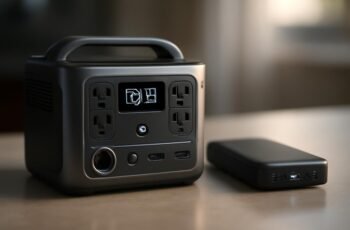
Portable power stations operate as self-contained energy storage systems that convert stored electrical energy into usable power through integrated inverter circuitry. Their effectiveness depends heavily on battery longevity, which is influenced by the quality of cells and the number of charge cycles. Charging methods, such as AC wall outlets, solar panels, or car adapters, directly impact battery health and lifespan; efficient, controlled charging preserves capacity over time. These stations are particularly useful in remote locations or during power outages where reliable, clean energy is essential. Their ability to supply consistent power to sensitive electronics makes them versatile. However, understanding how different charging methods affect battery longevity helps optimize performance and extends operational life, ensuring the station remains a dependable energy source when needed most.
What Are the Main Differences Between Portable Power Stations and UPS Batteries?
While both portable power stations and UPS batteries serve as backup power sources, they differ considerably in design, capacity, and application. Portable power stations are typically larger, feature higher capacity batteries, and include multiple outlets for diverse devices. They generally offer a longer battery lifespan, often measured in hundreds of charge cycles, making them suitable for extended use. UPS batteries, on the other hand, are compact, designed for short-term backup during power interruptions, and have a quicker recharge time, often within minutes, to restore full capacity. Their battery lifespan is usually shorter, around a few hundred cycles, reflecting their role in immediate power support. These distinctions influence their suitability for different scenarios, with portable power stations prioritizing capacity and versatility, and UPS batteries focusing on rapid response and short-term backup.
Which Device Is Better for Outdoor Activities and Emergency Use?
When selecting a power backup solution for outdoor activities and emergencies, understanding the distinct advantages of portable power stations and UPS batteries is essential. Portable power stations excel with longer battery lifespan and versatile charging methods, such as solar or AC charging, making them suitable for extended outdoor use. Conversely, UPS batteries provide rapid response and consistent power during outages but often have shorter lifespans and limited charging options.
| Feature | Portable Power Station | UPS Battery Backup |
|---|---|---|
| Battery Lifespan | Longer-lasting | Shorter lifespan |
| Charging Methods | Solar, AC, vehicle | AC, limited options |
| Ideal Use | Extended outdoor, emergencies | Short-term, immediate power |
This analysis indicates portable stations are better for prolonged use, while UPS systems suit quick, emergency scenarios.
How Do Cost, Portability, and Power Capacity Compare?
Evaluating cost, portability, and power capacity reveals significant differences that influence decision-making between portable power stations and UPS battery backups. Portable power stations generally have higher upfront costs but offer greater energy efficiency and versatility across various applications. Their battery longevity allows for prolonged use, making them suitable for extended power needs, though they tend to be bulkier and less convenient for immediate backup. UPS backups typically cost less and are more portable, primarily designed for short-term power support and protecting sensitive equipment. However, they often feature limited power capacity and shorter battery life, which can impact overall energy efficiency over time. When comparing these factors, understanding the trade-offs in cost, portability, and power capacity helps determine the most suitable option for specific power demands.
Which Option Suits Your Specific Power Needs Best?
Determining which power solution best fits your specific needs requires a clear understanding of your typical usage patterns, power requirements, and mobility constraints. For applications demanding extensive energy storage and longer operational durations, portable power stations excel due to their higher capacity and versatility. They often feature larger batteries with longer lifespan, supporting repeated deep discharges without significant degradation. Conversely, UPS battery backups are optimized for short-term, immediate power support during outages, emphasizing rapid response and reliability over capacity. If your priority is sustained, flexible energy storage for varied devices, a portable power station is preferable. For critical systems needing instant backup with minimal downtime, a UPS is more suitable. Ultimately, evaluating your power demand profile and considering battery lifespan factors guide the most suitable choice.
Frequently Asked Questions
Can Portable Power Stations Charge Multiple Devices Simultaneously?
Yes, portable power stations can charge multiple devices simultaneously, thanks to multiple AC and USB ports. They maintain solar compatibility, but weigh and portability vary, affecting ease of transport and practicality for multi-device charging in different scenarios.
How Long Do UPS Batteries Typically Last Before Replacement?
Typically, UPS batteries last 3 to 5 years before replacement, depending on usage and environment. We recommend following the manufacturer’s replacement schedule and regularly testing the battery’s health to guarantee peak performance and avoid unexpected failures.
Are Portable Power Stations Environmentally Friendly?
Portable power stations are generally eco-friendly, acting as bridges to renewable energy while reducing our carbon footprint. They utilize sustainable batteries and clean energy sources, making them a smart, environmentally conscious choice for modern power needs.
Do UPS Systems Provide Surge Protection?
Yes, UPS systems provide surge protection through voltage regulation and noise filtration, ensuring sensitive devices are shielded from power fluctuations. This technical design maintains stable output, safeguarding equipment during voltage spikes and minimizing electrical noise interference.
Which Option Has Better Energy Efficiency Over Time?
We find portable power stations generally offer better energy efficiency over time, thanks to their design for renewable integration and optimized battery longevity, whereas UPS systems often prioritize immediate power backup, potentially sacrificing long-term efficiency.
Conclusion
Ultimately, choosing between a portable power station and a UPS depends on your specific needs—whether that’s outdoor versatility or immediate backup. Notably, many of us find ourselves unexpectedly needing both at different times, like during a camping trip or a sudden blackout. By analyzing your power capacity requirements, portability preferences, and budget, you can make an informed decision. Sometimes, the most reliable choice is recognizing that, like most tools, these devices serve different but complementary roles in our energy solutions.