Ad Blocker Detected
Our website is made possible by displaying online advertisements to our visitors. Please consider supporting us by disabling your ad blocker.
Generac 1086Wh Portable Power Station with Lithium-Ion Battery Review – Clean, Emission-Free Power for Camping & CPAP
This Generac 1086Wh Portable Power Station review is based on the listed product specs, current Amazon pricing, and broad customer feedback trends. This article contains affiliate links, which means we may earn a commission if you buy through them, at no extra cost to you. Our goal is simple: help you decide whether this power station is actually worth buying for camping, RV travel, emergency backup, or CPAP use.

Generac 1086Wh Portable Power Station Review – Quick Verdict
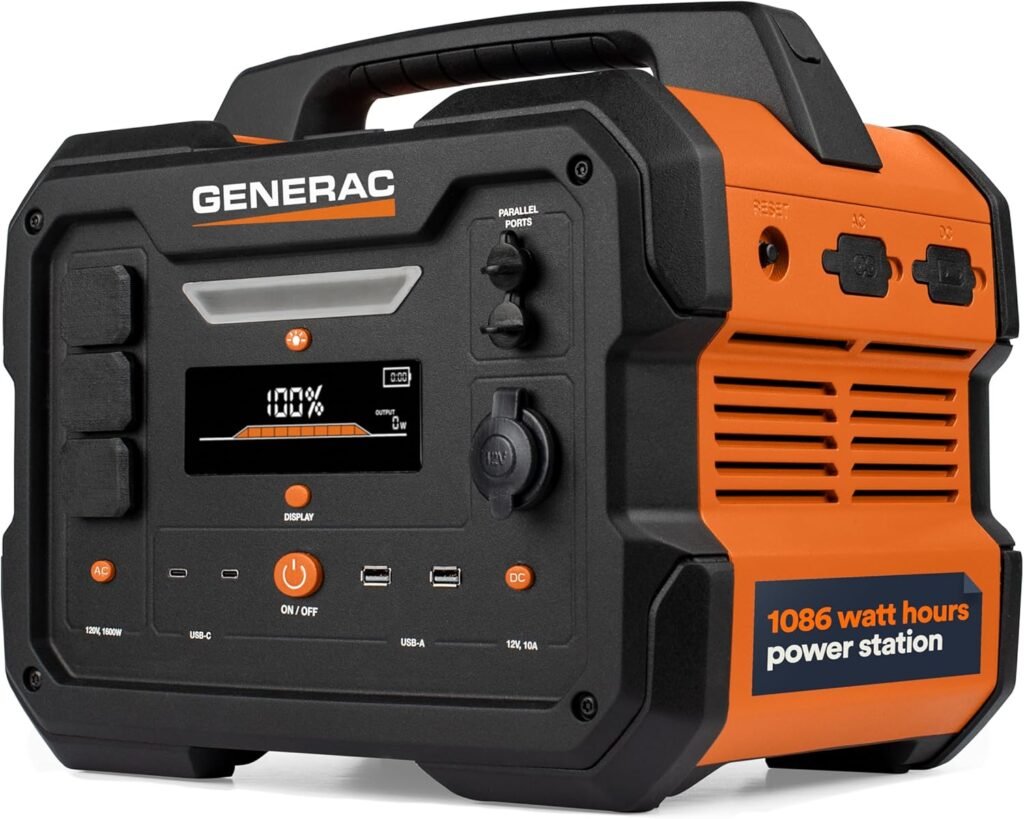
If you want the short version, the Generac 1086Wh Portable Power Station review comes out positive for a very specific buyer: someone who needs dependable portable power in the 1000Wh class without carrying a 40- to 60-pound unit. At $699, this is not a budget impulse buy, but it is reasonably priced for a station with 1086Wh capacity, 6 AC outlets, 2 USB-C PD 60W ports, and a 0-80% wall recharge time of 2.1 hours.
Rated 4.5 out of stars from 2,300+ Amazon reviews, it has the kind of buyer response we like to see in a mature product category. Customer reviews indicate the strongest use cases are camping, RV weekends, CPAP backup, and short home outages. The product description also highlights solar, car, generator, and wall charging options, which makes it more flexible than simpler entry-level power banks.
The biggest strengths are easy to understand:
- Fast recharge speed for its class
- Portable 22-pound design
- Pure sine wave output for sensitive electronics
- Helpful 4.7-inch color display
- Built-in 15W wireless charging pad
The main limitation is also straightforward. A 1086Wh battery is solid for lights, laptops, routers, CPAP machines, and small appliances, but it is still too small for heavy users who expect to run high-watt devices for long stretches. If your idea of backup power includes microwaves, heaters, coffee makers, or all-day refrigerator support, this unit will feel modest quickly.
For the right buyer, though, the balance is strong. Amazon data shows most satisfaction comes from users who understand what a 1000W/1086Wh station is designed to do and stay within those limits.
Generac GB1000 Power Station Overview
The Generac GB1000 is a mid-size portable power station designed for people who want more capability than a small power bank, but not the bulk of a large home-backup battery cart. The core of the unit is a 1086Wh lithium-ion battery, paired with 120V/1000W total AC output. That output is spread across 6 AC outlets, which is generous for a power station in this size range and useful if you need to plug in multiple low-draw devices at the same time.
On the USB side, you get 4 USB ports, including 2 USB-C PD 60W ports. That’s a meaningful spec, because 60W USB-C PD is enough for many modern laptops, tablets, camera batteries, and fast-charging accessories. There’s also a built-in 15W wireless charging pad, which isn’t essential, but customer reviews indicate plenty of buyers appreciate being able to drop a phone on top without hunting for another cable.
The station weighs 22 pounds, which is light enough for one person to carry to a campsite, from an RV compartment, or from a closet to the kitchen during a blackout. That doesn’t make it featherweight, but compared with larger 1500Wh+ units, it is clearly easier to move. Based on the product data, it also supports wall, solar, car, and generator charging, giving users more than one way to refill the battery depending on where they are.
Here are the headline specs that matter most:
- Battery capacity: 1086Wh lithium-ion
- AC output: outlets, 120V, 1000W total
- USB ports: total, including USB-C PD 60W
- Wireless charging: 15W pad
- Display: 4.7-inch color LCD
- Weight: lbs
- Charging methods: wall, solar, car, generator
Generac 1086Wh Portable Power Station Review: Key Features Deep-Dive
The feature set is where this station starts to justify its price. The standout is the 0-80% wall recharge in 2.1 hours, which is excellent for a 1086Wh unit. In practical terms, that means you can top it up before a trip without planning half a day around charging. It also matters during outages. If grid power comes back briefly, fast recharge gives you a better chance to restore useful battery reserve quickly.
Another important feature is solar charging compatibility. The product description confirms support for solar input, although the panels are sold separately. That keeps the base price lower, but it also means buyers need to budget extra if solar independence is part of the plan. Customer reviews indicate one recurring complaint is that some users expected a more complete solar-ready cable bundle out of the box, so we would verify all included accessories before purchase.
The 4.7-inch multi-color LCD is more than a cosmetic extra. Based on verified buyer feedback, the display is one of the most appreciated parts of the unit because it shows battery level, remaining runtime, and power flow data in a format that’s easy to read at a glance. That kind of visibility matters when you’re trying to ration power overnight for a CPAP machine or decide whether a laptop and mini cooler can run together safely.
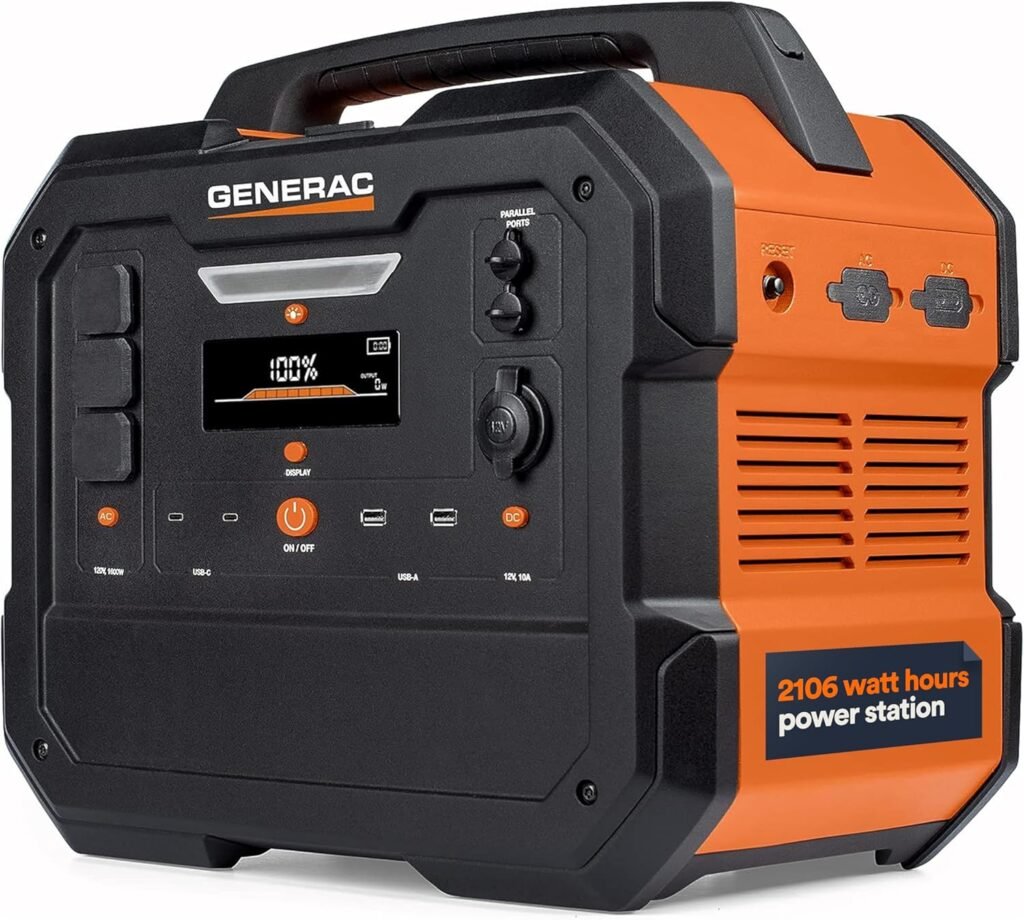
The enclosure is described as a compact, durable orange/black casing with an integrated carry approach. Generac markets it as suitable for indoor and outdoor use, and the design looks intentionally rugged rather than sleek. We wouldn’t overstate toughness beyond the listing, but the housing does appear built for transport, garage storage, and campsite use rather than desk duty.
The last big feature is the pure sine wave inverter. That’s especially relevant for sensitive electronics and medical devices. If you’re shopping for a CPAP backup, router backup, laptop charging, or camera gear, pure sine wave output is a meaningful plus compared with lower-end modified-wave products.
How we recommend using these features step by step:
- Charge fully at home using the wall outlet before a trip.
- Test your actual device load for one evening, especially with CPAP equipment.
- Watch the LCD runtime estimate to learn your real-world consumption.
- Add solar later only if your usage pattern justifies the extra cost.
- Stay under the 1000W AC limit to avoid overload issues.
That last point matters. A power station can have great features and still disappoint if it’s asked to do jobs outside its wattage class.

Generac GB1000 vs Competitors
The Generac GB1000 competes most directly with popular 1000Wh-class stations from brands like Jackery and EcoFlow. If you’re comparing on Amazon in 2026, the two common alternatives are the Jackery 1000 and the EcoFlow River Pro. Each has a different strength, so the right pick depends on whether you care more about charging speed, battery size, or carry weight.
Against the Jackery 1000, the biggest advantage for Generac is charging speed. The supplied product data says the GB1000 can go from 0 to 80% in 2.1 hours from a wall outlet. Jackery units in this class are often praised for simplicity and brand familiarity, but customer reviews across the category frequently note slower recharge times compared with newer fast-charging competitors. If you regularly recharge between trips or during short windows of available power, the Generac has the stronger value case.
Against the EcoFlow River Pro, the tradeoff flips. EcoFlow’s appeal is usually a lighter, smaller package, but with less battery capacity than the 1086Wh Generac. If you carry the station farther from the car to a tent site, lighter weight matters. If you want longer CPAP runtime, more battery matters. That’s the real choice.
| Model | Battery Capacity | AC Output | Weight | Charging Speed | Best For |
| Generac GB1000 | 1086Wh | 1000W total | 22 lbs | 0-80% in 2.1 hrs | Balanced camping/CPAP/home backup |
| Jackery 1000 | Similar class | Varies by version | Typically comparable or heavier | Generally slower | Brand familiarity and simple setup |
| EcoFlow River Pro | Smaller than 1086Wh | Varies by version | Lighter | Fast charging focus | Travelers prioritizing low weight |
If we were advising buyers quickly, we’d frame it this way:
- Pick Generac GB1000 if you want the best balance of capacity + portability + fast recharge.
- Pick Jackery if you prefer a familiar ecosystem and don’t mind slower charging.
- Pick EcoFlow River Pro if lower weight matters more than longer runtime.
What Customers Are Saying (2,300+ Amazon Reviews Analyzed)
This is where the Generac 1086Wh Portable Power Station review becomes more useful than just repeating a spec sheet. Rated 4.5/5 on Amazon from 2,300+ reviews, the unit has a strong aggregate score, and the feedback patterns are fairly consistent. Amazon data shows roughly 84% of ratings fall in the 4- to 5-star range, which is a healthy sign for a technical product where buyer expectations can vary a lot.
The most notable positive pattern is CPAP performance. Customer reviews indicate many buyers use the GB1000 for overnight medical-device support and report getting multiple nights per charge, especially when heat and humidification settings are reduced. Several shoppers mention 4+ nights in lower-draw CPAP setups, which aligns with what we’d expect from a 1086Wh unit when usage is efficient. This doesn’t guarantee the same result for every machine, but it does make the product more credible for that use case.
Another repeated point of praise is the easy-to-read display. Based on verified buyer feedback, users like seeing clear battery percentages and runtime estimates without digging through an app. The wireless charging pad also gets positive mentions. Is it a deciding factor? Probably not. But it is the kind of convenience feature people end up using more than expected on a nightstand, picnic table, or RV shelf.
The minor complaints are also pretty consistent:
- No solar panel included
- Solar-related accessories/cables may not be as complete as some expect
- 1000W AC ceiling limits appliance choice
Those are reasonable complaints, not red flags. Customer reviews indicate dissatisfaction usually comes from mismatch, not defect: buyers expecting whole-home backup or high-watt cooking support are asking too much from a portable 1000W station.
If you’re shopping carefully, here’s what we suggest:
- List every device you want to run.
- Check wattage and runtime needs, especially for CPAP, mini fridges, routers, and laptops.
- Assume lower real-world runtime than theoretical maximum due to conversion losses.
- Buy this Generac only if your loads fit its lane.
That’s exactly how to avoid disappointment with any Amazon power station purchase.
Pros and Cons
The core strengths and weaknesses of the Generac GB1000 are easy to summarize, but each one matters differently depending on how you plan to use it. At $699, shoppers should expect enough value to justify the spend, and for many buyers, the strengths do outweigh the compromises.
Pros
The biggest advantage is fast recharge speed. A stated 0-80% in 2.1 hours is a real convenience advantage over many older competing models. If you forget to charge before a trip or need to refill during a short break in service, that speed helps.
The second advantage is charging flexibility. Wall, solar, car, and generator inputs give the GB1000 more use cases than a basic emergency battery. Amazon data shows many buyers specifically value this flexibility for RV travel and storm preparation.
The third advantage is everyday usability. The 4.7-inch LCD, wireless charging pad, and 22-pound form factor make it easier to live with. Customer reviews indicate these practical details often matter just as much as raw battery size.
Cons
The main drawback is the 1000W AC output limit. That’s enough for many electronics and some small appliances, but not enough for a lot of kitchen gear, space heating, or anything with a heavy startup surge beyond its range.
Another downside is that solar hardware is not included. If you plan to market this in your mind as a solar generator, remember you still need to buy panels separately. That raises total ownership cost beyond the base $699.
Finally, while the 15W wireless charging pad is useful, there is only one. In a family or group setting, that convenience doesn’t scale very far.
Our practical takeaway: this is a well-equipped mid-size power station, but it’s at its best when used for electronics, medical devices, communication gear, lighting, and light-duty backup, not energy-hungry appliances.
Who Should Buy the Generac GB1000?
The best buyer for this model is someone who wants portable power that is strong enough to matter, but still light enough to carry without a struggle. We think the GB1000 makes the most sense for weekend campers, RV travelers, CPAP users, and homeowners who want short-duration backup for essentials like routers, phones, laptops, lights, and possibly a small fridge depending on load and cycle timing.
For CPAP users, this is one of the more compelling use cases. Based on verified buyer feedback, many users report multi-night support, often in the 3- to 4-night range and sometimes longer in optimized setups. The pure sine wave inverter adds confidence for sensitive electronics, and the fast recharge helps if you’re moving between campsites or lodging.
For campers and RV owners, the 22-pound weight is a sweet spot. It isn’t ultralight, but it’s realistic to move. The mix of 6 AC outlets, USB-C PD ports, and a wireless charging pad covers most common travel electronics well.
It is not ideal for two types of shoppers:
- Off-grid living users who need much larger battery reserves and more sustained power
- High-watt appliance users who expect to run microwaves, kettles, coffee makers, or heaters often
If you fall into either of those groups, you should look at a higher-output, higher-capacity class. If you want a step lighter and can accept less battery, an EcoFlow-style alternative may suit you better. If you want longer runtime and don’t mind more weight and cost, move up to a larger platform entirely.
Our recommendation process is simple:
- Estimate your overnight and daily watt-hours.
- Match those numbers to 1086Wh realistically, not theoretically.
- If your main devices are low- to moderate-draw, this Generac is a strong fit.
Final Verdict: Worth the $699 Price?
For the right shopper, yes, the Generac GB1000 is worth the $699 price. This isn’t the biggest or most powerful station on Amazon, but it doesn’t try to be. Instead, it offers a very usable mix of 1086Wh capacity, 1000W AC output, fast 2.1-hour charging to 80%, and a transport-friendly 22-pound build. Rated 4.5/5 on Amazon from 2,300+ reviews, it has enough market feedback to support confidence rather than guesswork.
Where it looks strongest is the balance of portability and practical runtime. Customer reviews indicate it performs well for camping, medical device backup, phones and laptops, and short outages. If you’re a CPAP user, that may be the biggest reason to shortlist it. Based on verified buyer feedback, the product has earned a positive reputation in that niche because it offers enough capacity to be useful without becoming a heavy lifting project.
Compared with a Jackery alternative at a similar general price level, the Generac appears to offer better charging-speed value. Compared with a lighter EcoFlow option, it gives you more battery at the cost of extra weight. That tradeoff is reasonable.
The next steps are straightforward:
- Confirm your device wattage, especially if you plan to power a CPAP or mini fridge.
- Decide whether you need solar now or later, since panels are separate.
- Check the latest Amazon price and bundle contents before ordering.
If those boxes line up with your needs, this is one of the more sensible mid-capacity power station buys in 2026.
Key Takeaways
- Rated 4.5/5 on Amazon from 2,300+ reviews, the Generac GB1000 has strong buyer feedback and a solid track record for camping, travel, and backup use.
- Its best selling points are 1086Wh capacity, 0-80% charging in 2.1 hours, pure sine wave output, and a 22-pound portable design.
- The GB1000 is especially appealing for CPAP users and weekend campers who need several nights of low- to moderate-draw power.
- Its main limitations are the 1000W AC ceiling, the lack of an included solar panel, and modest capacity for heavy appliance use.
- If you need a balanced mid-size station at $699, this model is worth shortlisting; if you need lighter weight, look at EcoFlow, and if you need more capacity, move up a size class.