Ad Blocker Detected
Our website is made possible by displaying online advertisements to our visitors. Please consider supporting us by disabling your ad blocker.
While it’s often tempting to overlook the finer details of solar system optimization, addressing the nuances of solar input wattage can markedly enhance overall efficiency. By systematically analyzing factors like panel placement, tilt angles, and shading impacts, we can identify measurable improvements that translate into higher energy yields. Understanding these technical aspects is essential for maximizing long-term return on investment, which prompts us to explore the most effective strategies to refine your solar setup and guarantee sustained performance.
Key Takeaways
- Ensure panels are correctly oriented and tilted based on geographic location and seasonal sun paths.
- Minimize shading by removing obstructions and conducting regular shading analysis throughout the year.
- Use high-quality, efficient components like MPPT charge controllers and low-resistance wiring.
- Regularly clean panels to remove dirt, debris, and grime that reduce efficiency.
- Monitor real-time energy production and adjust system settings to maximize wattage input.
How Does Solar Input Wattage Affect Your System’s Performance
The amount of solar input wattage directly impacts the efficiency and overall output of a solar power system. Higher wattage enhances energy storage capabilities by providing more surplus power for batteries, improving resilience during low sunlight periods. It also influences grid integration, as increased input allows for more flexible power dispatch, optimizing grid stability and reducing reliance on external sources. Conversely, insufficient input wattage limits energy storage potential and constrains grid contributions, risking underperformance during peak demand. Precise assessment of solar input wattage is vital for balancing energy storage capacity and ensuring seamless grid integration. Ultimately, maximizing input wattage supports a more resilient, efficient, and reliable solar system, aligning system performance with energy demands and grid requirements.
Assessing Your Current Solar Input Capacity
To accurately assess our current solar input capacity, we start by analyzing the output of our existing panels and identifying any shading or obstructions that may reduce efficiency. Precise measurement of panel performance under current conditions helps pinpoint potential losses. This data provides a foundation for targeted system optimization.
Current Solar Panel Output
How can we accurately evaluate our current solar panel output to determine our input capacity? We start by measuring real-time energy production, often through monitoring systems that log kilowatt-hours (kWh). This data reveals the actual power generated, which impacts battery storage efficiency and inverter compatibility. Key factors include:
- Comparing output against rated panel wattage under standard test conditions
- Analyzing daily and seasonal variation patterns
- Ensuring inverter capacity aligns with peak output levels
- Verifying that battery storage can handle maximum input without overloads
Shading and Obstructions
Evaluating your current solar input capacity requires careful examination of shading and obstructions that can considerably reduce energy production. Shadows cast by trees, buildings, or other structures impede sunlight exposure, directly impacting panel efficiency. Effective shadow mitigation involves identifying persistent shading patterns and implementing strategic adjustments, such as panel repositioning or trimming vegetation. Obstruction removal is equally critical; eliminating or relocating objects that block sunlight guarantees maximum exposure throughout the day. Precise shading analysis, using tools like solar pathfinders or software, helps quantify potential losses and guides corrective measures. By systematically addressing shading issues and optimizing the placement of panels, you can substantially improve overall solar input wattage, ensuring your system operates at peak efficiency.
Factors That Influence Sunlight Capture and Wattage
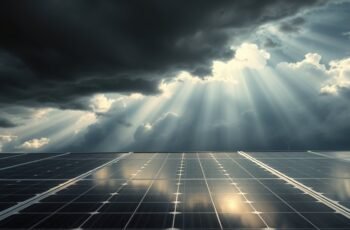
Weather conditions, such as cloud cover and atmospheric particles, directly affect the amount of sunlight reaching solar panels, thereby influencing wattage output. Panel orientation and tilt angles determine the efficiency of sunlight capture throughout the day and across seasons. Understanding these factors allows us to optimize panel positioning for maximum energy absorption.
Weather Conditions Impact
Have you considered how varying weather conditions directly influence the efficiency of solar energy capture? Cloud cover reduces direct sunlight, leading to significant wattage drops, especially during overcast periods. Temperature effects also play a critical role; high temperatures can decrease panel efficiency due to increased resistance, while cooler conditions often enhance performance. These factors interact dynamically, impacting energy output unpredictably. For instance:
- Extensive cloud cover diminishes insolation, lowering wattage.
- Partial cloud cover causes fluctuating sunlight, affecting consistency.
- Elevated temperatures increase thermal losses, reducing efficiency.
- Cooler, stable conditions promote ideal panel performance.
Understanding these variables helps us maximize system operation under different weather scenarios, ensuring maximum wattage capture despite atmospheric variability.
Panel Orientation and Tilt
Optimizing solar input wattage requires precise adjustment of panel orientation and tilt, as these factors directly influence the amount of sunlight captured throughout the day. Proper orientation aligns panels toward the sun’s path, maximizing exposure, while tilt adjusts the angle to enhance seasonal solar incidence. Panel materials, such as monocrystalline or polycrystalline silicon, respond differently to angle adjustments, affecting efficiency. Correct installation techniques ensure secure, ideal positioning, reducing shading and tilt inaccuracies. Adjustments should consider geographic location, latitude, and seasonal variations to maintain consistent wattage output. A systematic approach combining accurate orientation and tilt, tailored to specific panel materials and installation methods, ensures maximized sunlight capture and improved overall system performance.
Optimal Placement and Tilt for Maximum Sunlight Intake
To maximize sunlight absorption, we must carefully consider the placement and tilt angle of solar panels. Essential placement involves selecting a location with minimal shading, avoiding obstructions like trees or structures that can impede direct sunlight. Tilt adjustment is vital; panels should be angled to match the latitude for year-round efficiency, with seasonal modifications if possible.
Key considerations include:
- Positioning panels facing true south in the northern hemisphere
- Maintaining an ideal tilt angle based on geographic latitude
- Ensuring unobstructed exposure during peak sunlight hours
- Regularly adjusting tilt to account for seasonal sun path changes
How to Use Shading Analysis to Improve Solar Input
Shading analysis is a critical step in optimizing solar input, as even minor obstructions can substantially reduce panel efficiency. Conducting thorough shading analysis allows us to identify potential shading sources, such as trees, structures, or equipment, that cause partial or full shading during peak sunlight hours. By mapping shading patterns throughout the year, we can develop effective obstruction mitigation strategies, including strategic panel placement or trimming obstructions. Accurate shading analysis utilizes tools like solar pathfinders, computer simulations, or satellite imagery to quantify shading impact. Implementing these insights ensures maximum sunlight exposure and minimizes energy losses. Ultimately, precise shading analysis enhances overall system performance, enabling us to optimize solar input wattage through informed placement decisions and proactive obstruction mitigation.
Choosing the Right Solar Panels for Better Wattage Efficiency
Selecting the appropriate solar panels is vital for maximizing wattage efficiency, as different panel types vary considerably in performance characteristics. Monocrystalline panels offer higher efficiency and better energy storage potential, making them ideal for limited spaces. Polycrystalline panels, while slightly less efficient, are more cost-effective and suitable for larger installations. Consideration of inverter efficiency is critical, as it impacts how effectively generated power converts into usable energy. Additionally, panel temperature coefficients influence performance under high temperatures, affecting overall wattage output. To optimize system performance, evaluate:
Choosing the right solar panels and inverter ensures maximum efficiency and optimal energy output.
- Compatibility with inverter specifications
- Durability and weather resistance
- Cost-to-efficiency ratio
- Long-term energy storage integration
Choosing wisely guarantees maximum wattage, better energy storage, and optimized overall system efficiency.
Tricks to Keep Your Panels Clean and Maintain Peak Performance
Maintaining peak performance of your solar panels requires regular cleaning and vigilant monitoring, as dirt, dust, and debris can substantially diminish their efficiency. Effective cleaning techniques focus on gentle removal to prevent surface scratches, utilizing soft brushes, microfiber cloths, or low-pressure water. Regular panel maintenance includes inspecting for accumulation of grime and checking for physical damage or shading issues. It’s crucial to schedule cleaning during cooler parts of the day to avoid thermal stress and to use environmentally safe cleaning solutions, avoiding harsh chemicals. Monitoring performance metrics helps identify efficiency drops that may indicate dirt buildup or damage. Consistent cleaning and proactive panel maintenance ensure maximum light absorption, minimize efficiency losses, and prolong the lifespan of your solar array.
Upgrading Components to Boost Overall Solar Input Wattage
Enhancing the overall solar input wattage often involves upgrading key system components to maximize efficiency gains. Focus on improving energy storage solutions to reduce losses and guarantee consistent power delivery. Upgrading inverters enhances inverter efficiency, converting more DC to usable AC power with minimal loss. Additionally, selecting high-quality, low-resistance wiring minimizes power dissipation. Modern MPPT (Maximum Power Point Tracking) charge controllers optimize energy harvest under varying conditions. Implementing these upgrades ensures that every watt of captured solar energy is effectively stored and transmitted. To summarize:
Upgrading components like inverters, wiring, and charge controllers maximizes solar energy efficiency and system performance.
- Invest in advanced energy storage systems with higher capacity and lower self-discharge
- Upgrade to high-efficiency inverters for peak power conversion
- Use low-resistance wiring for minimal energy loss
- Incorporate MPPT charge controllers to maximize energy harvest
These enhancements collectively boost overall wattage input and system performance.
Troubleshooting Common Issues That Reduce Solar Input
When solar input wattage diminishes unexpectedly, it often indicates underlying issues that require systematic troubleshooting. Key factors include degraded energy storage systems and inverter efficiency drops. Poorly maintained panels, shading, or dirt buildup reduce energy capture, while inverter inefficiencies limit power transfer. To diagnose, assess panel cleanliness, shading sources, and inverter health.
| Issue | Diagnostic Indicator | Potential Fix |
|---|---|---|
| Dirty or Shaded Panels | Reduced current, uneven output | Clean panels, trim obstructions |
| Inverter Malfunction | Overheating, error codes | Inspect, reset, or replace inverter |
| Energy Storage Degradation | Voltage drops, capacity loss | Replace or upgrade batteries |
| Wiring/Connection Problems | Intermittent power, voltage irregularities | Tighten connections, check cables |
Frequently Asked Questions
How Does Weather Variability Impact Solar Input Wattage?
Weather variability, including cloud cover and temperature effects, considerably impacts solar input wattage. Increased cloud cover reduces sunlight intensity, while temperature fluctuations can decrease panel efficiency, both causing notable fluctuations in solar power generation.
Can Shading From Nearby Objects Permanently Reduce Wattage?
Shading effects from nearby objects can cause permanent shading, permanently reducing solar input wattage by blocking sunlight. This persistent obstruction decreases efficiency, requiring careful site assessment to prevent long-term performance loss in solar power systems.
What Are the Signs of Declining Solar Input Over Time?
We notice declining solar input through reduced energy output, often indicating panel degradation. Regular maintenance schedules help identify inefficiencies early, ensuring peak performance and allowing us to address issues before significant power loss occurs.
How Does Panel Orientation Affect Seasonal Wattage Changes?
In winter, ground-mounted panels tilted ideally at latitude maximize wattage; misaligned panel tilt or poor orientation reduces seasonal gains, illustrating how precise adjustments in panel tilt considerably influence seasonal wattage variations in different orientations.
Are There Legal Restrictions on Panel Placement for Optimal Wattage?
We check local regulations to guarantee compliance with installation codes and obtain necessary legal permits, preventing legal restrictions on panel placement. This guarantees our setup meets safety standards, optimizing wattage without risking legal issues or code violations.
Conclusion
By analyzing our system’s placement, optimizing tilt angles, minimizing shading, selecting efficient panels, and maintaining cleanliness, we can maximize solar input wattage. These steps guarantee our system operates at peak performance, enhances energy production, and improves long-term reliability. Continuous monitoring and timely upgrades allow us to adapt to changing conditions and technological advances. Ultimately, a proactive, data-driven approach enables us to harness solar energy more effectively, ensuring sustainability, efficiency, and cost savings over time.