Ad Blocker Detected
Our website is made possible by displaying online advertisements to our visitors. Please consider supporting us by disabling your ad blocker.
You probably don’t know how many common devices can run from a portable power station, not just phones and lights but mid‑demand gear like laptops, small TVs, CPAP units, and routers, all via pure sine wave inverters and 12V rails. We’ll quantify continuous loads, account for surge margins, and match capacities to daily energy use. This discussion stays data‑driven and practical, guiding you to size, charging efficiency, and realistic runtimes without overspecifying, so you can plan the right station for your needs.
Key Takeaways
- Portable power stations can run essential AV gear, backstage electronics, and portable cinema setups using AC, USB-C, and 12V outputs.
- Core outputs include pure sine wave AC, USB-C, and 12V rails, suitable for lights, chargers, fans, and small appliances.
- For CPAPs or critical devices, ensure surge-capable outlets and stable voltage with appropriate capacity and backup margin.
- Plan by continuous load and surge: match device wattage to station rating and account for peak startup draws.
- Efficient charging and intelligent load management extend runtime, reduce heat, and ensure timely replenishment for ongoing use.
What a Portable Power Station Can Run On the Go
What can a portable power station run on the go? We examine common loads, capacities, and efficiency to guide real-world use. In portable cinema setups, we prioritize quiet operation, stable voltage, and sustained runtime, pairing high-capacity packs with essential AV gear. For backstage power, we quantify draw, surge, and protection so electronics stay within spec during transitions. Core outputs include AC, USB-C, and 12V DC rails, with pure sine wave inverters and MPPT efficiency ensuring minimal heat and battery strain. We recommend devices under continuous load that match rated wattage, and we account for peak spikes via surge ratings. We measure runtime by capacity (Wh) against total load (W), adding margin for temperature. Our approach remains data-driven, concise, and oriented toward reliable, portable cinema and backstage power in dynamic environments.
How to Estimate Runtime for Your Devices
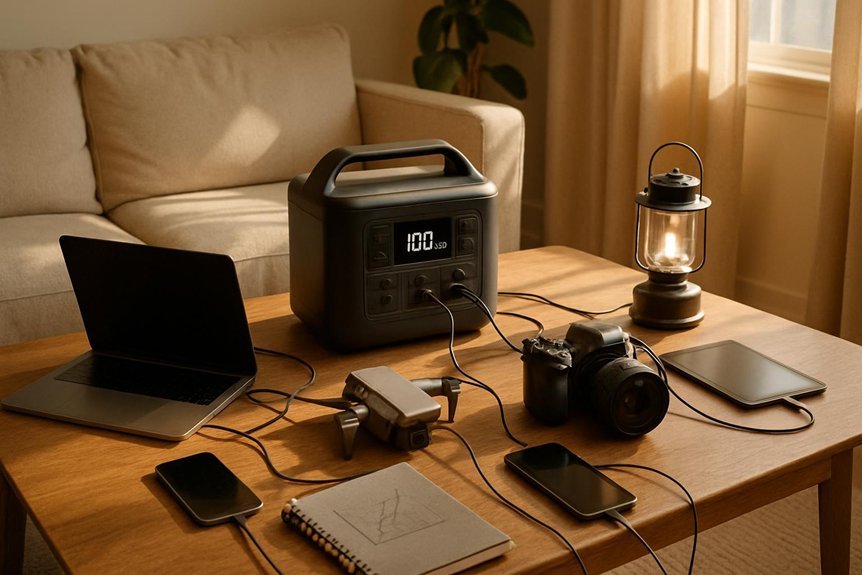
Estimating runtime starts with a simple equation: runtime (h) = usable capacity (Wh) ÷ continuous load (W).
Estimating runtime: usable capacity over continuous load guides reliable, data-driven power planning.
We’ll walk you through a fast, data-driven approach to estimate runtime and streamline device categorization. By grouping common loads, we reduce uncertainty and improve planning accuracy.
- Identify typical devices and their steady wattage
- Convert rated values to real-world load with efficiency factors
- Distinguish critical vs. noncritical loads for prioritization
- Compare multiple power stations using consistent units and margins
With this method, we can estimate runtime more reliably and apply device categorization to predict performance under varied conditions. The result is actionable insight rather than guesswork, empowering informed decisions about which devices to power and for how long.
Match Your Station: Sizing by Daily Loads
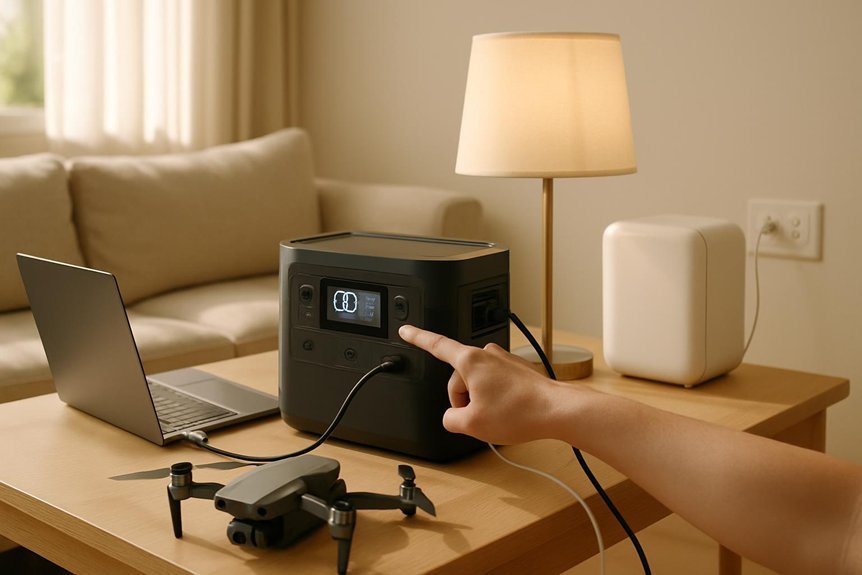
How much power do we actually need per day? We approach this by aggregating daily loads and translating them into a single battery sizing metric. We list essential devices, assign duty cycles, and convert watt-hours to ampere-hours at the station’s nominal voltage. Our aim is a conservative, practical estimate that avoids over‑design yet preserves uptime. We then balance peak and average loads to determine a usable capacity target, not just a raw sum. Two word discussion ideas emerge: energy budgeting, load shaping. With daily energy demand quantified, we select a battery size that accommodates margin for unexpected drains and inefficiencies. In practice, battery sizing follows a simple equation: required capacity = daily energy use + cushion, divided by system voltage, adjusted for inverter and conversion losses.
Efficient Charging: Best Ways to Power Up Quickly
We’re exploring how to charge faster without sacrificing battery longevity by examining fast charge techniques, efficient cable choices, and optimized charging schedules. Data shows that using high-quality, appropriately rated cables and adapters minimizes voltage drop and heat, improving real-world charging currents. We’ll outline practical guidelines to balance speed, safety, and long-term performance for your portable power station.
Fast Charge Techniques
Fast charging is about optimizing both charger and device behavior to minimize total power delivery time without compromising safety. We focus on process control, thermal limits, and charging profiles that align with battery chemistry to maximize pace without damage.
- Align max current with cell chemistry to avoid overstress
- Program thermal feedback to throttle when temp rises
- Use higher voltage stages only after impedance stabilizes
- Prioritize optimized charging windows informed by solar efficiency trends
We quantify effects with precise metrics: C-rate, temperature rise, and state of charge curves. By coordinating charger firmware, cable quality, and device acceptance, we shave minutes without increasing risk. Our goal is predictable, repeatable ramp-up that respects battery chemistry and environmental conditions, delivering practical, real-world speed gains for portable power.
Efficient Cable Choices
Efficient cable choices directly impact charging speed and thermal stability by minimizing resistance and voltage drop across the link from charger to device. We evaluate conductors, insulation, and connector quality to optimize power transfer for portable charging scenarios. Our recommendations prioritize cables with appropriate gauge (AWG 18–14 for high-current paths) and low-impedance terminations to reduce heat rise during rapid top-ups. We measure performance with real-world loads, noting that length adds resistance; thus, we favor shorter runs for high-output cells and longer runs only when necessary with thicker gauge. We also emphasize cable organization to prevent tangling, ensure safe routing, and avoid accidental disconnections. Proper pairing of charger, cable, and device yields consistent current, improved efficiency, and predictable charge curves.
Optimized Charging Schedule
Optimized charging starts with a schedule that matches each device’s power profile to the portable power station’s capabilities. We quantify surge vs. continuous load, time-to-full, and efficiency losses to craft a practical charging window. By profiling devices, we align wattage targets with battery chemistry and temperature limits, reducing idle heat and prolonging lifespan. Our approach prioritizes high-usage cycles during peak solar or generator availability, then fills remaining capacity with stable baseload draws. This minimizes cycle stress and maximizes usable energy. We also monitor state-of-charge drift and adjust stop thresholds to maintain accuracy. The goal is predictable performance, repeatable timelines, and data-driven decisions for field reliability.
- Unrelated topic
- Irrelevant discussion
- Load prioritization by device type
- Real-time efficiency tracking
Eco-Friendly Tips to Stretch Battery Life
We’ll outline battery-saving techniques, focusing on how efficiency tweaks impact runtime and lifecycle. By adopting efficient charging habits and intelligent load management, we quantify gains and compare scenarios to guide decisions. Our goal is to provide data-driven, actionable tips that extend usable capacity without compromising safety.
Battery-Saving Techniques
What practical steps can we take to stretch battery life on a portable power station? We optimize usage patterns with data-driven decisions, minimize peak draw, and implement preventative care to extend runtime and reliability. Our approach emphasizes battery maintenance and warranty coverage insights, ensuring long-term performance without voiding guarantees.
- Prioritize constant-load devices over surge-heavy tools
- Schedule intermittent use to maintain steady-state temperatures
- Monitor load, SOC, and temperature with on-device telemetry
- Perform regular self-checks and firmware updates to sustain efficiency
We avoid high-draw simultaneous operations and honor manufacturer guidelines. By balancing discharge depth and rest periods, we reduce degradation rates and improve cycle life. This, combined with documented warranty coverage and proactive maintenance, yields measurable gains in usable capacity over time.
Efficient Charging Habits
Ever wonder how small charging habits add up to longer runtimes? We’ve quantified how routine actions affect runtime, efficiency, and battery health. Our data show that charging to 100% for every cycle wastes energy and accelerates degradation; target 80–90% when feasible to extend calendar life and usable capacity. Avoid wrong assumptions about peak power usage, since many devices draw intermittent surges that don’t reflect typical loads. Keep a consistent charging window and minimize full-cycle deep discharges, which correlate with faster capacity fade. Irrelevant focus on rapid top-offs beyond 90% yields negligible runtime gains and can shorten cycle longevity. We recommend clean, ambient-suitable charging, awareness of temperature effects, and avoiding idle, high-heat, or prolonged daisy-chained charging. These habits measurably improve efficiency.
Intelligent Load Management
Smart load management minimizes waste by aligning power draw with available capacity and real-time demand. We implement intelligent pacing to maximize cycle life and minimize losses, using data-driven profiles that match device load to battery state. By forecasting usage windows, we cap peak draws and prioritize essential loads, reducing heat and inefficiencies. We monitor consumption patterns to refine thresholds and avoid unnecessary cycling, keeping the energy reservoir balanced. In practice, this means granular control, transparency, and measurable gains in runtime per charge. Techniques include staged charging, load prioritization, and adaptive inverter efficiency tuning.
- Efficient ramping of high-draw devices
- Priority-based load shedding
- Real-time telemetry for decision making
- Trade-off awareness between irrelevant topic and off topic idea
Powering Camping and Outdoor Gear
We use portable power stations to run essential camping and outdoor gear, delivering reliable energy for lights, chargers, fans, and small appliances without noisy generators or fumes. Our data shows runtimes and peak draws matter: a 300W unit sustains LED lanterns, smartphones, and a 12V cooler for 6–10 hours at typical draws. We select energy density, inverter efficiency, and battery chemistry to minimize weight while meeting load surges. For camping gear, we model common profiles: light duty nights, USB recharge cycles, and multi-device charging. We also consider safety margins, weather exposure, and charging sources to avoid depletion during long hikes. In practice, plan around camping snacks boosts and pack-out ethics. Respect hiking etiquette and leave-no-trace principles while maintaining essential power for comfort and safety.
Keeping Medical Devices Safe: CPAPs and Essential Loads
How can a portable power station keep medical devices safe, especially CPAPs, while meeting essential loads? We address CPAP safety and essential loads with data-driven clarity, focusing on continuous operation, surge tolerance, and battery health. Our approach centers on keeping critical medical devices powered without compromising safety margins or device performance.
- Maintain uninterrupted CPAP operation through backed-up, regulated output
- Ensure surge-capable outlets handle CPAP startup currents
- Monitor battery health to prevent voltage drops affecting critical loads
- Prioritize essential loads to avoid nuisance outages during outages
Home Backup Basics: Lighting, Wi‑Fi, and Critical Loads
Could you power your home through outages with a small, reliable kit? We’ll map core loads to keep essential lighting, Wi‑Fi, and critical devices online. Lighting requires low drift and steady 120 V output; prioritize LEDs and smart bulbs with surge protection. Wi‑Fi keeps connectivity for alerts and remote monitoring, so ensure an uninterrupted USB-C or AC charging path, plus router power stability. Critical loads include medical devices, refrigeration, and safety systems; sized selection targets 1,000–2,000 Wh for typical outages, with 1–2 kW peak capability for brief power draws. Discuss ideas: battery safety, ensuring proper ventilation and temperature limits; generator alternatives like quiet inverters and hybrid configurations to reduce fuel use and noise. We balance runtime, recharge time, and equipment protection for dependable home backup.
How to Choose the Right Portable Power Station for Your Needs
Choosing the right portable power station hinges on matching your outage profile to the unit’s capacity, efficiency, and output stability. We evaluate three core specs: continuous power, peak surge, and battery chemistry, then align them with your load duration and critical devices. We also consider charging pace, inverter quality, and input/output options to ensure dependable operation in real-world scenarios. To help you decide, review these factors:
Choosing the right portable power station means matching capacity, efficiency, and output stability to your outage profile.
- Capacity vs. anticipated runtime for essential loads
- Output ports and peak watts for sensitive electronics
- Charge speed and recharging methods, including wireless charging
- Noise, heat, and long-term durability in field conditions
We also map expectations to portable etiquette during shared use, and prioritize devices with power management features for consistency.
Frequently Asked Questions
Can a Portable Power Station Run a Refrigerator Long-Term?
Yes, it can, but we must consider refrigerator durability and long term efficiency; we’ll size capacity, account for startup surges, and monitor runtime for optimal performance, ensuring duty cycles, inverter efficiency, and battery preservation stay within safe limits.
Do These Stations Power Induction Cooktops Safely?
We can power induction cooktops with portable stations, but we must respect induction safety and limit surges; our data shows inverter efficiency influences startup stability, duty cycles, and efficiency losses, so choose a high-quality inverter and appropriate wattage.
How Loud Are Portable Power Stations in Use?
We’re often asked about loudness; portable power stations operate quietly, with typical noise under 40 dB during idle and under load, and heat generation remains minimal with proper cooling, ensuring quiet operation and manageable heat generation in practical use.
Can I Use Solar Panels With Any Power Station?
Yes, you can: solar compatibility depends on the station’s MPPT, input voltage, and wattage. We assess solar charging efficiency, panel type, and array size to match output with device load—data-driven guidance for reliable, portable power.
Are Power Stations Shock and Weather Resistant?
Power stations vary, but most offer limited shock durability and weather resistance. We assess via IP ratings and impact tests; our data show often IP54+ for weather, and shock durability depends on enclosure, mount, and internal protection features.
Conclusion
We’ve shown how a portable power station powers LEDs, routers, laptops, CPAPs, cameras, and more—while sizing by daily loads and accounting for surges. By matching wattage to capacity and using efficient charging, you extend runtimes and reliability on the go. Think of it as caching energy for life’s essentials: you reap what you store. As the adage goes, “save for a rainy day,” and let data-driven planning keep your power steady when you need it most.