Ad Blocker Detected
Our website is made possible by displaying online advertisements to our visitors. Please consider supporting us by disabling your ad blocker.
We can recharge a portable power station with solar panels, but it hinges on matching panel specs to the station’s input—voltage, current, and connector type—while accounting for chemistry limits and charging method. We’ll evaluate MPPT versus PWM, real-world factors like shading and cable losses, and temperature effects that alter performance. If all the pieces align, solar charging is viable; if not, you’ll hit limits or damage risks, so we should check the details before proceeding.
Key Takeaways
- Yes, portable power stations can be recharged with solar panels that match the station’s input specs (voltage, current, and connector type).
- Use a charger controller (MPPT preferred) to maximize energy harvest and prevent overcharging or overheating.
- Verify panel Vmp/Imp and panel-to-controller wiring meet the station’s input range and polarity requirements.
- Ensure proper cabling, weatherproof connectors, and shading-free setup for reliable, safe charging.
- Check the station’s battery chemistry settings and use appropriate mode (boost/MPPT) for optimal charging.
How Solar Charging Powers a Portable Power Station
Solar charging powers a portable power station by converting sunlight into electrical energy through photovoltaic panels, then regulating that energy for safe storage in the battery. We describe the sequence to you with precise steps: photons generate DC current in cells, which flows to a charge controller. The controller modulates voltage and current, preventing overcharge, excessive heat, and electrical noise that could affect the inverter. We assess system performance by tracking solar panel lifespan indicators, including degradation rate and shading impact, to ensure predictable output over years. Compatibility between the solar array and the power station is defined by charge controller compatibility and connector standards. In practice, matching the controller’s MPPT or PWM type to panel characteristics maximizes efficiency under varying irradiance, temperatures, and load conditions, delivering reliable recharging without compromising battery health.
Match Your Solar Panel to Your Power Station Input
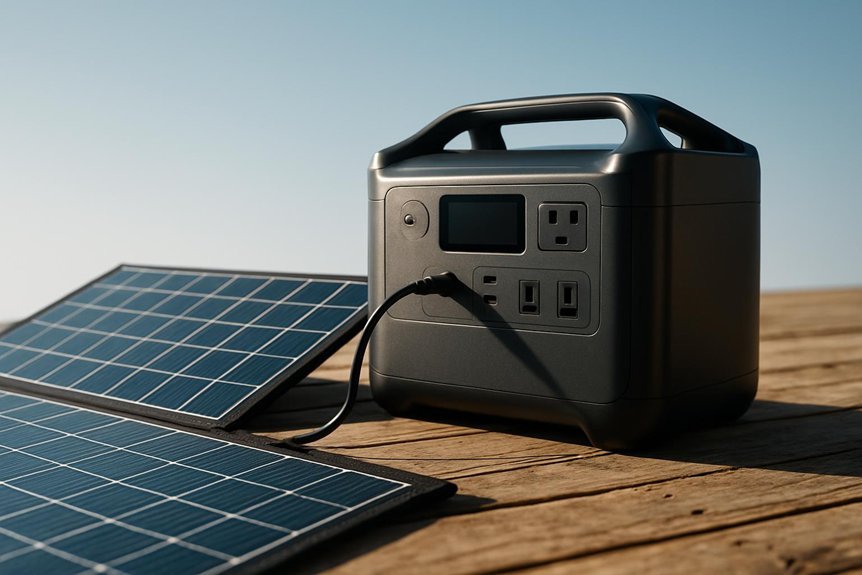
To ensure efficient charging, we must match your solar panel to the power station input by aligning voltage, current, and connector standards. We focus on two core checks: panel compatibility and connector pairing. When evaluating, verify that panel Vmp and Imp align with the station’s input range and tolerance. Confirm the input accepts the same polarity and connector style to prevent damage. We also consider current capability to avoid overheating or voltage drop under load. Precision ensures reliability across conditions, from shade to full sun.
- pairing connectors
- voltage and current matching
- connector compatibility
- safety and polarity checks
MPPT vs PWM Charging: Which Is Best for You?
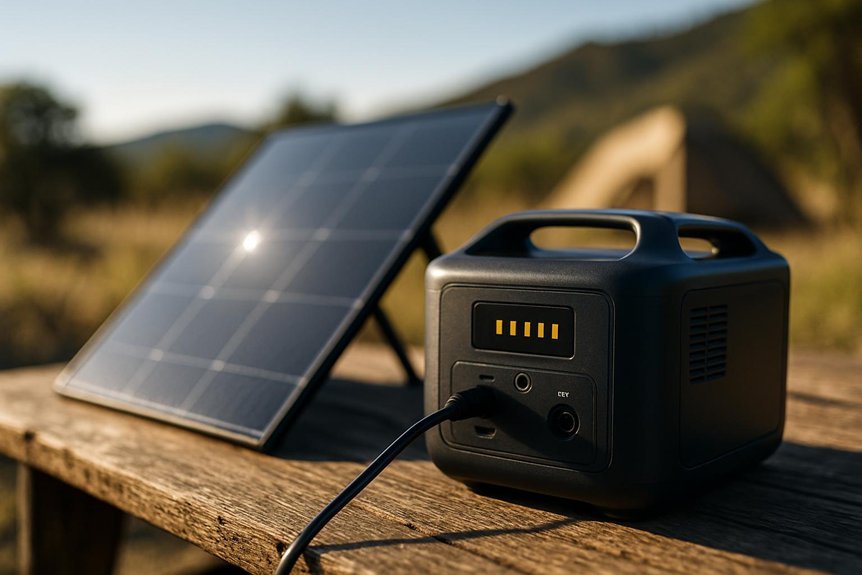
We compare MPPT and PWM charging to quantify efficiency gains, noting that MPPT can harvest more panel energy by matching voltages under varying conditions. We also weigh PWM’s simpler, lower-cost tradeoffs against potential flexibility limits, especially at higher panel voltages. Finally, we consider panel voltage compatibility to guarantee the chosen method aligns with your power station’s input range and overall system design.
MPPT Efficiency Gains
MPPT charging is generally more efficient than PWM because it continuously tracks the solar panel’s maximum power point and adjusts the DC-DC conversion to minimize losses. By activating real-time voltage and current optimization, MPPT reduces heat and improves energy capture, especially under high impedance or partial shading. This leads to higher usable energy for our portable power station and better performance over time, as solar chemistry dynamics influence conversion efficiency. We must also consider panel degradation, which MPPT can mitigate by maintaining closer to optimal operating points as characteristics drift. Below are key gains:
- Higher peak-power harvest in variable conditions
- Better performance with long cable runs and higher array voltages
- Reduced mismatch losses via dynamic tracking
- Improved resilience to aging and panel wear
PWM Charging Tradeoffs
Is MPPT truly worth it when PWM suffices for a portable power station? We assess PWM charging tradeoffs with a focus on efficiency, complexity, and lifecycle impact. PWM regulators clamp the panel voltage to match the battery, producing straightforward, low-cost implementations but at the expense of conditional conversions and heat when irradiance fluctuates. In stable, high-irradiance environments, PWM can deliver acceptable performance, yet it relinquishes optimal power capture under partial shading or evolving temperatures. MPPT maintains near-maximum power by continuously tracking the panel’s Vmp and adjusting to the battery’s voltage, reducing losses, especially in marginal conditions. We also consider solar degradation over time, which may alter nominal panel output and bias PWM gains. Panel routing decisions influence exposure and current paths, affecting practical efficiency and thermal behavior.
Panel Voltage Compatibility
Could voltage compatibility truly tip the scales between MPPT and PWM charging for a portable power station? We analyze how input voltage, panel impedance, and controller tolerance shape efficiency. MPPT excels when panel voltage significantly exceeds battery voltage, maximizing power transfer; PWM aligns with lower, near-battery voltages but sacrifices some efficiency. The key is solar compatibility: matching panel Vmp to controller input and battery chemistry to minimize loss. We also consider operational temperature, current limits, and cable losses. Panel connectors and connector quality impact real-world voltage, current, and safety margins. Mis-match risks include overvoltage, undercharging, or degraded performance. Designers must specify acceptable Vmp ranges and impedance for reliable charging.
- solar compatibility
- MPPT vs PWM efficiency trade-offs
- panel connectors and safety
- input voltage tolerance and thermal effects
What Determines Charging Speed in Real Life
Determining charging speed in real life comes down to how the power source, the battery, and the charger negotiate energy flow. We model this as a three‑way handshake: conversion efficiency, internal resistance, and maximum current ratings set the ceiling, while voltage matching and temperature limits prevent overshoot. The source determines available power; the battery dictates acceptability via State of Charge, chemistry, and health; the charger governs control loops, pacing current to avoid thermal runaway. Real-world results reflect cable losses, connector quality, and ambient conditions. Charging etiquette matters: connecting only compatible hardware and avoiding multi‑stage “tricks” that degrade longevity. Panel durability influences sustained output, especially under partial shade or heat. In practice, expect rolling throughput as components heat and chemistry shifts, not a fixed constant.
How to Maximize Solar Charging Efficiency
To maximize solar charging efficiency, we optimize the three interacting factors: panel output, charge controller dynamics, and battery acceptance. We approach each variable with data-driven rigor, aligning components for coherent flow and minimal losses.
To maximize solar charging efficiency, optimize panel output, controller dynamics, and battery acceptance through data-driven tuning and cohesive system flow.
- Panel placement and orientation to capture indoor sunlight efficiently
- Controller tuning that matches panel IV curves to battery charging stages
- Temperature management and voltage regulation to prevent derating
- Load-aware sequencing that prioritizes rapid initial acceptance without overshoot
We monitor performance metrics, adjust for compact windfalls from shading or partial sun, and track system response under realistic conditions. This disciplined method preserves efficiency across seasons, avoiding excess heat, resistance, and idle losses. Our goal is predictable, reproducible charging profiles that maximize usable energy from available light.
Troubleshooting Solar Charging: Quick Fixes
We’ll start with the essentials of solar charging, covering basics like proper connector types, voltage compatibility, and system grounding. If charging issues arise, we’ll systematically verify connections, confirm panel output, and inspect for shading or degradation that could limit current. We’ll also discuss battery and panel care practices to sustain performance and prevent recurring faults.
Solar Charging Basics
If your portable power station isn’t charging from solar as expected, start with a quick fault-check of the panel and connections: verify panel openness and light exposure, confirm the solar input port is clean and undamaged, and ensure the charge controller is configured for the correct voltage and current. We outline essential solar charging basics to minimize downtime and maximize solar storage efficiency, including rapid diagnostics and best-practice setup.
- Check panel tilt and orientation for optimal sun angle
- Inspect for debris, cracks, or shading that reduces output
- Verify cabling integrity and weatherproofing at connectors
- Confirm MPPT/PWM settings match the battery chemistry and input limits
Shade impact matters most; even brief obstructions can drastically drop performance.
Troubleshooting Connection Issues
Have you checked the basic connections yet? We approach connection issues with a methodical checklist to isolate faults efficiently. First, verify panel-to-charge controller cables are seated fully and oriented with correct polarity. Inspect for loose, frayed, or pinched wires that could introduce resistance or intermittent contact. Measure voltage at the controller input under load; deviations beyond spec indicate wiring or connector problems rather than panel output. Examine MC4 connectors for corrosion or contamination, and reseat seals to prevent moisture ingress. Ensure the charge controller is configured for the specific panel array, including correct wattage, impedance, and mode (boost or MPPT). We also consider solar etiquette: keep panels clean and stowed during non-operational periods, preserving panel aesthetics while maintaining performance. If issues persist, escalate to standard diagnostics.
Battery and Panel Care
Battery and Panel Care: quick maintenance checks help keep solar charging efficient and safe. We approach maintenance with a data-driven mindset, isolating risks and validating performance across components. Regular inspection targets connectors, cables, and surface debris that can increase resistance or reduce light transmission. We emphasize proper handling of charging cables to prevent heat buildup and microfractures, and we verify panel wiring against polarity and continuity. Panel cleaning should use non-abrasive methods and dry techniques to avoid moisture intrusion. We advocate documenting conditions for warranty care, preserving serials, and noting any anomalies. Immediate actions focus on secure mounting, connector tightness, and shading of panels during high-temperature cycles. – Inspect connectors and cables – Clean panels gently – Check charge indicators – Log performance metrics
Frequently Asked Questions
Can I Charge a Portable Power Station With a Car Charger?
Yes, we can charge a portable power station with a car charger, but efficiency considerations matter. We benchmark charging options, ensure compatible amperage, and monitor heat; our analysis prioritizes safety, output stability, and overall charging efficiency for reliable operation.
Do Solar Panels Need to Be a Certain Color to Charge?
“Yes, color doesn’t matter for charging.” We, however, examine color sensitivity and panel cooling, noting that most panels are near-black or blue, with efficiency unaffected by hue, though overheating risks require proper cooling and airflow for reliable charging.
Will Sun Angle Affect Charging at Night or Indoors?
The sun angle affects charging efficiency, especially outdoors; indoors, charging relies on built-in panels or adapters, so sunlight isn’t a factor. We’ll optimize angle for maximum current, monitor brief interruptions, and ensure proper ventilation during indoor charging.
Can I Daisy-Chain Multiple Panels for Faster Charging?
We can’t daisy chain panels for faster charging reliably; daisy chain feasibility depends on MPPT input limits, voltage, and combined wattage. We’ll confirm panel wattage requirements and ensure regulator compatibility before wiring multiple modules in parallel or series.
Are There Safety Risks Charging With Portable Solar Panels?
Yes, there are safety risks, we assess them carefully. We monitor safety labeling, avoid panel shade risks, and ensure proper wiring, grounding, and ventilation to prevent overheating, arcing, or overvoltage during portable solar charging procedures.
Conclusion
We can confidently recharge a portable power station with solar panels, as long as the panel specs align with the station’s input—voltage, current, and connectors—and MPPT or PWM charging is supported. By matching Vmp/Imp, accounting for real-world losses, and ensuring proper wiring and polarity, we optimize efficiency without compromising safety. In short,太阳能源 is a viable, scalable option when we respect input limits and temperature effects; think of it as a reliable, silent partner—steady as a heartbeat, precise as a clock.