Ad Blocker Detected
Our website is made possible by displaying online advertisements to our visitors. Please consider supporting us by disabling your ad blocker.
We want to clarify how long portable power stations last before needing replacement, focusing on real-world use. In practice, most units hold 2–5 years or roughly 300–1,500 full charge cycles, with performance determined by temperature, charge rates, and cycling patterns. We’ll compare remaining capacity to rating, monitor internal resistance, and track cycle counts relative to specs. If our runtimes stay within safe margins, we’ll weigh upgrade benefits; if power drops or fades quickly, replacement considerations follow.
Key Takeaways
- Battery lifespan depends on cycle count, depth of discharge, and temperature; hotter temps and deeper discharges shorten life.
- Portable power stations typically last several hundred to a few thousand full charge cycles before noticeable capacity drop.
- Internal resistance rise and remaining capacity relative to rated specs help indicate when replacement is needed.
- Moderate charging, steady operating temperatures, and avoiding sustained high SOC extend usable life and cycles.
- Replacement or upgrade should be considered when runtime targets are no longer met with safety margins.
How Long Does a Portable Power Station Full Charge Last?
How long a portable power station stays at full charge depends on both its battery size and how it’s used. We project performance by pairing capacity with expected load, then applying a conservative margin for aging efficiency. In practice, a compact unit with a small battery will hold a full state briefly if run at high power, while a larger pack sustains it longer under modest loads. We’re careful to note that a short battery experience occurs when discharge rates spike or temperatures rise, accelerating loss of voltage headroom. Our forecasts factor efficiency losses from internal components and round-trip cycling, yielding a realistic window for full-charge duration. This clarity lets readers plan, avoid idle drain, and anticipate end-of-charge timing with precision.
What Factors Shorten or Extend Battery Lifespan in Practice
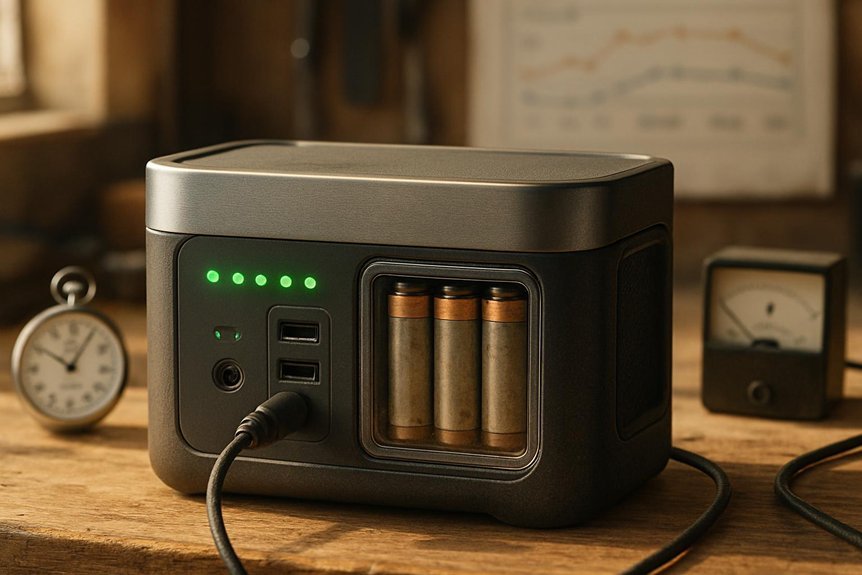
What factors shorten or extend battery lifespan in practice hinge on operating conditions, usage patterns, and environmental factors that influence degradation trajectories. We observe that ageing chemistry and thermal management largely determine lifecycle outcomes. In practice, high discharge rates accelerate wear, while moderate, controlled cycling mitigates it. Temperature is decisive: prolonged exposure to heat or cold degrades electrolyte stability and electrode interfaces, reducing capacity and efficiency. We document that partial charging, shallow cycles, and avoiding deep discharge extend usable life, whereas aggressive charging currents and sustained high state-of-charge strain cells. Materials quality, cell balancing, and protection circuitry influence longevity by reducing stress concentrations. Predictive models must incorporate real-world duty cycles, ambient conditions, and duty-cycle variability to forecast replacement timing with confidence. Our guidance emphasizes disciplined operating practices and robust thermal management to optimize longevity.
How to Check Battery Health and Predict Replacement Timing
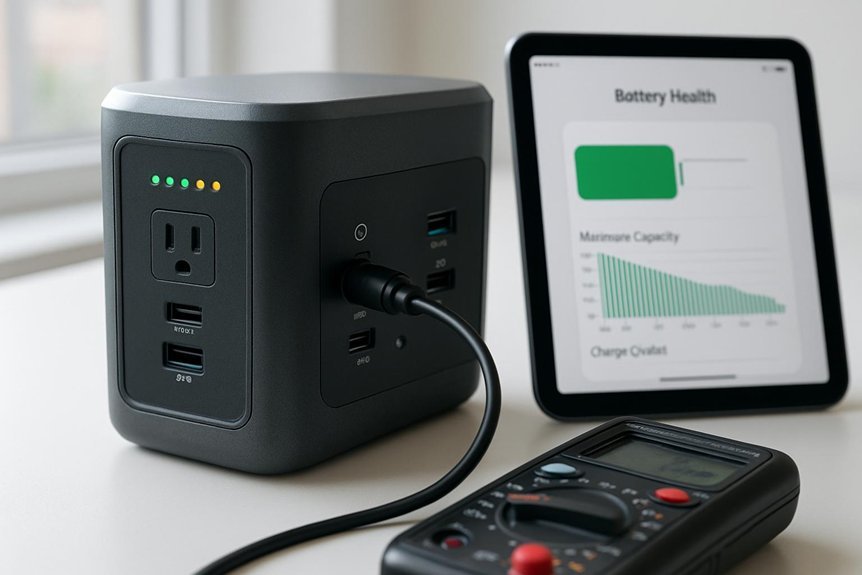
To assess battery health and forecast replacement timing, we start by establishing a baseline: measure capacity, internal resistance, and cycle count, then compare these metrics against the manufacturer’s specs and observed degradation trends. We establish a repeatable test protocol, record results, and monitor deviations over time. Key indicators include remaining capacity relative to rated, rising internal resistance, and shrinking usable energy per cycle. We track cycle count to infer calendar effects and temperature exposure, then map results to the device’s maintenance schedule. We interpret charging indicators and state-of-health estimates with caution, distinguishing short-term fluctuations from meaningful trends. Our approach emphasizes battery maintenance rigor, documenting thresholds that trigger replacement decisions and ensuring consistent decision criteria across devices and environments.
Practical Ways to Extend Battery Life and Maximize Cycles
From the groundwork on battery health, we now translate that insight into practical steps to extend runtime and maximize cycles. We outline targeted actions, metrics, and forecasting to keep you informed and prepared. Prioritize moderate temperatures, consistent charging, and avoiding deep discharges; these choices stabilize chemistry and extend life. Monitor cycle count and voltage window, adjusting usage patterns before degradation accelerates. Here’s a concise framework:
| Action | Rationale | Expected Impact |
|---|---|---|
| Optimize temperature | Reduces stress on cells | Longer cycles |
| Apply buffering | Prevents over-draw | Stable runtime |
| Schedule top-ups | Keeps SOC within band | Improved longevity |
| Calibrate periodically | Aligns indicators with reality | Accurate forecasts |
| Separate high/low drains | Minimize stress across cells | Higher efficiency |
Two word ideas, unrelated topics.
When to Replace vs. Upgrade Your Portable Power Station Batteries
When should you replace versus upgrade portable power station batteries hinges on measurable performance and projected lifespan, not on age alone. We assess current capacity, discharge rate, and cycle health to decide between replacement and a forward-looking upgrade. If a unit still meets our runtime targets with acceptable safety margins, upgrading components or adding newer cells may extend value without the upfront costs of a full swap. Conversely, rapid capacity fade, reduced peak power, or degraded safety indicators signal replacement is prudent. We weigh total cost of ownership, expected remaining life, and compatibility with newer chemistries. Safety concerns take priority; any signs of swelling, overheating, or venting require immediate action. We communicate decisions clearly, documenting metrics to ensure predictable performance and informed budgeting.
Frequently Asked Questions
Do Battery Warranties Cover Natural Wear and Tear?
Yes, battery warranties typically exclude natural wear; we’ve seen coverage limited to manufacturing defects, not gradual degradation. We advise reviewing terms carefully, as battery warranties often carve out natural wear, limiting or denying claims for routine use and aging.
How Does Temperature Affect Cycle Life Significantly?
We’ve seen temperature effects dramatically shorten life: higher temps accelerate cycling degradation, lower temps reduce efficiency, and extreme swings worsen wear; solar recharge impact and warranty exclusions matter, yet failure indicators warn us of imminent cell replacement viability.
Can You Replace Cells Without Professional Service?
We can replace cells, but we don’t recommend it; replaceable cells carry high DIY risk, and improper handling risks thermal runaway, fire, or damage. We proceed only with professional service to maintain safety, reliability, and calibrated performance forecasts.
Do Solar Recharging Cycles Impact Longevity Differently?
We believe solar recharging cycles do affect longevity, but impacts vary; we forecast that higher quality cells endure more cycles. We recommend recycling options and insist on manufacturing quality to maximize lifespan and informed maintenance.
Which Indicators Best Predict Imminent Battery Failure?
We see warning lights like weatherForecasts: battery health indicators are most telling; sudden drops in charging efficiency, rapid capacity loss, and shifting usage patterns predict failure, as we monitor degradation trends before performance suffers.
Conclusion
We’ll stay honest about what the numbers imply, reader: batteries age, but we’ll pace expectations with care. Think of longevity as a clock’s quiet cadence—steady, not dramatic—shaped by heat, charge rate, and how often we cycle. When capacity slips, or internal resistance climbs, it’s time to reassess. We’ll prioritize prudent use, check health indicators, and plan a thoughtful replacement or upgrade, ensuring continued reliability without overpromising on how long it lasts.