Ad Blocker Detected
Our website is made possible by displaying online advertisements to our visitors. Please consider supporting us by disabling your ad blocker.
We want to keep it simple and reliable, yet a storm of small details can still derail us if we rush. When we store a portable power station, we choose a cool, dry spot, elevate it, and keep cables organized so nothing leaks or rattles later. We’ll maintain a partial charge and check monthly, but what exactly should we do with vents, terminals, and accessories to ensure long-term readiness? Let’s map out a practical plan that covers both safety and convenience.
Key Takeaways
- Store in a cool, dry, well-ventilated area away from direct sunlight and heat sources, on shelves off the floor.
- Charge to a safe middle level (about 40–60%) for long-term storage and avoid full idle.
- Inspect and clean the unit, terminals, vents, and connectors; disconnect and label components for reassembly.
- Use a breathable cover; keep cables organized and stored separately with clear labeling.
- Monitor environment weekly and schedule periodic checks, charging as needed to maintain health and readiness.
Prepare Your Portable Power Station for Storage
When preparing your portable power station for storage, start by cleaning and inspecting it for any signs of wear, damage, or corrosion. We’ll methodically check terminals, connectors, casing, and cooling vents, noting any abnormalities. Next, we verify that batteries are at an optimal state of charge based on your manual, since improper levels can degrade performance. We adopt storage etiquette that prioritizes dry, cool environments away from extreme temperatures and moisture. We document the current charge, age, and last usage for future reference. If applicable, perform a light cycle or follow the recommended charging schedules to prevent deep discharge. Finally, secure cables, store accessories with the unit, and place it on a stable surface. This disciplined routine preserves reliability and readiness for your next deployment.
Choose the Best Storage Spot for Your Power Station
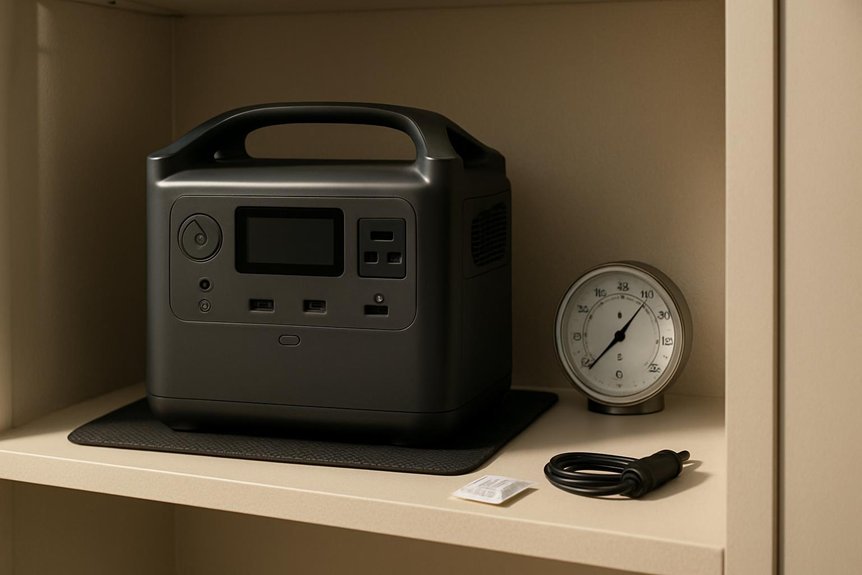
Where should you store your power station for maximum longevity and quick access? We’ll pick a smart storage location that minimizes risk and preserves performance. Choose a cool, dry spot away from direct sunlight, heat sources, and combustible materials. A climate-controlled area is ideal, but if that’s not available, aim for a consistently cool basement or a well-ventilated cabinet. Keep the unit off the floor to reduce moisture exposure and elevate it on a shelf or pallet. Use a breathable cover to deter dust while allowing airflow. Prioritize moisture control by avoiding damp basements or garages and addressing any leaks promptly. Maintain stable conditions, check periodically, and keep the area tidy to simplify retrieval and charging when needed.
Store at the Right Charge Level: Full vs Partial
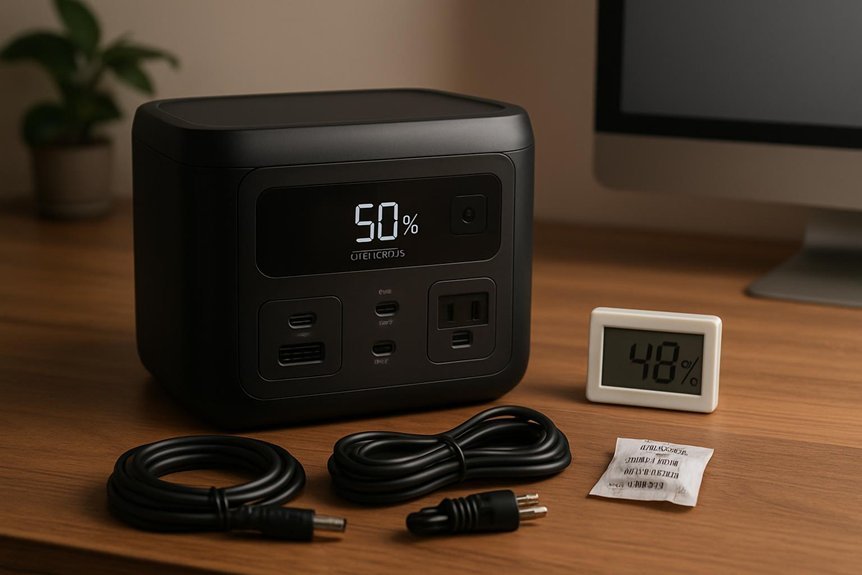
Storing a portable power station at the right charge level is essential for longevity and readiness. We’ll team up to weigh full charge versus partial charge, so you know what to pick for storage. A full charge is convenient for immediate use, but it may stress cells if left long-term. A partial charge reduces aging risk and helps sustain capacity, though it requires timing to re‑top up. Below, we highlight the idea with a compact reference:
| Scenario | Recommended State | Practical Note |
|---|---|---|
| Long-term idle | Partial charge | Check monthly and top up as needed |
| Short gaps | Full charge | Ensure safe transport and readiness |
| Shelf life aim | Partial charge | Maintain around 40–60% for best health |
| Temperature independent | Partial charge | Reduces swelling risk |
| Frequent use | Full charge | Ready for rapid deployment |
Control Temperature and Humidity for Safe Storage
We should keep a portable power station within a safe temperature and humidity range to preserve battery health. We’ll share practical guidelines on Temperature Range, Humidity Control Methods, and Safe Storage Practices to help you maintain performance. By following clear steps, you can minimize degradation and ensure reliable operation when you’re ready to use it again.
Temperature Range Guidelines
Temperature and humidity control is essential for safe storage of a portable power station. We outline temperature range guidelines to preserve performance and extend life. Maintain a storage temperature between ambient room levels, typically about 5°C to 25°C (40°F to 77°F), unless the manufacturer specifies otherwise. Avoid extreme heat or freezing, which can degrade cells and reduce capacity. We emphasize stable conditions, not frequent cycling, to defend chemical stability inside the pack. Check for guidance on safe minimum and maximum limits and respect any regional climate considerations. If you must store outdoors or in a garage, use insulation or a shaded, dry enclosure and monitor for temperature spikes. Remember that consistent storage temperature supports chemical stability and overall safety.
Humidity Control Methods
Humidity poses a real risk to portable power stations, so we manage moisture proactively. We begin with controlled storage environments and monitor humidity levels regularly to avoid condensation inside casings. Our approach combines dehumidification, ventilation, and proper insulation to reduce moisture ingress and build-up. We favor low-humidity settings around 30–50% where feasible, adjusting for climate and device tolerance. Temperature stability supports humidity control, so we avoid rapid swings that stress seals. We seal gaps, use desiccants in storage bins, and choose breathable yet moisture-resistant coverings. Regular checks help us catch corrosion or swelling early, preserving circuitry and battery integrity. This focus on humidity management enhances long term viability and minimizes performance degradation over extended storage periods.
Safe Storage Practices
Safe storage hinges on keeping both temperature and humidity stable to protect the battery and circuitry. We guide you to store in a cool, dry place, away from direct sun, extreme heat, or freezing conditions. Maintain a moderate environment, ideally around 20 to 25°C with humidity between 40 and 60 percent. Use a stable surface, and keep vents unobstructed to prevent heat buildup. Avoid rapid temperature changes during transport or long idle periods. Regularly inspect the unit for swelling, corrosion, or loose connectors, and test the battery cycle occasionally to confirm functionality. Address storage myths, such as overnight extremes, by following a consistent climate. Conduct durability testing in short, controlled intervals to verify long‑term reliability and readiness for use. We’ll help you implement these safeguards.
Safe Handling and Safety Practices During Storage
We’ll cover safe handling and safety practices during storage, including safe chlorination and storage, battery isolation, and proper temperature and ventilation. We’ll outline steps to keep the unit secure, isolate the battery when not in use, and ensure airflow and ambient conditions meet the device’s specs. If you follow these practices, you’ll reduce risk and keep the power station ready for use.
Safe Chlorination And Storage
How should you handle and store a portable power station to minimize risk and preserve its life? We approach storage with safe chlorination in mind, though we’ll keep details focused on high-level safety and cleanliness. First, ensure the unit is cool, dry, and unplugged before any checks. If you’re treating containers or caps, follow manufacturer guidance and avoid introducing moisture or corrosive cleaners. Use only approved disinfectants for external surfaces, and wipe away residues to prevent corrosion. Store in a ventilated area, away from flammable liquids, extreme heat, or direct sunlight. Label storage dates and perform periodic inspections for leaks, corrosion, or damaged seals. Maintain clear access and avoid stacking heavy items on top. This approach aligns with storage safety and minimizes contamination risks.
Battery Isolation And Isolation
Should you isolate the battery during storage to prevent leaks or thermal drift, the answer is yes: we recommend deliberate battery isolation as a core safety practice. We’ll outline practical steps and keep you covered with clear, actionable guidance. Battery isolation reduces risk of corrosion, short circuits, and thermal runaway. Isolation strategies include disconnecting packs, removing leads, and storing cells separately in nonconductive trays. Follow manufacturer specs for voltage and state of charge before isolation. Inspect seals, terminals, and enclosures to ensure integrity. During storage, label each component and maintain a dry, cool environment. Table below visualizes quick actions.
| Step | Action | Rationale |
|---|---|---|
| 1 | Disconnect | Prevents unintended contact |
| 2 | Insulate | Reduces moisture risk |
| 3 | Label | Aids reassembly |
| 4 | Check | Ensures safety |
| 5 | Store | Maintains integrity |
Temperature And Ventilation Rules
Maintaining proper temperature and ventilation is a key follow-up to isolating the battery during storage. We’ll keep a close eye on the environmental conditions to protect performance and safety. Our guidelines focus on steady, moderate temperatures and adequate airflow to prevent hot spots and moisture buildup.
- Store design: Choose a cool, dry location with minimal temperature swings and stable shelving that promotes air circulation.
- Ventilation needs: Ensure cross-ventilation or a dedicated vented cabinet; avoid sealed rooms when possible.
- Monitoring practices: Use a simple thermometer and hygrometer, check weekly, and adjust placement if the readings drift.
Organize and Stow Accessories and Cables
Do we keep cords, adapters, and small components in a single, labeled pouch? Yes—we group accessories by type and function, then store them together for quick access. We use dedicated bins or sleeves for cables, chargers, and connectors, minimizing tangling. For each item, we note its purpose and compatible devices, so replacements aren’t misfiled. Our approach to storage organization emphasizes consistency: same pouch sizes, same labeling format, and a predictable placement routine. When packing the unit away, we coil cords loosely, securing them with velcro ties to avoid kinks. We route cables neatly in their designated compartments, avoiding overlaps that cause wear. Regular checks prevent corrosion or degradation, ensuring reliable cable management and ready readiness for next use.
Long-Term Storage Maintenance and Revival
When we store a portable power station long-term, we start with a simple, proactive routine: inspect, clean, and prep the unit for extended inactivity. We focus on longevity, not guesswork, so our steps are deliberate and safe.
- Inspect for signs of wear, corrosion, or damage, then address immediately.
- Clean coils, vents, and connectors, ensuring unobstructed airflow and storage safety.
- Prep the battery: charge to a safe middle voltage if recommended by the manufacturer, power down, and store in a cool, dry place away from extreme temps.
We also plan for revival: track the next check, follow battery disposal guidelines when needed, and avoid exposing the unit to moisture. This keeps performance reliable even after long rests.
Frequently Asked Questions
How Long Can a Portable Power Station Sit Unused Safely?
We can say a portable power station can stay unused for several months if stored properly. We’re careful with a partial charge, cool, dry area, and periodic checks; portable power station stay unused safely with regular inspections and maintenance.
Can I Store It in a Garage or Outdoor Shed?
Storing it in a garage or outdoor shed can work, provided you maintain proper storing conditions and temperature control. We’ll monitor for humidity, avoid extreme heat, and use a ventilated, dry space to keep the power station safe.
Should I Disconnect the Battery Before Long-Term Storage?
Yes, we should disable battery before long-term storage. Fun stat: most users extend life by 20% when moisture control is maintained. We’ll guide you, prioritizing disabling battery, moisture control, and safe, low-temperature storage.
Will Storage Affect Warranty or Performance Guarantees?
Storage can affect your storage warranty and performance guarantees; we’ll keep you covered. We’ll store properly, follow guidelines, and document conditions to protect both the warranty and performance guarantees while you rest assured with full transparency.
How Often Should I Check It During Storage?
We read that 30% of portable power failures occur from improper storage. We check it quarterly during storage, and we remind you: prioritize Battery safety. Two word discussion ideas help us stay proactive, clear, precise, and responsible.
Conclusion
We store our portable power station in a cool, dry spot, elevated and lightly covered, with cables neatly labeled. We’ll keep a partial charge around 40–60%, check monthly, and top up as needed. We organize accessories separately, inspect vents and terminals for wear, and store components with clear labels for reassembly. We avoid heat and humidity, maintain good airflow, and follow safety practices. In short, plan, protect, and monitor—our trusty tech stays ready, even during a holodeck-style blackout.