Ad Blocker Detected
Our website is made possible by displaying online advertisements to our visitors. Please consider supporting us by disabling your ad blocker.
When selecting a portable power station for camping, we recognize that the choice between lightweight and heavy-duty models hinges on specific technical needs and usage scenarios. Each offers distinct advantages and limitations in design, capacity, and operational flexibility. Understanding these differences is essential for optimizing performance and ensuring reliable power supply during outdoor adventures. As we explore these options, it becomes evident that a nuanced approach can greatly impact overall efficiency and convenience.
Key Takeaways
- Lightweight stations are portable and ideal for short trips, while heavy units support extended outdoor activities with higher power needs.
- Heavy power stations offer greater capacity and durability, suitable for powering multiple devices over longer durations.
- Lightweight models typically use lithium-ion batteries, emphasizing portability and quick recharging; heavy stations often employ lead-acid or LiFePO4 for durability.
- For frequent or multi-day camping, heavy-duty stations provide reliable, sustained power; lightweight units excel for quick, short-term use.
- The choice depends on trip length, device power demands, and whether portability or endurance is the primary priority.
How Do Lightweight and Heavy Power Stations Differ in Design and Size?
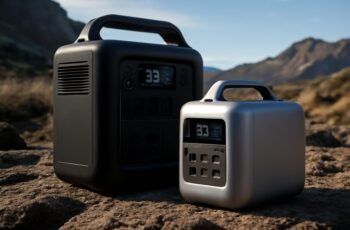
Although both lightweight and heavy power stations serve the same fundamental purpose—providing portable energy—they differ markedly in their design and size parameters. Lightweight units typically feature compact form factors optimized for portability, utilizing battery chemistries such as lithium-ion or lithium-polymer, which offer high energy density and fast charging methods. Heavy power stations, by contrast, incorporate larger batteries with diverse chemistries like lead-acid or advanced lithium variants, resulting in increased size and weight but enhanced capacity. Their design emphasizes durability and modularity to support various charging methods, including AC wall outlets, solar input, and DC inputs. These differences influence not only physical dimensions but also operational flexibility, determining suitability for different camping scenarios based on energy needs and transportation constraints.
What Are the Key Benefits of Lightweight Portable Power Stations?
Lightweight portable power stations offer significant advantages for camping enthusiasts who prioritize mobility and ease of use. Their reduced weight enhances portability, enabling seamless transportation across varied terrains. These units often feature optimized solar efficiency, allowing rapid recharging via solar panels, which is essential for extended outdoor use without access to grid power. Additionally, their design typically emphasizes battery lifespan, ensuring long-term reliability with minimal degradation over cycles. This longevity translates into sustained performance and reduced replacement costs, making them a cost-effective choice for frequent campers. Precise engineering balances size, weight, and energy capacity, maximizing operational efficiency. Overall, lightweight stations deliver a practical, efficient power solution that aligns with the demands of modern outdoor adventures, emphasizing portability, renewable energy compatibility, and durability.
Why Choose a Heavy-Duty Power Station for Camping?
Heavy-duty power stations offer considerably higher power capacity, supporting multiple devices simultaneously without interruption. Their enhanced durability and longer lifespan guarantee reliable operation in rugged outdoor environments. Additionally, their proven off-grid performance maintains consistent power supply despite challenging conditions.
Enhanced Power Capacity
Choosing a heavy-duty power station for camping considerably enhances overall power capacity, ensuring that multiple devices and high-demand appliances can operate simultaneously without interruption. Advanced battery technology, such as lithium-ion or lithium-polymer cells, provides higher energy density and efficient power output. These units typically support diverse charging methods—solar, AC wall outlets, or vehicle adapters—allowing flexible recharging options. To illustrate, consider the following comparison:
| Feature | Heavy-Duty Power Station |
|---|---|
| Battery Technology | Lithium-ion for high energy density |
| Charging Methods | Solar, AC, vehicle adapters |
| Power Output | 300W to 2000W |
| Capacity | 500Wh to 2000Wh |
| Device Compatibility | High-demand appliances & multiple devices |
This combination of superior battery tech and versatile charging methods maximizes power capacity for demanding camping needs.
Greater Durability and Longevity
Enhanced power capacity alone isn’t sufficient if the power station cannot withstand the rigors of outdoor use. Heavy-duty units typically feature robust construction and advanced battery chemistry, such as lithium iron phosphate (LiFePO4), which offers higher thermal stability and longer cycle life. This enhances durability and prolongs overall longevity, even under frequent or demanding use. Additionally, resilient charging methods—such as multiple input options, fast charging, and temperature management—support sustained performance in remote environments. These power stations are engineered to resist physical shocks, vibrations, and environmental stressors, ensuring consistent operation over time. By prioritizing durable materials and sophisticated battery chemistry, heavy-duty portable stations deliver reliable, long-term performance essential for extended camping trips.
Reliable Off-Grid Performance
When venturing into remote areas where grid power is unavailable, reliable off-grid performance becomes crucial for maintaining connectivity and powering essential devices. Heavy-duty power stations excel in this area due to advanced battery technology, which provides sustained output and rapid recharge cycles, ensuring consistent energy supply. Their superior solar compatibility allows for efficient recharging via solar panels, critical during extended stays. These systems often feature robust inverter capacity, supporting high-wattage appliances without performance drops. The combination of durable battery technology and flexible solar input ensures dependable operation regardless of weather or duration. This reliability makes heavy-duty power stations ideal for off-grid camping, where uninterrupted power is indispensable for safety, communication, and comfort.
How to Decide Between Lightweight and Heavy Power Stations Based on Your Needs?
When selecting a portable power station, we must evaluate weight and portability against the power capacity required for our camping activities. Additionally, considering the expected duration and frequency of use helps determine whether a lightweight model suffices or a heavier unit with greater capacity is necessary. Balancing these factors ensures a suitable choice aligned with our specific energy demands and mobility constraints.
Weight and Portability
Selecting the appropriate portable power station hinges considerably on weighing its weight against your specific needs, as the balance directly impacts usability and convenience. Heavier units typically feature advanced battery chemistry, offering higher capacity and durability, but compromise portability. Conversely, lightweight stations prioritize portability, often employing simplified battery chemistries that may limit charging speed and overall longevity.
To evaluate your needs:
- Assess whether rapid charging speed is essential for your setup, favoring heavier models with larger batteries.
- Consider the frequency and duration of your camping trips; frequent travelers benefit from lightweight stations.
- Balance weight with battery chemistry to guarantee durability without sacrificing portability, especially if extended use is anticipated.
Power Capacity Needs
How do you determine the appropriate power capacity for your camping needs? Evaluating your required wattage load is essential. Consider the devices you plan to power—laptops, lights, or small appliances—and sum their wattages. Battery technology influences capacity; advanced lithium-ion batteries offer higher energy density and longer life, supporting larger loads in heavy stations. Charging methods also impact suitability: solar charging is crucial for extended trips, while AC/DC options favor shorter stays. Lightweight stations typically provide lower capacity, suitable for minimal devices, whereas heavy stations accommodate higher demands with larger batteries. By analyzing your device wattages and preferred charging methods, you can select a power station that balances capacity with portability, ensuring reliable power without unnecessary weight.
Usage Duration and Frequency
Evaluating the duration and frequency of your camping trips is critical in choosing between lightweight and heavy power stations. Longer trips demand higher capacity, often benefiting from advanced battery technology that supports extended usage. Frequent trips, especially those emphasizing renewable energy sources, require stations with efficient energy management and recharging capabilities.
Consider these factors:
- For multi-day excursions, prioritize heavy stations with larger capacity and advanced battery technology to ensure reliable power throughout.
- For short or infrequent trips, a lightweight station with sufficient capacity may suffice, especially if quick recharging via renewable energy is feasible.
- The station’s ability to incorporate renewable energy sources impacts usage duration, as solar or wind options extend operational time without frequent recharges.
Deciding hinges on trip length, frequency, and the importance of renewable energy integration.
Which Features Matter Most When Selecting a Portable Power Station?
When choosing a portable power station for camping, understanding which features directly impact performance and usability is essential. Key factors include battery chemistry, which influences longevity and safety, and charging options, determining versatility in various environments. High-quality lithium-ion batteries offer efficient energy density, while newer lithium-polymer variants provide safety advantages. Charging options vary from AC outlets, solar inputs, to car adapters, affecting recharge flexibility. To illustrate, consider the following:
| Feature | Impact | Consideration |
|---|---|---|
| Battery Chemistry | Affects cycle life and safety | Lithium-ion or lithium-polymer |
| Charging Options | Determines recharge flexibility | Solar, AC, DC |
| Port Selection | Affects device compatibility | USB, AC outlets, car port |
Selecting the right combination guarantees ideal camping performance.
Can You Combine Both Types for a Versatile Camping Setup?
Combining different types of portable power stations can considerably enhance a camping setup’s versatility by leveraging their unique strengths. Integrating lightweight units with heavy-duty models allows for optimized energy management, especially when considering solar compatibility and advanced battery technology. This approach provides reliable power for essential devices while maintaining portability.
Enhance camping versatility by combining lightweight and heavy-duty power stations for reliable, portable energy management.
- Maximize Energy Flexibility: Use lightweight stations for quick, short-term needs, and heavy-duty units for extended power supply, guaranteeing seamless energy transition.
- Enhance Solar Charging: Pair solar-compatible models to supplement battery technology efficiency, reducing reliance on grid sources and prolonging usage.
- Optimize System Redundancy: Combining different capacities mitigates failure risks, offering a resilient setup adaptable to varying power demands.
This strategic integration ensures a versatile, efficient, and resilient camping power system.
Frequently Asked Questions
What Is the Typical Battery Capacity Difference Between Lightweight and Heavy Power Stations?
Typically, lightweight power stations have battery capacities around 150-300Wh, while heavy ones range from 500Wh to over 2000Wh. This affects battery lifespan and charging cycles, with larger capacities generally offering longer lifespan and more cycles.
How Long Do Lightweight Versus Heavy Power Stations Typically Last on a Single Charge?
On a single charge, lightweight stations last around 6-8 hours, while heavy ones may stretch to 12-24 hours, depending on usage; battery recycling and solar compatibility considerably influence their longevity and environmental impact in outdoor scenarios.
Are There Specific Safety Concerns Unique to Lightweight or Heavy Portable Power Stations?
We find battery safety vital, especially with lightweight stations, which may have more delicate batteries risking thermal issues. Heavy units pose portability concerns, but both require proper handling, ventilation, and adherence to manufacturer guidelines to prevent safety hazards.
Can Lightweight Power Stations Handle High-Power Appliances Effectively?
In our experience, lightweight power stations with solar compatibility can handle high-power appliances like mini-fridges, but their lower weight compared to heavy models limits sustained high-power output, making them less ideal for prolonged use.
What Are the Maintenance Requirements for Each Type of Power Station?
We maintain power stations through regular battery recycling and monitoring charging cycles to prevent degradation. Heavy units may require more frequent checks, while lightweight models benefit from careful storage, ensuring ideal performance and longevity for both types.
Conclusion
Ultimately, choosing between lightweight and heavy-duty power stations is like selecting the right tool for a specific job—precision matters. By analyzing your power needs, portability preferences, and device demands, you can craft a tailored solution. Combining both types can create a versatile, resilient camping setup, much like a well-stocked toolkit for all situations. Making an informed decision guarantees your outdoor power needs are met efficiently, providing reliability when it matters most.