Ad Blocker Detected
Our website is made possible by displaying online advertisements to our visitors. Please consider supporting us by disabling your ad blocker.
Imagine a remote construction site relying on either a portable power station or a deep cycle battery system to keep equipment running smoothly. Both options offer distinct advantages and limitations, but choosing the right setup depends on specific operational needs and constraints. As we analyze their technical differences, you’ll see how factors like capacity, portability, and maintenance influence long-term efficiency and cost-effectiveness, prompting a closer look at which solution aligns best with various applications.
Key Takeaways
- Portable power stations offer integrated, user-friendly AC/DC output with multiple charging options, while deep cycle batteries require external systems and maintenance.
- Deep cycle batteries provide longer lifespan and cost-efficiency for long-term storage, unlike portable stations designed for quick deployment.
- Power stations deliver immediate, stable power with built-in safety features; deep cycle batteries depend on external management for safety and performance.
- Portable stations are lightweight, compact, and suitable for on-the-go use; deep cycle batteries are bulkier, better for stationary, off-grid applications.
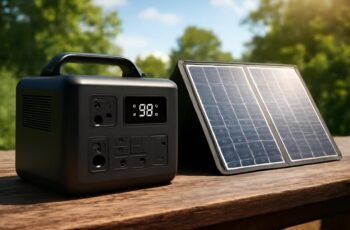
- Solar integration is typically built-in for stations, whereas deep cycle batteries need additional equipment for solar charging setup.
What Are Portable Power Stations and Deep Cycle Batteries?
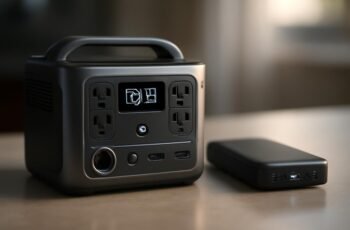
Although both portable power stations and deep cycle batteries serve as energy storage solutions, they differ markedly in design and functionality. Portable power stations integrate batteries with inverters, allowing versatile AC and DC output, and typically feature multiple charging methods, including AC adapters, solar panels, and vehicle chargers. Deep cycle batteries, on the other hand, are designed for sustained energy release through slow, deep discharges, often used in renewable energy setups. Storage safety is essential for both; portable power stations incorporate built-in safety mechanisms against overcharge, overheating, and short circuits, while deep cycle batteries require careful handling to prevent leakage or thermal runaway. Their distinct charging methods and safety considerations reflect their specialized applications in portable power and long-term energy storage.
How Do Portable Power Stations Work and What Are Their Benefits?
Portable power stations store electrical energy in integrated batteries and convert it into usable power through built-in inverters, enabling reliable energy delivery. Their design prioritizes ease of use, with straightforward operation and multiple output options to support various devices. This combination of efficient storage and user-friendly features makes them versatile solutions for portable power needs.
Power Storage and Delivery
Portable power stations operate by storing electrical energy in integrated batteries and delivering it through built-in outlets, making them versatile sources of portable electricity. The core of their power storage relies on specific battery chemistry, such as lithium-ion or lithium-polymer, which determine energy density, lifespan, and safety. These chemistry types influence charging methods; for example, lithium-based batteries typically require controlled, multi-stage charging to optimize longevity and performance. The delivery of power is efficiently managed through inverter systems, converting stored DC into usable AC power. By combining advanced battery chemistry with optimized charging methods, portable power stations provide reliable, immediate access to electricity in diverse environments, ensuring quick response times and consistent supply, which are essential for both emergency and recreational applications.
Ease of Use
Understanding how portable power stations operate reveals their user-friendly design and practical benefits. They typically feature straightforward charging methods, such as AC outlets, USB ports, or even solar input, making recharging adaptable to various situations. These stations are engineered with built-in safety measures that guarantee storage safety, preventing overcharging, overheating, or short circuits. Their intuitive interfaces allow users to monitor power levels and manage outputs easily, minimizing operational complexity. Compared to deep cycle batteries, portable power stations eliminate the need for complex wiring or dedicated maintenance routines, reducing setup time and potential errors. Overall, their design prioritizes ease of use, enabling quick deployment and reliable power management in diverse environments without specialized technical knowledge.
What Is a Deep Cycle Battery Setup and When Is It Ideal?
| Feature | Benefit |
|---|---|
| Discharge Rate | Supports prolonged, steady power output |
| Charging Methods | Guarantees longevity and ideal performance |
| Capacity | Suitable for heavy, continuous use |
| Lifespan | Higher with correct maintenance and use |
| Application | Best for off-grid, renewable energy setups |
Comparing Cost, Portability, and Ease of Use Between the Two Options
When comparing portable power stations and deep cycle battery setups, analyzing cost efficiency reveals differences in initial investment and long-term maintenance. Portability and usability are critical factors that influence practicality, especially in varied environments. We’ll examine how each option balances these aspects to inform ideal decision-making.
Cost Efficiency Comparison
A thorough cost efficiency comparison reveals that portable power stations generally require a higher upfront investment but offer greater convenience and user-friendliness, while deep cycle batteries tend to be more economical over time with lower initial costs. When evaluating cost, factors like battery chemistry influence durability and lifespan, impacting long-term expenses. Charging methods also affect operational costs; portable units often feature rapid, integrated chargers, reducing downtime, whereas deep cycle batteries depend on external chargers and maintenance.
Key considerations include:
- Initial purchase price—power stations are more expensive.
- Long-term costs—deep cycle batteries typically cost less overall.
- Maintenance expenses—batteries require periodic care.
- Efficiency of charging methods—impacting operational costs over time.
Portability and Usability
While both portable power stations and deep cycle batteries serve as reliable energy sources, their practicality largely depends on portability and ease of use. Power stations excel in indoor use and solar compatibility, offering plug-and-play convenience with integrated outlets and displays. Deep cycle batteries, while more cost-effective, require additional equipment for charging and distribution, reducing their immediate usability. The table below compares key aspects:
| Feature | Portable Power Station | Deep Cycle Battery Setup |
|---|---|---|
| Portability | Compact, lightweight, ideal for on-the-go | Bulkier, less convenient for portability |
| Ease of Use | User-friendly, ready for immediate deployment | Requires setup, external charger, and management |
| Solar Compatibility | Direct, integrated options | Needs external solar charge controllers |
This analysis highlights that power stations prioritize ease for indoor and solar use, while batteries favor cost and flexibility with added complexity.
Evaluating Power Capacity and Run Time for Different Needs
Evaluating power capacity and run time requires a clear understanding of the specific energy demands of different applications. Key factors include battery chemistry, which influences capacity, lifespan, and charge/discharge cycles, and power efficiency, determining how effectively stored energy is used.
Consider these points:
- Application Load – Higher wattage devices reduce runtime, especially with batteries relying on less efficient chemistries.
- Battery Chemistry – Lithium-ion offers better power efficiency and longer cycle life compared to lead-acid, affecting overall capacity.
- Energy Storage – Larger capacity batteries provide extended run times but may compromise portability.
- Power Management – Efficient power conversion minimizes losses, essential for maximizing runtime across both setups.
Understanding these factors helps tailor power solutions to specific needs, balancing capacity and efficiency.
Which Setup Is Better for Emergency Backup and Remote Work?
Choosing the ideal power setup for emergency backup and remote work depends on evaluating factors such as reliability, portability, and power stability. Portable power stations generally provide integrated solar options, enabling renewable energy input and reducing reliance on grid power. Deep cycle batteries excel in longevity and consistent power delivery but often lack direct solar integration unless paired with additional systems.
| Feature | Portable Power Station | Deep Cycle Battery Setup |
|---|---|---|
| Solar Integration | Built-in support | Requires external gear |
| Battery Lifespan | Moderate | Longer, depending on use |
| Power Stability | High, with regulation | Consistent, stable |
While portable stations offer convenience and solar adaptability, deep cycle batteries excel in long-term sustainability, especially when considering battery lifespan.
Considerations for Installation, Maintenance, and Longevity
Installing and maintaining power backup systems require careful planning to guarantee reliability and safety over time. Proper setup ensures efficient operation and extends system lifespan, especially when considering environmental factors like battery recycling and integration with renewable energy sources.
Effective planning and maintenance ensure reliable, safe, and long-lasting power backup systems.
Key considerations include:
- Proper Ventilation — essential for deep cycle batteries to prevent overheating and degradation.
- Regular Maintenance — including capacity checks and cleaning to ensure longevity.
- Safe Handling and Disposal — adhere to battery recycling protocols to minimize environmental impact.
- System Monitoring — using smart technology to track performance and identify issues early, especially important for renewable energy integration and prolonged system durability.
These practices help optimize performance, promote sustainability, and maximize the lifespan of your power backup system.
How to Choose the Right Power Solution for Your Outdoor Adventures
Ever wondered how to select the most reliable power solution for your outdoor adventures? Choosing between a portable power station and a deep cycle battery depends on factors like energy capacity, recharge options, and system integration. Consider solar compatibility, which allows renewable energy input and extends operational independence. Additionally, assess the sustainability aspect through battery recycling options, ensuring environmentally responsible disposal or reuse. A portable power station often offers integrated solar charging and user-friendly interfaces, ideal for quick deployment. In contrast, deep cycle batteries provide cost-effective, long-term energy storage but require careful handling and system compatibility. Analyzing these elements helps determine the best fit for your power needs, balancing performance, environmental impact, and future scalability.
Pros and Cons Summary: Portable Power Station Vs Deep Cycle Battery
While both portable power stations and deep cycle batteries serve to supply electrical energy in outdoor or off-grid scenarios, each option presents distinct advantages and limitations. Portable power stations typically feature integrated inverters, multiple charging methods, and diverse battery chemistries, enabling plug-and-play convenience. Deep cycle batteries rely on specific chemistries like AGM or lithium-ion, requiring dedicated charging methods that influence lifespan and performance.
Pros and Cons:
- Portability and ease of use favor power stations, but they often have limited capacity.
- Deep cycle batteries offer higher storage capacity but demand careful maintenance and appropriate charging methods.
- Power stations excel in quick recharging, whereas batteries generally need more time and stable conditions.
- Battery chemistry impacts longevity and safety, influencing long-term cost-effectiveness.
Frequently Asked Questions
Which Option Has a Longer Lifespan Under Regular Use?
We find deep cycle batteries generally last longer with proper battery maintenance, as their design supports frequent cycling. Portable power stations, however, typically have limited power storage capacity and shorter lifespans due to battery chemistry and usage patterns.
Are Portable Power Stations More Environmentally Friendly Than Deep Cycle Batteries?
We believe portable power stations are generally more environmentally friendly due to better energy efficiency and easier battery recycling processes, reducing overall waste. Deep cycle batteries, however, often involve more hazardous materials, impacting their eco-friendliness.
How Do Weather Conditions Affect the Performance of Each Setup?
Weather conditions considerably impact both setups; extreme cold reduces deep cycle battery storage capacity and efficiency, while high humidity and heat challenge portable power stations’ climate resilience, ultimately affecting their performance and reliability in varying environmental conditions.
Can Both Setups Be Integrated With Renewable Energy Sources?
Approximately 85% of renewable energy systems involve solar integration; both setups can be adapted, but deep cycle batteries generally require less maintenance, making them more suitable for consistent renewable energy storage and efficient system performance.
What Safety Precautions Should Be Considered for Each System?
We prioritize fire safety and handling precautions for both systems by ensuring proper ventilation, avoiding overcharging, using appropriate disconnects, and following manufacturer guidelines. Regular inspections and protective gear further mitigate risks, ensuring safe operation and maintenance.
Conclusion
In the end, choosing between a portable power station and a deep cycle battery boils down to our specific needs—whether we crave instant, user-friendly power or are willing to wrestle with external systems for long-term sustainability. While one offers unparalleled convenience, the other demands technical finesse. So, as we weigh cost, portability, and capacity, remember: the right choice isn’t just about power but about how much patience we’re willing to invest in our energy solution.