Ad Blocker Detected
Our website is made possible by displaying online advertisements to our visitors. Please consider supporting us by disabling your ad blocker.
We understand both portable power stations and generators offer backup power, but they differ in how they store or produce it. Power stations rely on rechargeable batteries with smart management for quiet, clean use, while generators burn fuel for higher continuous output and longer runtimes but with noise and emissions. If you’re choosing, consider your essential devices, space, and tolerance for maintenance. The next step clarifies which setup fits your typical outages and demands.
Key Takeaways
- Portable power stations are battery-based, quiet, fuel-free, and ideal for sensitive electronics and short-term outages; generators offer higher continuous wattage and endurance for longer runs.
- Power stations rely on lithium-based cells with management systems to control temperature, charge, and load, while generators use internal combustion engines and fuel.
- Recharging: stations can be charged via AC, solar, or car with emphasis on speed and resilience; generators require fuel and produce continuous runtime with refueling.
- Noise and emissions: stations are quieter and cleaner; generators emit more exhaust and require ventilation and regular maintenance.
- Selection focus: choose based on required surge/continuous loads, runtimes, portability, and planned recharge options for your specific use case.
Power Station vs Generator: Which Should You Buy?
When deciding between a power station and a generator, the key question is whether you need portable, quiet, and fuel-free power or maximum output for long outages. We compare use cases, runtimes, and practical constraints rather than hype. A power station delivers clean, silent operation, simple recharging, and predictable outputs suitable for sensitive electronics, camping, or emergency kits. A generator provides higher continuous wattage, proven endurance, and cheaper upfront fuel availability for extended outages. We assess portability, noise, and maintenance requirements to guide choice. In our view, portable efficiency matters when every decibel and pound count, while durability comparison matters for long-term reliability under frequent use. Ultimately, select based on where you’ll power essential devices and how long you’ll rely on backup power.
How Portable Power Stations Work: Battery Chemistry Explained
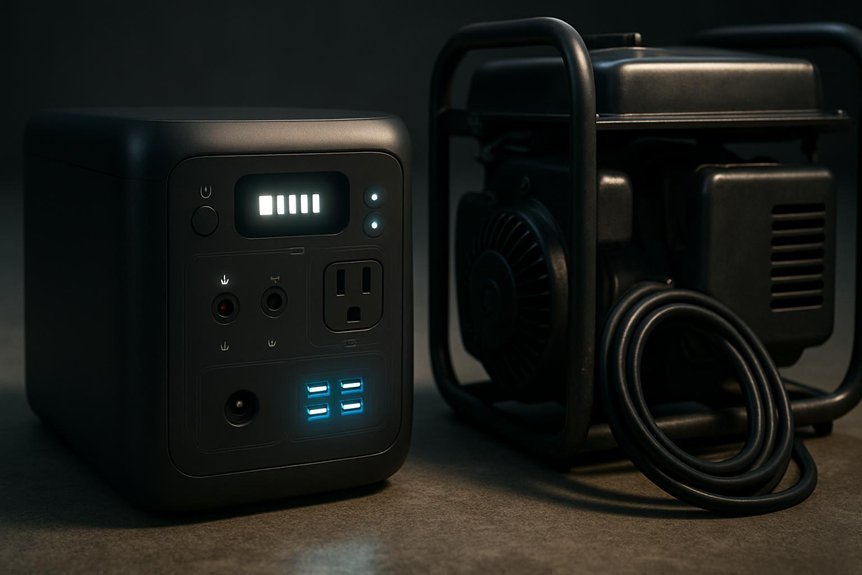
Portable power stations run on rechargeable batteries, so understanding battery chemistry explains why they perform the way they do. We design these systems around cells, modules, and management algorithms that optimize energy delivery and safety. At the core is the chemistry type, typically lithium-based, which determines voltage, capacity, and discharge characteristics. Consistent operation relies on predictable internal resistance and thermal behavior. As we use the pack, cell aging progresses: capacity fades, internal impedance rises, and voltage sag can worsen under load. Our management system monitors temperature, current, and state of charge to mitigate degradation and balance cells. By selecting appropriate chemistry, we balance energy density with durability. We emphasize accurate specifications, avoid overstatements, and remain clear about how chemistry drives performance and longevity choices.
Recharging 101: AC, Solar, and Car Charging Options
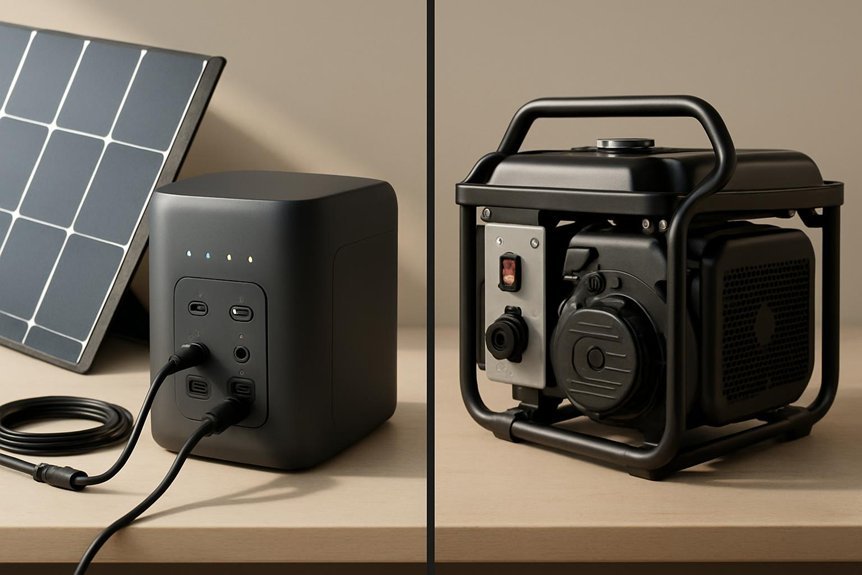
We’ll cover AC charging essentials alongside solar and car options to show how each path affects recharge speed, accessibility, and practicality. You’ll see how compatible ports, power requirements, and charging times influence decision-making for portable power stations versus generators. Let’s outline the basics so you can compare options clearly and choose the best fit for your needs.
AC Charging Essentials
AC charging is the most common and convenient way to recharge a portable power station, whether you’re at home, on the road, or off-grid. We outline essential practices for safe, reliable AC recharging. Our approach is precise: use a dedicated AC adapter rated for the unit’s input, verify outlet compatibility, and monitor charging indicators. Keep cables tidy and avoid daisy-chaining multiple power strips. We emphasize stable mains voltage and avoid extension cords that exceed recommended gauge. For portable charging, we rely on correctly rated adapters and timing to minimize heat buildup. Car adapters may offer limited, not primary, charging speed and are best used for emergencies or supplemental updates. Always consult manufacturer guidance for input specifications and warranty considerations.
Solar and Car Options
Can solar and car charging realistically support your power needs? We examine options for recharging a portable power station. Solar charging leverages panels to replenish capacity, typically via a dedicated input on the unit. Efficiency depends on panel wattage, sun exposure, and battery chemistry; expect slower top-ups during cloudy days or at moderate angles. Car usage benefits include 12V and, in some models, high‑voltage adapters, enabling on‑the‑road replenishment, though charging times vary with vehicle type and port standards. For frequent outages, combine AC charging for speed with solar charging for off‑grid resilience and car usage as a supplement. Each method has tradeoffs: pace, portability, and cost. We tailor choices to load, climate, and available space.
Noise, Emissions, and Maintenance: What Really Matters
Noise, emissions, and maintenance are the practical lenses through which we compare portable power stations and generators. We’ll present the realities plainly, so you can decide with clarity. Our focus: how noise compares, the emissions reality, and routine upkeep implications.
- Noise comparison: portable power stations stay quieter in typical use, easing daily life and environments.
- Emissions reality: generators emit more exhaust and require ventilation; stations generally provide cleaner operation.
- Maintenance: stations often demand less ongoing service, fewer parts, and simpler battery health checks.
We aim for precise, objective guidance that helps you weigh user experience, environmental impact, and reliability without hype. If you want predictable performance, prioritize documented noise data, vetted emissions ratings, and clear maintenance schedules.
Match Your Need: Quiet Home Backups vs. Raw Running Time
Choosing between quiet home backups and raw running time isn’t a one-size-fits-all decision. We assess your needs by balancing noise expectations, power duration, and reliability. For quiet home backups, portable power shines in scenarios where minimal disruption matters, preserving daily routines and energy safety while maintaining enough capacity for essential devices. When raw running time dominates, we prioritize larger energy storage, faster recharging, and extended operation, accepting more noise and weight. Our approach centers on practical tradeoffs: portable power should cover critical loads with steady output, while backup resilience ensures continuity through outages. We summarize by aligning system choice to your critical loads, environmental tolerance, and recharge options, then verify performance with real-world readiness. This method clarifies the optimal path for dependable home power.
Decide With Confidence: Quick Criteria and Next Steps
Wondering how to decide quickly? We can help by outlining concise criteria and clear next steps. Our approach centers on real-world use, safety, and practical limits, so you don’t overthink tradeoffs. Consider these criteria first, then act:
- Define power needs: estimate surge vs. continuous load, and confirm runtimes against battery capacity or fuel.
- Assess portability and safety: evaluate ergonomics, noise, venting, and portable safety features for your environment.
- Check limits and longevity: understand battery limitations, cycle life, and maintenance requirements for long-term reliability.
Next steps: shortlist devices that meet your core load, verify warranty support, and plan for future expansion. This keeps decisions grounded, avoids overbuying, and clarifies how battery limitations and portable safety shape your choice.
Frequently Asked Questions
Can Portable Power Stations Power a Whole House?
We can’t power an entire house with a portable power station reliably. They handle essential circuits, not whole-home loads, though portable charging helps during outages; outdoors viability varies, and additional inverters/energy storage may be required for full home use.
Do Generators Require More Maintenance Than Power Stations?
Yes, generators generally require more maintenance than power stations due to fuel systems and moving parts. We monitor maintenance frequency closely, and we consider noise considerations, ensuring inspections, oil changes, filter replacements, and system tests remain routine.
Are Lithium Batteries Safer Than Lead-Acid in Power Stations?
We’ll start by saying lithium safety is generally higher for storage and handling, though costs and abuse risks exist; lead acid comparisons show lower upfront cost but shorter cycle life. We acknowledge safety nuances, not absolutes, for readers.
Can Power Stations Run Continuously Without Overheating?
We can run power stations continuously, but not without limits: they risk overheating if not properly managed. Too noisy and maintenance cost rise with runtime; ensure adequate cooling, monitoring, and periodic servicing to maintain safe operation.
Do Inverters in Power Stations Affect Peak Surge Handling?
We’ll be honest: inverter peak influences surge handling. In our view, a power station’s inverter determines how quickly it responds to rapid loads, affecting peak performance and safe surge management for delicate electronics.
Conclusion
We’ve laid out the basics, so you can pick what fits your needs. Portable power stations win for quiet, clean, low-maintenance use with electronics, while generators excel in raw running time and endurance on fuel. Consider essential devices, runtime, portability, noise tolerance, and long-term reliability. If you want certainty, start with your top three must-haves and test the options—because choosing is a numbers game, and you don’t want to bite off more than you can chew. It’s a game changer, to be honest.