Ad Blocker Detected
Our website is made possible by displaying online advertisements to our visitors. Please consider supporting us by disabling your ad blocker.
We want to understand how long portable power stations last, and we’ll look at chemistry, usage, and design factors that matter. We’ll explain cycle life, DoD, and temperature effects, and how to estimate runtime for your loads. We’ll also cover practical steps to extend life and the signs that retirement may be near. If you’re managing a critical setup, these details steer when to upgrade or recalibrate—and that choice isn’t simple.
Key Takeaways
- Lifespan depends on chemistry: LiFePO4 offers thousands of cycles; NMC/NCA typically 500–2,000 cycles to 80% SoH, with temperature and DoD as key modifiers.
- Use and aging: runtime and cycle life are governed by DoD, temperature, and C-rate; partial cycles and proper BMS extend usable life across chemistries.
- Protect and monitor: keep firmware/BMS updated, maintain good thermal management, and avoid deep discharges to maximize longevity.
- Practical lifetime estimate: portable stations 300–3,000 Wh last through hundreds to thousands of cycles, with calendar aging contributing even when unused.
- End-of-life signs: rising internal resistance, reduced capacity, longer charges, and swelling indicate nearing retirement.
What Drives Portable Power Station Longevity
Longevity in portable power stations is shaped by how we design, use, and manage the system as a whole. We focus on BMS quality and protective features, since overcharge, overdischarge, overcurrent, and temperature protections define safe operating windows and failure modes. Cell balancing accuracy, whether passive or active, affects drift and long-term capacity. Firmware updateability and diagnostic logging enable field fixes and trend monitoring, reducing undetected degradation. Design tolerances, together with protection cutoff thresholds and hysteresis, determine usable capacity and cycle stress. Thermal management, including throttling and derating, directly limits high-temperature aging. Warranty coverage becomes meaningful when these factors are documented and maintained. Inverters, power electronics, and system integration further influence heat, efficiency, and stress distribution, shaping overall longevity. The selection of LiFePO4 batteries can influence long-term durability and overall lifecycle costs.
How Battery Chemistry Sets Cycle Life
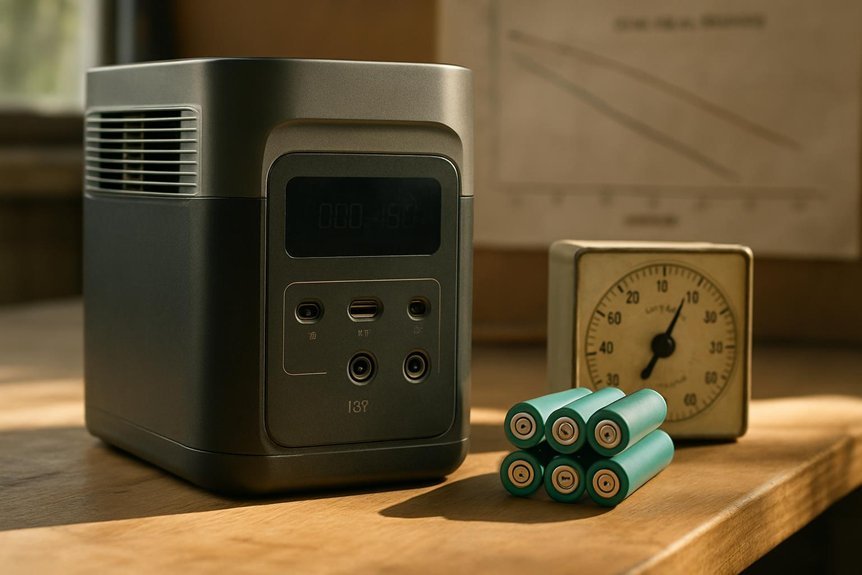
Battery chemistry largely sets how many times a portable power station can cycle before its capacity falls to a given threshold. We compare LiFePO4, NMC/NCM/NCA, and niche chemistries to explain cycle life. LiFePO4 offers long LiFePO4 longevity with 2,000–6,000 full cycles to 80% under standard tests, high DoD tolerance, and strong calendar life, making it attractive for premium stations and long‑life backups. NMC degradation dominates when temperatures rise or high C‑rates trigger faster fade, with typical 500–2,000 cycles to 80% depending on formulation. Temperature and DoD interact: elevated temps accelerate degradation more for NMC/NCA than LiFePO4. Partial cycles extend life; deep cycles shorten it. In all chemistries, a cautious DoD and proper BMS help manage cycle counts. New sentence with main factual point added here: For long-term durability, lithium iron phosphate chemistries deliver broad calendar life and resilience in variety of storage conditions.
How to Estimate Runtime for Your Loads
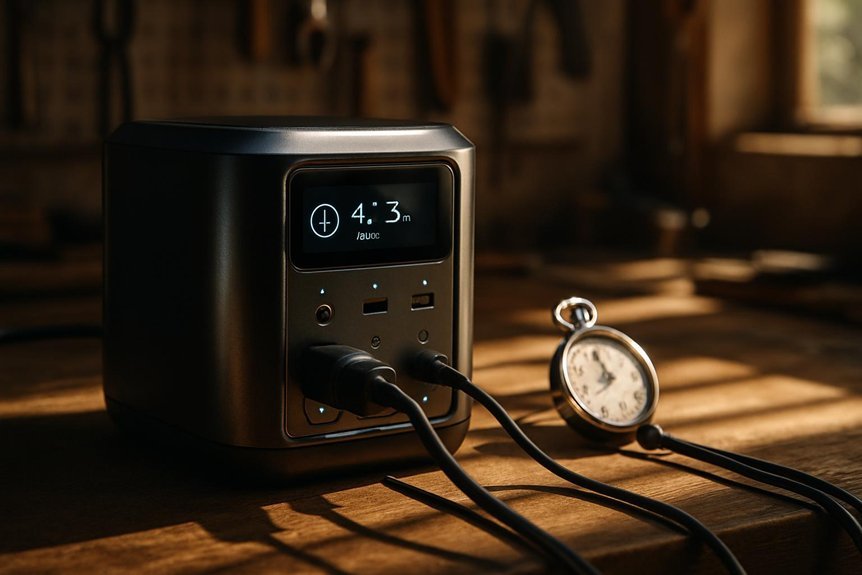
To estimate runtime for your loads, we start from the core runtime formula and the key variables that influence it. Runtime (hours) = (Battery capacity in Wh × Usable fraction) ÷ Load in W. Wh comes from V × Ah; typical portable stations span 300–3,000 Wh. Usable fraction accounts for inverter efficiency, BMS limits, and reserve, commonly 0.75–0.92. Define Load as continuous average power; distinguish steady draws from cycling loads and include surge multipliers (1.2–3×) for high inrush. Inverter losses (AC) and path efficiency (DC/USB) matter; plan 80–95% overall. Include standby/BDMS overhead (1–5 W) and losses from cables (1–5%). For cycling devices, use running-watt × duty cycle. Track appliance labels, measured watts, and daily kWh to refine estimates. irrelevant topic and unrelated concept should not derail calculations. New factual point: Real-world runtimes benefit from understanding device-specific power behavior, such as how fridges cycle and fans draw intermittently, which can be modeled to improve accuracy. [New factual point in brackets
Practical Steps to Extend Lifespan
How can we reliably extend a portable power station’s lifespan? We follow practical steps that minimize stress on cells and maximize useful life. Proper charging, temperature control, load management, firmware updates, and routine checks form the core. Battery maintenance hinges on keeping 20–80% SOC for daily use and avoiding deep discharges; store at 40–60% if idle. Temperature matters: operate 0–30°C, avoid >40°C and cold charging. Manage loads by staying below continuous ratings and staggering high-power events. Keep firmware/BMS current, inspect connections, and test protections regularly. For long-term care, schedule periodic top-ups and a gentle annual full cycle. This approach supports warranty coverage and reduces degradation.
Maintain 20–80% SOC, 0–30°C operation, and steady loads with regular firmware checks for lasting portable power.
- battery maintenance
- proper charging practices
- temperature control
- load management
- firmware & maintenance checks
Signals That Your System Is Nearing Retirement
Are you noticing a drop in runtime and reliability from your portable power station? We’ll point to clear signals that retirement is approaching. Reduced usable capacity, with SoH dropping toward lower percentages, and longer recharge times that force more frequent recharges during typical tasks. Increased cycle counts and calendar age align with approaching end of life, while elevated internal resistance worsens heat and performance. Charging anomalies persist, including incomplete or inconsistent fills and protective behavior that locks out power under stress. Physical signs matter, such as swelling, overheating, or unusual smells, plus corrosion at connectors. Diagnostic indicators, like growing cell imbalance and protective fault codes, reinforce the trend. If irreversible swelling or electrolyte leakage appears, cease use and replace promptly.
Frequently Asked Questions
Do Inverters Degrade Battery Longevity, and by How Much?
Inverters can degrade battery longevity, though modestly. We see this via inverter efficiency and thermal load affecting cycles. In practice, battery chemistry limits dominate, but poor efficiency can shave roughly 5–15% of usable life.
How Does Warranty Affect Total Long-Term Cost?
Warranty cost can lower long-term expenses, since longer coverage reduces out-of-pocket replacements, while service options affect downtime and repair ease; we weigh these to minimize total ownership cost for our portable power stations.
Can You Mix Battery Chemistries in One System?
No, we don’t mix chemistries in one system—ironic, right? We insist on safe design. Mixing chemistries breaks system interoperability, triggers mismatched BMS, and risks safety; we keep identical chemistries or isolated banks instead.
What’s the Real Impact of Daily Charging Frequency?
Daily charging accelerates battery degradation over time, but the impact depends on DoD and temperature. We experience slower degradation with moderate, shallow cycles, keeping SoC around 20–80%, and avoiding constant 100% charging.
How Do Environmental Contaminants Affect Life Expectancy?
Environmental contaminants shorten life expectancy; they also stress durability. We must consider charging frequency impacts. We, readers and researchers, aim to minimize exposure and maximize durability, recognizing environmental contaminants’ diverse, cumulative effects on health and longevity.
Conclusion
We compare what lasts with what fades, and we see the difference clearly. We estimate life by chemistry, cycles, and temperature, yet predictability comes from smart design, not luck. We keep SOC in the middle, stagger big loads, and top up regularly, so performance stays steady while wear grows slowly. When capacity drops and resistance climbs, we face retirement. In balance, careful use and updates extend life; neglect brings premature aging.