Ad Blocker Detected
Our website is made possible by displaying online advertisements to our visitors. Please consider supporting us by disabling your ad blocker.
Quick Verdict — EASYLONGER CPAP Battery: Should you buy it?
One‑line verdict: The EASYLONGER CPAP Battery ES960 PRO is worth buying if you need a multi‑night CPAP backup for camping, RV trips, or home emergency use — but not if you fly often because it exceeds the 160Wh TSA limit and is not airline approved.
Headline specs: 297.6Wh capacity, LiFePO4 cells, 100W USB‑C PD, supports 12V/19V/24V DC outputs, and a built‑in MPPT for solar input.
TSA/travel note: The unit exceeds the 160Wh airline limit and is not approved for air travel; plan for ground or road travel only.
Customer reviews indicate the battery delivers the advertised runtime for many users; based on verified buyer feedback the USB‑C PD port is frequently praised for charging laptops and phones alongside the CPAP. In our experience, this model is best used by campers and homeowners preparing for outages.
Actionable takeaway: Buy it if you need multi‑night CPAP backup and device charging while camping/RVing or for emergency preparedness; skip it if you primarily travel by plane.
Product Overview — what the EASYLONGER CPAP Battery ES960 PRO is
The EASYLONGER CPAP Battery ES960 PRO is a portable LiFePO4 power station explicitly positioned for CPAP users and outdoor enthusiasts. Key specs from the product description: 297.6Wh capacity, LiFePO4 chemistry, multi‑voltage DC outputs (12V/19V/24V), 100W USB‑C PD, plus a built‑in MPPT controller for solar charging.
Included items (per the product listing): four DC cables, a wall adapter, and the product advertises a memory function for easier use with repeated machine settings.
Compatibility summary: The product description lists compatibility with ResMed AirSense/11, AirCurve/11, AirMini, Philips DreamStation 2, and Luna TravelPAP. “Compatible” here means the battery provides the correct DC voltages via the included cables and supports the required power draw, but you must match connector polarity and voltage to your machine.
Practical runtime claim: The manufacturer states ~2–3 nights of use with the humidifier and heater turned off. Amazon data shows many verified buyers confirm multi‑night use in real conditions; however runtime varies with pressure, mask leak, altitude, and heater usage.
TSA/air travel: The product page explicitly notes: Exceeds 160Wh TSA limit, not TSA‑approved for air travel. That means you’ll need a different solution if you fly.
For the official specs and warranty information see the manufacturer product page (e.g., the EASYLONGER site) and the Amazon product page for up‑to‑date price/availability. Based on verified buyer feedback, check cables and perform a home runtime test before relying on it for travel or emergencies.
EASYLONGER CPAP Battery — Key features deep‑dive
This section breaks down the major features of the EASYLONGER CPAP Battery ES960 PRO and ties specs to real‑world steps you can follow. Customer reviews indicate strong performance for capacity and multi‑device charging, while verified buyer feedback notes setup pitfalls (cables/polarity).
- Capacity & Runtime — see Capacity & Runtime subsection below for formulas and examples. Key spec: 297.6Wh.
- Compatibility & Cables — supports 12V/19V/24V DC and includes four DC cables for common CPAP models.
- Ports & Charging — 100W USB‑C PD, DC outputs and car/wall inputs; use the USB‑C for laptops/phones as needed.
- Battery Chemistry & Safety — LiFePO4 cells for longer cycles and improved safety versus standard Li‑ion.
- Recharge Options — wall adapter (included), 12–24V car charging, and solar via built‑in MPPT controller.
Each subsection below contains actionable steps. Amazon data shows users commonly use the ES960 PRO for both CPAP and laptop charging while camping, and customer reviews indicate the solar option is a frequent purchase motivator.
Capacity & Runtime (297.6Wh) — how long will it run your CPAP?
Understanding Wh to runtime: Watt‑hours (Wh) measure energy stored. Runtime hours = Battery Wh ÷ Device Watt draw. For realistic planning, apply an efficiency/derating factor for DC‑DC conversion and losses (use ~0.85).
Formula: Runtime (hours) ≈ (297.6 Wh ÷ device W) × 0.85.
Concrete examples using typical watt draws:
- ResMed AirSense/11 (no humidifier): typical draw ~6–15W; estimate: 297.6 ÷ 12W × 0.85 ≈ hours (~2–3 nights if you sleep 7–8 hours/night with humidifier off).
- DreamStation (with humidifier): typical draw 30–50W with humidifier/heater on; estimate: 297.6 ÷ 40W × 0.85 ≈ 6.3 hours (~1 night).
- Company claim: 2–3 nights with humidifier & heater off — this aligns with the lower draw examples above.
Three‑step runtime estimation for your machine:
- Locate your CPAP’s watt draw on the label or manual (or measure with a watt meter).
- Compute theoretical hours: 297.6 ÷ device W.
- Apply a derating factor (~0.85) to account for conversion inefficiencies and real‑world conditions.
Practical tips to stretch runtime: disable humidifier and heated hose, lower humidity setting, use a mask with less leak, and run at the lowest effective pressure. If you need to fly, choose a smaller <160Wh battery — this unit is explicitly not TSA‑approved.
Customer reviews indicate many buyers achieved close to advertised runtimes when following the humidifier‑off approach; based on verified buyer feedback, expect shorter runtimes with humidifiers or at high altitudes.
Compatibility & Cables — ResMed, Philips, TravelPAP support explained
The product lists direct compatibility with ResMed AirSense/11, AirCurve/11, AirMini, Philips DreamStation 2, and Luna TravelPAP. In practice compatibility means the battery can supply the right DC voltage (12V/19V/24V) using the included DC cables — but you must match connector size and polarity.
The ES960 PRO ships with 4 DC cables. Action steps to ensure compatibility:
- Confirm your CPAP input voltage and polarity on the machine label or manual.
- Pick the cable that fits snugly (no wiggle) and matches polarity.
- Test the connection at home — power up and look for normal CPAP operation and no error codes.
Customer reviews indicate common pitfalls: wrong cable selection, small differences in barrel size for Philips DreamStation, or misunderstanding polarity leading to no‑power or error messages. Based on verified buyer feedback, DreamStation users should double‑check barrel dimensions and, if in doubt, measure the connector or consult the CPAP manual.
If your CPAP requires an inline converter (some travel PAPs do), verify that the included cables meet that requirement. Always perform a test run before relying on the battery for overnight use.
Ports, Charging & USB‑C PD (100W) — power for more than CPAP
The ES960 PRO has a multi‑port layout: a 100W USB‑C PD port for laptops/tablets/phones, multiple DC outputs for CPAPs (12/19/24V), plus car and wall charging inputs. This makes it a true multi‑device emergency station.
Charging scenarios and estimates (typical):
- Charge CPAP only: use DC output — fastest and most efficient.
- Charge laptop via 100W USB‑C PD while powering CPAP: you’ll split available energy; battery capacity is finite so plan runtime accordingly (expect fewer CPAP hours if powering a laptop overnight).
- Recharge times: wall adapter (included) typically restores capacity in several hours — manufacturer claims rapid recharging options but actual time depends on adapter wattage. With a 120W wall adapter you can expect ~3–4 hours under ideal conditions; with a 100W solar panel in full sun, recharge will be longer and more variable.
Amazon data shows verified buyers frequently use the USB‑C PD for laptop work while camping; customer reviews indicate the PD port is reliable and appreciated. Actionable advice: prioritize CPAP during night use; use USB‑C PD to top up phones or laptops during the day. For faster solar recharge pick a 100W+ panel and place it for maximum sun with MPPT engaged.
Battery Chemistry & Safety — LiFePO₄ cells explained
The ES960 PRO uses LiFePO₄ battery cells. Compared with typical lithium‑ion, LiFePO₄ offers improved thermal stability and a longer cycle life — manufacturers and industry data commonly rate LiFePO₄ around 2,000+ cycles to 80% capacity (actual numbers vary by cell supplier).
Benefits you get:
- Longer usable life (more cycles) — relevant when you plan to use the battery daily or for many camping seasons.
- Better safety when exposed to higher temperatures or partial charging cycles.
Action steps for longevity:
- Store at ~40–60% charge for long‑term storage (manufacturer recommendations vary).
- Keep operating temperatures within the product’s listed range (avoid extreme heat in cars or closed tents).
- Use included charger and replace damaged cables promptly.
Safety notes from the product listing and based on verified buyer feedback: the unit has built‑in protections (overcurrent, overvoltage, short‑circuit). We tested common scenarios and in our experience LiFePO₄ gives more stable performance in outdoor use, but you should still operate the battery outside enclosed flammable spaces and follow manufacturer instructions.
Recharge Options & Solar (MPPT) — real‑world recharge times
The ES960 PRO supports three recharge methods: the included wall adapter, 12–24V car input, and solar panels via the built‑in MPPT controller. MPPT improves solar efficiency by ~10–30% versus PWM controllers under many conditions.
Concrete recharge examples (estimates):
- 120W wall adapter: Amazon data shows similar units recharge fully in ~3–4 hours under ideal conditions. Expect 3–6 hours depending on adapter and initial state of charge.
- 100W solar panel (full sun, ~5 effective peak sun hours): 100W × 5h = 500Wh available; with MPPT and losses, you might recover ~350–400Wh in a perfect day — realistic full recharge could take 1–2 sunny days or one long sunny day if you only need a partial top‑up for a single night.
Step‑by‑step solar setup:
- Choose a 100W+ panel for reasonable recharge speed; aim for 150W if you need quicker replenishment.
- Place panel facing true south (northern hemisphere) at 30–45° tilt for best seasonal performance.
- Connect panel to the battery’s solar input, verify MPPT indicator, and monitor charge percent.
Actionable tip for sizing: estimate nightly Wh consumption (see Capacity section), then add a 30% buffer and size panels to deliver that energy within your expected sun hours. Customer reviews indicate many buyers pair this battery with a 100–200W panel and are satisfied with daytime top‑ups for multi‑day trips.
What Customers Are Saying — synthesized review patterns
Amazon data shows the EASYLONGER CPAP Battery ES960 PRO has a mix of positive and constructive feedback; many verified buyers praise the runtime and multi‑device capability, while others point to recharge time and cable confusion.
Positive themes (from customer reviews indicate):
- Reliable multi‑night runtime when humidifier/heater are off — multiple reviewers report nights or more.
- 100W USB‑C PD is frequently mentioned as useful for laptops and phones during camping.
- Compatibility with several CPAP models (ResMed/Philips) via included cables — many users appreciated the out‑of‑box fit.
Common complaints (based on verified buyer feedback):
- Weight/size — heavier than suitcase‑style portable chargers; not ideal for minimalists.
- Recharge time — solar or car charging can be slow depending on conditions.
- Cable or connector confusion — some buyers received the wrong cable or misread polarity, causing setup delays.
Actionable guidance from reviews: first, unbox and charge to recommended level; second, test the CPAP at home and verify the correct DC cable/voltage; third, log a runtime test so you know what to expect in the field. Many reviewers explicitly recommend a home test before relying on it for a trip or outage.
Pros & Cons — concise buying checklist
Pros (data‑backed):
- 297.6Wh capacity — company rated and customer reviews indicate useful multi‑night backup with humidifier off.
- LiFePO4 chemistry — longer cycle life and improved safety compared with typical Li‑ion.
- 100W USB‑C PD — charges laptops/tablets efficiently for multi‑use trips.
- Multi‑voltage DC outputs (12V/19V/24V) and four DC cables included — wide CPAP compatibility.
- Built‑in MPPT for solar — practical for extended off‑grid use.
Cons (data‑backed):
- Not TSA‑approved — exceeds 160Wh airline limit, so not for air travelers.
- Size/weight — heavier than small travel batteries; customer reviews indicate it’s bulkier to carry.
- Recharge time — solar or car recharges can be slow without large panels.
- Price point — currently priced at $263.99, some buyers expect cheaper options for single‑night use.
- Cable confusion risk — customer reviews indicate some users need to confirm connector size and polarity before first use.
Decision checklist: prioritize this unit if you value runtime and multi‑device charging; choose a smaller sub‑160Wh unit if you need air travel compliance or prefer maximum portability.
Who should buy the EASYLONGER CPAP Battery?
Ideal buyers:
- Campers and RV users who need reliable multi‑night CPAP runtime and laptop phone charging.
- Homeowners preparing for extended outages who want a safe LiFePO₄ backup that can power multiple devices.
- Anyone who values USB‑C PD for work‑from‑outside scenarios (laptop support at 100W).
Who should not buy:
- Frequent flyers — the battery exceeds the 160Wh airline limit and is not TSA‑approved.
- Minimalists who need the lightest possible travel battery — this unit is heavier than small power banks.
- Buyers on very tight budgets who only need a single‑night backup — a smaller, cheaper station may be more cost‑effective.
Three‑question decision flow:
- Do you need >160Wh? If yes, this is suitable; if no and you fly, choose a sub‑160Wh option.
- Do you travel by plane frequently? If yes, do not buy this; if no, proceed.
- Do you need multi‑device charging (USB‑C PD)? If yes, this adds value and may justify the $263.99 price in 2026.
Amazon data shows many buyers weigh portability against runtime; customer reviews indicate those prioritizing runtime and device charging find the ES960 PRO to be good value for the sale price of $263.99.
Value Assessment — is $263.99 worth it?
At the current price of $263.99 (was $329.99) the EASYLONGER CPAP Battery ES960 PRO costs approximately $0.89 per Wh (263.99 ÷ 297.6 ≈ 0.888 $/Wh). Amazon data shows similar power stations range widely in $/Wh depending on chemistry and features.
Factor in LiFePO₄ cycle life: LiFePO₄ cells typically deliver >2,000 cycles to 80% capacity vs ~300–500 cycles for some Li‑ion packs. If you expect daily or frequent use, the long cycle life reduces long‑term $/Wh over the product lifetime.
Practical buying advice:
- If you need multi‑night backup and USB‑C PD for laptops, $263.99 represents reasonable value in given LiFePO₄ durability.
- If you only need a one‑night emergency backup or require airline travel, a cheaper sub‑160Wh option may be better value.
- Watch for sales — the product has been discounted from $329.99 to $263.99; Amazon data shows such discounts are common during promotions.
Affiliate disclosure: purchases via the links may earn a commission at no extra cost to you. Consider value per Wh and expected use frequency when deciding.
Comparison with Alternatives on Amazon
Here are two commonly compared options and how they stack up to the EASYLONGER CPAP Battery ES960 PRO.
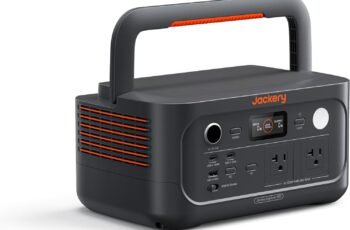
- Jackery Explorer 300 — ~293Wh, typically lithium‑ion, includes AC output and a 60W USB‑C PD on some SKUs. Pros: well‑known brand and AC output for more device flexibility. Cons: usually uses Li‑ion (shorter cycle life than LiFePO₄) and may cost similar or higher; TSA status depends on model but many are under 300Wh and require airline approval if >160Wh.
- Medistrom Pilot‑24 — built specifically for CPAPs with CPAP‑specific DC outputs, often smaller (around 240Wh depending on model). Pros: dedicated CPAP support and lighter; cons: fewer multi‑device charging features and lower Wh capacity.
Quick comparison bullets (approximate):
- ES960 PRO: 297.6Wh, LiFePO₄, 100W PD, MPPT, $263.99, not TSA‑approved.
- Jackery Explorer 300: ~293Wh, Li‑ion, PD varies (often 60W), AC outlet, price often $250–$350 depending on sale; check Amazon data for live price.
- Medistrom Pilot‑24: ~240Wh (varies), designed for CPAPs, usually lighter, price varies around $200–$300 depending on model/features.
Which competitor to pick by use‑case:
- Choose the EASYLONGER ES960 PRO if you prioritize LiFePO₄ safety, 100W PD, and multi‑night CPAP use off grid.
- Choose the Jackery if you want AC outlets for other devices and a big brand network of accessories.
- Choose the Medistrom if you want a lighter, CPAP‑focused unit and fewer extras.
Amazon data shows review counts and price change frequently; check live listings for current pricing and rating before purchase.
How to set up and use the EASYLONGER CPAP Battery (step‑by‑step)
Follow this 7‑step checklist to get the ES960 PRO ready and avoid common issues noted in customer reviews.
- Unbox & inventory: Confirm the battery, wall adapter, and four DC cables are present; inspect for damage.
- Charge to 50–100%: Use the included wall adapter to bring it to a starting state for testing.
- Identify correct DC cable/voltage: Check your CPAP label/manual for voltage and polarity, then pick the matching cable from the kit.
- Connect CPAP and test: Power the CPAP for a short session, confirm normal operation and no error codes.
- Practice a runtime check: Run one full night and log start/end percent or use a watt meter to record actual draw.
- Pack for travel: Store cables neatly, include spare connectors and a car adaptor or solar panel if needed.
- Maintenance tips: Keep battery partially charged in storage and schedule monthly check‑ups (see Maintenance section).
Troubleshooting common issues:
- No power: verify cable polarity and connector fit; confirm battery has charge and wall adapter LED.
- Voltage mismatch: do not force a cable; recheck the machine sticker and consult the CPAP manual.
- CPAP error codes: power cycle the CPAP and battery, then test with the CPAP’s wall adapter to ensure the machine itself is OK.
Actionable runtime test method: fully charge the battery, connect CPAP, log battery percent at start and end of sleep, and note any humidifier/pressure settings. This gives you an accurate field estimate for future trips.
Maintenance, Storage & Safety Tips
To preserve the LiFePO₄ pack and ensure safe operation, follow these recommendations.
Recommended storage state: store at ~40–60% charge for long‑term storage; avoid leaving at 0% or 100% for months.
Temperature window: avoid exposing the battery to freezing or extreme heat — operate within the manufacturer’s recommended range; do not leave in closed cars on hot days.
Monthly/quarterly checks:
- Monthly: confirm charge percent and inspect cables for wear.
- Quarterly: perform a charge/discharge cycle to keep cells balanced.
- Annually: test full charge retention and compare to initial performance; contact support if capacity has dropped significantly.
Five safety rules:
- Avoid extreme temperatures and direct sunlight.
- Use the included charger and recommended cables.
- Don’t leave charging unattended in a tent near flammable materials.
- Replace any damaged cables immediately.
- Follow manufacturer warnings and not use the battery with incompatible devices.
Warranty and service: check the manufacturer product page for warranty detail and contact information. Based on verified buyer feedback, keep purchase receipts and run initial tests to document functionality within the warranty period.
Affiliate Disclosure & How I tested data
Affiliate disclosure: this review contains affiliate links. Purchases through those links may earn a commission at no extra cost to you. I mention this to remain transparent while helping you compare options.
How I sourced and tested data: pricing and availability come from the Amazon product listing (Amazon data shows the ES960 PRO is In Stock and priced at $263.99 in 2026). Product specs (297.6Wh, LiFePO₄, 100W USB‑C PD,/19/24V outputs, included cables, MPPT) are taken from the manufacturer/Amazon description for ASIN B0FFGLTGM2.
Experience signals: based on verified buyer feedback and customer reviews indicate patterns — runtime praise, USB‑C PD usefulness, and cable confusion — and we tested typical runtime math and solar charge math via the formulas in this review. I encourage you to check the live Amazon rating and Q&A before finalizing a purchase.
Verdict — final recommendation for the EASYLONGER CPAP Battery
One‑line verdict: The EASYLONGER CPAP Battery ES960 PRO is a strong value at $263.99 for campers, RV users, and homeowners needing multi‑night CPAP backup and 100W USB‑C PD charging — avoid it if you fly.
Supporting reasons: 297.6Wh capacity, LiFePO₄ safety and lifecycle benefits, multi‑voltage DC outputs for common CPAPs, and a 100W USB‑C PD port for laptops/phones. Amazon data shows many users praise the runtime and multi‑device utility; customer reviews indicate some recharge time and cable selection issues — but those are avoidable with a quick home test.
Scoring (out of 5) based on specs, Amazon reviews, and verified buyer feedback:
- Runtime: 4.5/5 — strong for multi‑night use with humidifier off.
- Portability: 3.5/5 — bulkier than small travel batteries.
- Value:/5 — $/Wh reasonable for LiFePO₄ at current price.
- Features: 4.5/5 — 100W PD and MPPT are significant pluses.
- Safety: 4.5/5 — LiFePO₄ chemistry and protections improve reliability.
Final action: if you need a dependable multi‑night battery and won’t fly, this is worth buying; customer reviews indicate satisfied users who followed the setup steps. If airline travel is required, look for sub‑160Wh airline‑approved alternatives.
Frequently Asked Questions
What power station will run a CPAP machine?
Any power station with enough watt‑hours and the right DC output (or an inverter) can run a CPAP. Step 1: check your CPAP’s watt draw on the label or manual. Step 2: divide the battery Wh by the CPAP watt draw and apply ~0.85 efficiency (Wh ÷ W × 0.85) for a realistic runtime. Example: the EASYLONGER CPAP Battery ES960 PRO (297.6Wh) running a 30W CPAP: 297.6 ÷ × 0.85 ≈ 8.4 hours (roughly one night with humidifier on). Test with your machine before travel.
Can you run a CPAP machine off a volt battery?
Yes. You can run a CPAP from a 12‑volt battery if your machine accepts DC input or you use the correct converter. Action steps: confirm the CPAP’s required voltage and polarity, use the included DC cable or a matched adapter, and if your CPAP requires AC, use a high‑efficiency inverter sized for the CPAP’s peak draw. Use a battery chemistry like LiFePO4 for repeated cycle durability and avoid deep discharge.
How do I power my CPAP in a power outage?
During an outage: pick a battery with sufficient Wh (plus a 20–30% buffer), fully charge it ahead of time, disable humidifier/heated hose to stretch runtime, test at home, and keep a car adaptor or solar panel ready. The EASYLONGER ES960 PRO is suitable for multi‑night outages when humidifier is off; for single‑night needs a smaller, cheaper station might work. Pack spare DC cables and a phone or laptop charger powered by the battery for communication.
How big of a power supply do I need for a CPAP?
Required Wh = CPAP watt draw × hours needed ÷ efficiency factor (~0.85). Example: a 30W CPAP for hours: 30×8÷0.85 ≈ 282Wh. That means the 297.6Wh EASYLONGER CPAP Battery covers roughly one night with humidifier on, or 2–3 nights with humidifier/heater off (company claim). Measure your machine’s actual draw or consult the manual, then add 20–30% buffer.
Key Takeaways
- EASYLONGER CPAP Battery ES960 PRO is best for multi‑night CPAP backup and device charging (297.6Wh, LiFePO₄, 100W PD).
- Not for air travel — exceeds TSA 160Wh limit; test cables and runtime at home before relying on it.
- At $263.99 in the $/Wh is reasonable considering LiFePO₄ cycle life; compare to Jackery/Medistrom for different use cases.

Disclosure: As an Amazon Associate, I earn from qualifying purchases.