Ad Blocker Detected
Our website is made possible by displaying online advertisements to our visitors. Please consider supporting us by disabling your ad blocker.
STARY LINE Phantom Series overview
Can a $429.99 portable power station provide dependable emergency and camping power without becoming awkward to carry? The STARY LINE Phantom Series makes a credible case for shoppers who need essential-load backup rather than whole-home electricity, but its headline “1800W” name needs careful interpretation. The listed Velocity Red model is in stock and combines a 1024Wh battery with a stated 1000W continuous output, so it looks more suitable for refrigeration, CPAP equipment, networking gear, and personal electronics than high-draw heating appliances.
Our review examines the STARY LINE Phantom Series as both a short-duration outage resource and a car-camping power source. We assess the charging claims, connection options, stated noise level, portability, solar support, safety information, customer-review evidence, and alternatives. The central buying decision is straightforward: if your essential devices stay comfortably below the continuous output rating, this station deserves consideration; if you expect to run heaters, kettles, or a whole house, the advertised product designation should not set unrealistic expectations.
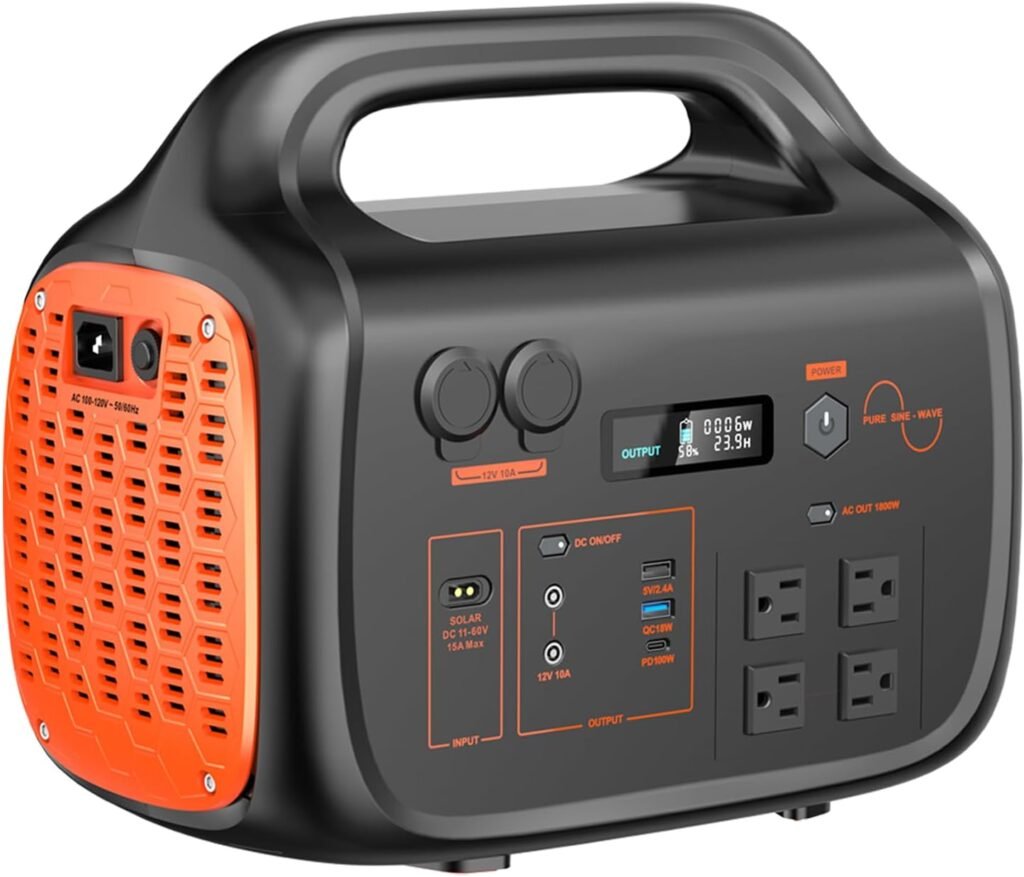
The finish is Velocity Red, a high-gloss colour designed to be easy to spot, and the listing describes the unit as a portable power station for home backup and camping. Availability is currently shown as in stock. We would treat that availability as a purchasing snapshot rather than a permanent guarantee, since stock and price can change.

Key specifications and included-use scenario
The 1024Wh battery places the STARY LINE Phantom Series in the mid-capacity class. In practical terms, that is enough energy to make a meaningful difference during a short outage, but not enough to behave like a permanent household battery. A refrigerator may be supportable when its average consumption and compressor cycling are taken into account; a CPAP machine, Wi-Fi router, phones, and laptops are generally more modest loads. Exact runtimes still depend on each device, inverter losses, operating temperature, battery condition, and whether several products run together.
We would plan around essential services rather than the battery’s theoretical capacity. Write down each device, its running wattage, and the number of hours you expect to use it. Multiply watts by hours to estimate watt-hours, then leave a reserve for conversion losses and unexpected compressor or startup activity. That exercise is more useful than assuming a printed capacity translates directly into usable appliance runtime.
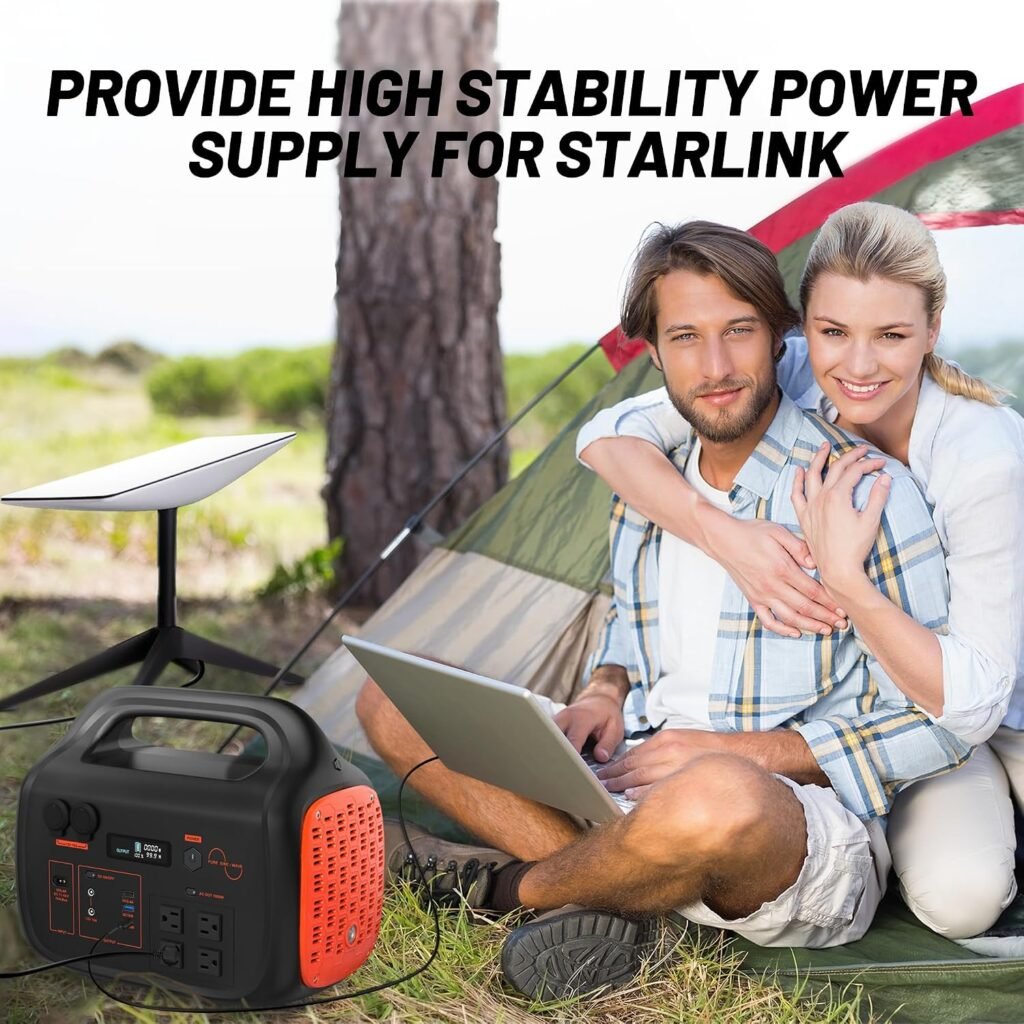
The intended role is dual-purpose. At home, it can provide short-duration support for refrigeration, communications, sleep equipment, and charging. Away from home, it can serve car campers who want AC and USB access without a fuel generator. Its 39.7-pound weight is reasonable for vehicle-based camping but meaningful on stairs, across a campsite, or during repeated loading and unloading. We would store it close to the likely emergency-use area and use a simple load worksheet before purchase.
- List the devices that must remain operational.
- Record their running watts and estimated hours of use.
- Identify any motor startup demand.
- Compare the resulting estimate with the station’s usable energy, not just its label capacity.
STARY LINE Phantom Series output ports and device support
The connection mix is one of the STARY LINE Phantom Series’ strongest practical features. The listing specifies four AC outlets, USB-C Power Delivery, USB ports, and a 12V car port. It also states that the station can power more than devices at once, which should appeal to families, campers, or outage users charging several small electronics simultaneously.
That device count does not remove the main electrical limit. The total demand of connected equipment still has to stay within the stated 1000W continuous output. Four outlets can be convenient without making four high-wattage appliances safe to operate together. Refrigerators, CPAP machines, routers, phones, tablets, and laptops are the more sensible targets; heaters, kettles, hair dryers, and many power tools can approach or exceed the available sustained output.
We recommend testing an intended setup before relying on it during an outage. Check the rating label or manual for each device, note the running watts, and look for a separate startup or surge figure on motor-driven products. Add the running loads together, then retain a safety margin below the continuous rating rather than operating at the edge. For a refrigerator or pump, test the actual unit if possible, because startup behaviour can be more demanding than its normal running figure.
- Best suited: communications equipment, personal electronics, CPAP use, and carefully tested refrigeration.
- Use caution: motor-driven appliances whose startup surge is unclear.
- Usually unsuitable as a routine plan: sustained resistive heating and other high-draw appliances.
Charging performance: wall outlet and solar input
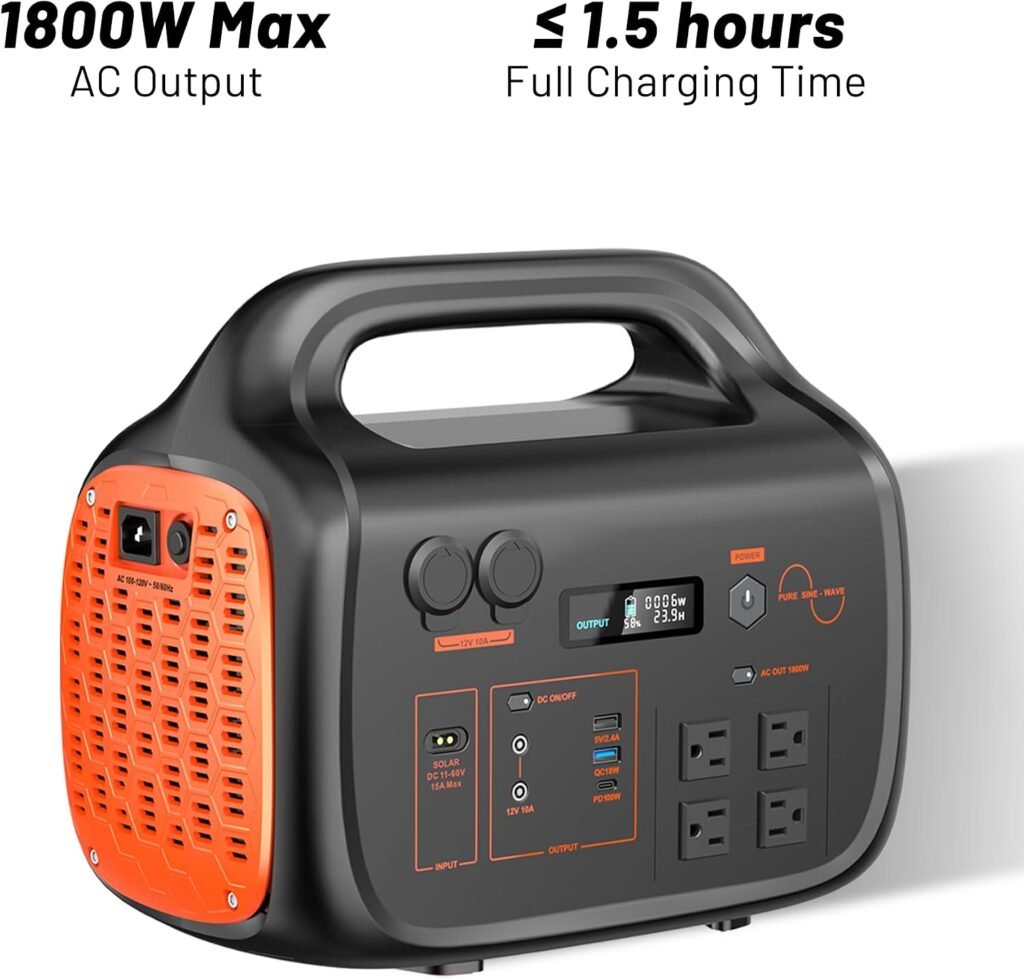
The listing claims a 1.5-hour recharge through a wall outlet, a useful feature when an outage warning arrives late or a camper needs to prepare quickly. We would regard that as a stated charging target rather than a guaranteed result in every situation. Actual time can vary with the starting battery level, ambient temperature, charging conditions, and whether the station is simultaneously powering equipment.
The STARY LINE Phantom Series is also described as solar-ready, with support for up to 200W of solar input. Solar charging is inherently less predictable than wall charging. Sun angle, cloud cover, panel placement, shade, cable conditions, and the controller’s operating limits all affect the energy reaching the battery. A nominal panel rating therefore should not be treated as a constant real-world charging rate.
These two charging methods serve different purposes. AC charging is the practical choice for preparing before a storm, departure, or planned outage. Solar input is more valuable for off-grid trips or maintaining energy during a longer stay away from mains power, when patience and good weather matter more than a fixed recharge schedule.
- Charge fully from a wall outlet before leaving home.
- Set up and test the solar equipment in daylight before the trip.
- Record the approximate recharge time in the weather conditions you normally encounter.
- Repeat that test with your intended devices connected if you expect charging and output to happen together.
Noise, portability, and design details
A stated noise level of no more than dB gives the STARY LINE Phantom Series a potentially quieter profile than a fuel generator. Beside a bed, inside a tent, or near a living area, that level may be acceptable for many people, particularly when the station is powering low-demand electronics. Still, the figure should be read as a stated maximum or design claim, not a promise that the fan will sound identical in every condition.
Fan activity can change with electrical load and temperature. A lightly loaded station may remain unobtrusive, while heavier output or a warm environment can make cooling more noticeable. We would place it where airflow is not blocked and listen to it during a trial run before deciding whether it is suitable for sleeping areas.
The high-gloss Velocity Red finish has a practical benefit: it should be easier to locate quickly during a power cut or at a busy campsite. Glossy plastic or painted surfaces can also reveal fingerprints and scuffs more readily than a matt finish. That is a cosmetic trade-off rather than an electrical limitation.
At 39.7 pounds, the unit is better viewed as vehicle-portable than backpack-portable. We would keep it indoors in a dry, ventilated location, lift it with both hands, and secure it against movement when transporting it in a vehicle. Avoid leaving it exposed to moisture, direct heat, or an unstable surface.
Safety certifications and outage-readiness considerations
The product description states that the STARY LINE Phantom Series is FCC certified and includes full safety protection. Those claims provide useful reassurance about the product’s stated compliance and protective design, but they do not guarantee that every appliance will start, remain compatible, or run for the duration a buyer expects. Electrical protection is not the same thing as unlimited output or appliance approval.
Our basic safety routine would be deliberately simple. Inspect the station and cables before use, keep the equipment dry, leave ventilation around it, and keep it away from heaters, flames, and other heat sources. Stop using the unit if the casing or battery appears damaged, swells, smells unusual, or becomes unusually hot. Damaged lithium battery equipment should not be treated as a minor cosmetic concern.
Outage preparation also benefits from a short rehearsal. Identify essential devices, charge the station in advance, test the refrigerator or CPAP arrangement, and keep the relevant charging cables together. Labeling the emergency cable bundle can save time when the lights are out.
This is not a whole-home generator. We would never connect it directly to household wiring or a wall socket in an attempt to energize circuits. A transfer system, if appropriate for the property and equipment, must be selected and installed professionally.

What Customers Are Saying about the STARY LINE Phantom Series
The supplied product information does not include a displayed star rating, review count, or accessible customer-review excerpts at publication time. We therefore cannot responsibly claim that many buyers praised battery life, that several reported slow charging, or that verified owners experienced a particular failure rate. Those figures and patterns should be checked on the live listing before purchase, because inventing a rating or treating missing evidence as positive evidence would mislead shoppers.
For the same reason, we cannot separate recurring comments about refrigerator performance, CPAP operation, USB usefulness, AC-port reliability, noise, battery longevity, portability, packaging, solar charging, setup, defective units, or customer support from isolated remarks. The product description supplies feature claims, not an independently verifiable customer consensus. Buyers should be especially cautious about reviews that promise exact runtimes without identifying the appliance load or operating conditions.
When reviews are visible, we would assess them in this order:
- Prioritise recent, detailed reports that identify the connected device and its approximate load.
- Look for the same issue across multiple buyers rather than relying on one dramatic comment.
- Separate a setup error or overloaded appliance from a repeatable product fault.
- Check whether reviewers discuss actual solar conditions, recharge time, and fan behaviour.
- Give more weight to verified-buyer reports that explain what happened and how the unit was used.
That approach is particularly relevant here because a refrigerator’s startup demand, a CPAP’s humidifier settings, and a camper’s collection of simultaneous devices can produce very different outcomes. Until the live review evidence is available, the sensible position is neutral: the specifications are assessable, but customer satisfaction is not established by the supplied data.
Who should buy the STARY LINE Phantom Series?
The STARY LINE Phantom Series is aimed at shoppers who want a mid-capacity station for essentials rather than a substitute for household mains power. It makes the most sense for backup users supporting refrigeration, CPAP equipment, Wi-Fi, phones, and laptops, provided their measured loads fit the output limit. The solar-ready design and multiple connection types also suit car campers who value convenience more than minimum carry weight.
We would be less enthusiastic for backpackers or anyone who repeatedly carries equipment over long distances. A station in this class can be manageable from a car to a pitch, yet burdensome on foot. It is also a poor match for buyers whose main goal is sustained heating, boiling, drying, or workshop use, since those applications commonly demand more continuous power than an essential-electronics setup.
Our decision process is practical:
- Calculate the watt-hours needed by your essential devices.
- Check each appliance’s running and startup requirements.
- Confirm that the required AC, USB, USB-C, or 12V connections are present.
- Decide whether the carry burden suits your vehicle and storage arrangement.
- Consider whether the claimed wall-charging routine fits the time you normally have to prepare.
Choose this model when your priority is a manageable emergency reserve and flexible campsite charging. Look elsewhere when you need a substantially lighter design, sustained high-wattage output, or a system intended for long-term whole-house backup.
Pros and Cons
Pros
- Useful mid-capacity format for outage essentials and car camping
- Four AC outlets plus USB-C PD, USB, and 12V connections
- Stated wall recharge target and solar input support
- Listed noise level is intended to remain relatively quiet
- High-visibility Velocity Red finish can be easy to locate
Cons
- The 1800W product designation can be misleading beside the stated 1000W continuous output
- Nearly pounds makes it unsuitable for ultralight travel
- High-draw heating appliances and some power tools may be poor matches
Final Verdict
Key Takeaways
- The model is best viewed as essential-load backup and car-camping power, not a whole-home generator.
- Its advertised product designation should not be confused with the stated continuous output used for appliance matching.
- The combination of multiple ports, solar readiness, and rapid wall-charging claim is useful, but real charging and runtime depend on conditions and load.
- The supplied information contains no verifiable star rating, review count, warranty details, or competitor pricing, so those should be confirmed on the current listing.
- At the listed price, it is most compelling for buyers who will actively use and test it rather than store it indefinitely.
Frequently Asked Questions
Is the STARY LINE Phantom Series suitable for refrigerator backup?
It may be suitable for a refrigerator if the appliance’s running demand and startup surge fit the station’s available output. Check the refrigerator label or manual, test the setup before an outage, and leave a safety margin rather than relying only on the headline product name.
Can it run a CPAP machine overnight?
A CPAP is the type of essential electronic device this station is intended to support, but runtime depends on pressure settings, humidifier and heated-tube use, battery condition, and other connected loads. Test the exact CPAP configuration before relying on it.
Can this portable power station run a kettle or hair dryer?
Those appliances commonly draw substantial power. Confirm their running and startup requirements against the station’s continuous output before connecting them, and do not assume that the 1800W designation represents sustained output.
Is it suitable for backpacking?
It is better suited to car camping than backpacking because the listed weight creates a meaningful carrying burden. It is intended for users who can transport it by vehicle and place it securely at the campsite.
Can it power a whole house during an outage?
No. A portable power station should support selected appliances and electronics, not energise household wiring directly. Any professionally installed transfer arrangement must be designed for the property and equipment.
What should we check before buying?
Confirm the current price, stock status, warranty, return terms, included accessories, replacement-battery policy, and live customer-review rating. Then calculate your essential watt-hours, check appliance startup demand, and decide whether the station’s carry weight fits your use.