Ad Blocker Detected
Our website is made possible by displaying online advertisements to our visitors. Please consider supporting us by disabling your ad blocker.
VTOMAN FlashSpeed Pro 3600: Quick Overview
Finding a portable power station that can handle genuine home-backup loads is easy; finding one that can recharge quickly enough for repeated outages is much harder. The VTOMAN FlashSpeed Pro 3600 addresses that problem with a 3,096Wh battery, a 3,600W continuous inverter, and a bundled 400W solar panel. At $1679.99, with only units listed as available, it sits firmly in the premium portable-power category.
On paper, the package is unusually capable. The manufacturer claims 6,000W of surge power, a zero-to-100% AC recharge in two hours, solar input of up to 800W, and wheeled portability. Those specifications make it relevant for refrigerators, networking equipment, CPAP machines, RV accessories, and demanding outdoor tools rather than merely phones and lamps.
We will separate those published claims from what customer feedback can actually confirm, then assess whether the unit makes sense for camping, RV travel, emergency backup, or worksite use in 2026. The central trade-off is clear from the start: substantial output and capacity come in an 83.8-pound body, and the purchase price is high for anyone with modest power needs.

Specifications, Included Solar Panel, and Everyday Setup
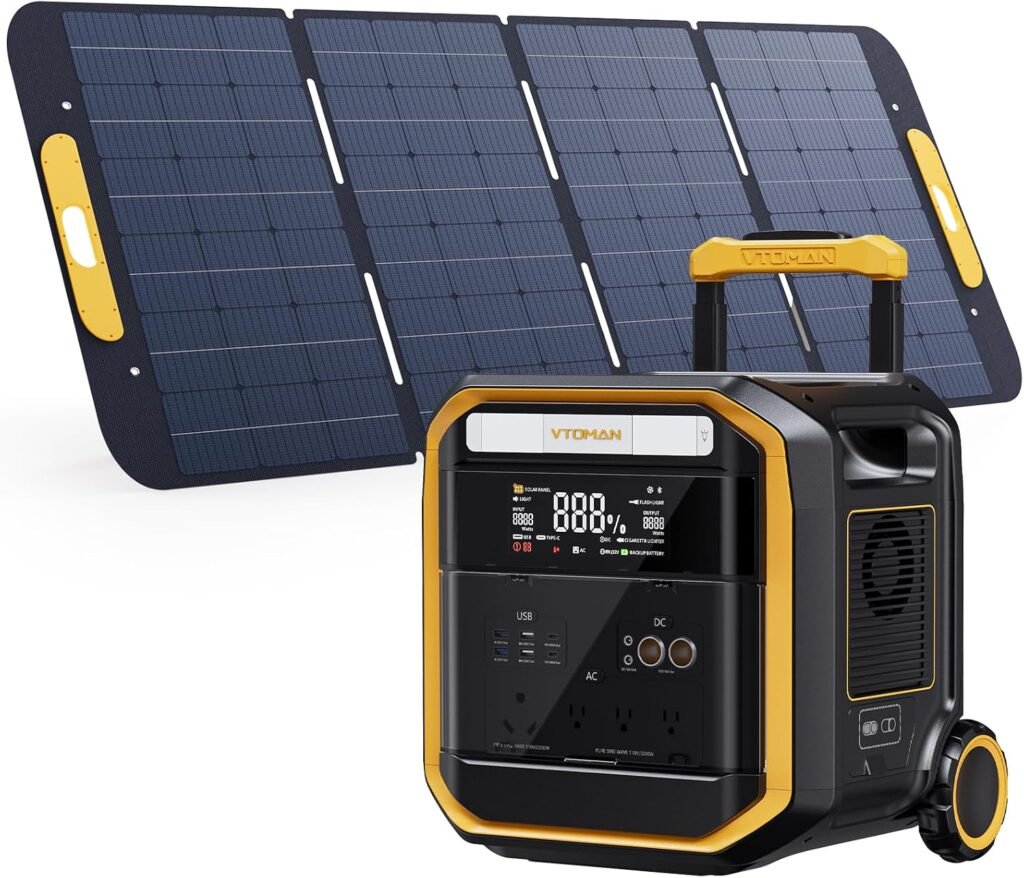
The specification sheet positions this as a high-output backup system rather than a lightweight camping battery. The key figures are:
| Specification | Published detail |
|---|---|
| Battery capacity | 3,096Wh |
| Rated output | 3,600W |
| Surge output | 6,000W |
| Included solar panel | 400W |
| Maximum solar input | Up to 800W |
| Output ports | 14 |
| UPS transfer time | Less than 20ms |
| Weight | 83.8 pounds |
A 3,096Wh rating represents the energy stored in the battery under stated test conditions, not the exact amount every appliance will receive. Inverter losses, device wattage, temperature, cable efficiency, and battery condition all affect usable runtime. A 100W load should not be expected to run for precisely 30.96 hours because the conversion process consumes some energy.
For first use, we would unpack the station and panel, inspect the cables and connectors for shipping damage, charge the battery from an AC outlet, and test every device intended for emergency use. Record the normal running wattage and starting wattage for refrigerators, pumps, compressors, and power tools. Motors can demand a short burst well above their running figure, so relying on the lower number alone can cause an overload.
The included panel is rated at 400W, while the station’s solar-input ceiling is higher. That ceiling becomes useful only with compatible additional solar equipment; the panel in the box cannot provide the full maximum by itself. Buyers should also confirm connector compatibility before adding panels rather than assuming every 800W arrangement will work.
VTOMAN FlashSpeed Pro Charging Performance
The advertised two-hour AC recharge is one of the most useful features here. For an outage, it means a depleted battery may be ready again during the same day; for travel, it reduces the preparation window; and for worksite use, it makes repeated daily charging more practical than a slower unit.
VTOMAN names its energy-management system CHARGECORE. The stated purpose is to tailor charging speed and efficiency for real-world use, although the supplied product information does not provide a detailed charging curve, app data, or independent laboratory results. We should therefore treat the two-hour figure as a manufacturer claim measured under particular conditions, not as a guaranteed time from every outlet and at every battery temperature.
Solar charging is more variable. Weather, panel angle, partial shade, season, cable losses, and the battery’s state of charge can all reduce the wattage actually received. A panel labelled with its peak rating will rarely deliver that number continuously outdoors, especially during cloudy periods or when a nearby tree shades part of its surface.
Our recommended routine is straightforward:
- Charge fully from a wall outlet before departure or before a forecast storm.
- Place the panel in open sunlight and adjust its angle as the sun moves.
- Check the station’s live input reading instead of assuming the panel is producing its rated figure.
- Keep reserve capacity available for the refrigerator, communications equipment, or other critical load rather than using the battery completely on nonessential devices.
The important buying distinction is that the box immediately supplies a 400W solar option, while the station is designed to accept more with compatible equipment. That makes the package more useful than a bare power station for many off-grid buyers, but it does not mean the included panel alone will recharge at the maximum possible rate.
Output Capacity, Ports, and UPS Backup
The 3,600W continuous rating gives the VTOMAN FlashSpeed Pro enough inverter headroom for demanding portable loads, provided their combined running requirements remain within the limit. The 6,000W surge figure is intended for short startup demands from motors and compressors. It does not mean a 6,000W appliance can operate continuously, nor does it guarantee that every motor will start successfully.
The product description specifically mentions refrigerators, WiFi routers, phones, laptops, and CPAP machines. Those examples cover a useful mix of high-priority and low-power equipment, but each device still needs an individual check. A refrigerator may have a modest running draw but a much larger compressor-start requirement; a CPAP machine may also use more energy with heated humidification enabled.
Fourteen output ports make mixed-device charging convenient. In practical terms, a household could connect communications equipment while also charging phones, laptops, drones, or RV accessories, rather than constantly swapping plugs. Port count is a convenience advantage, not a substitute for checking the total load and the limits of each outlet type.
The claimed UPS transfer time of less than 20ms is aimed at keeping selected electronics powered during a sudden mains interruption. Computers, networking hardware, security systems, and some other sensitive equipment are reasonable candidates, but compatibility should be tested before relying on the feature. We would connect the critical device, allow it to operate normally, unplug the station from the wall, and confirm that the device remains active without rebooting.
That test should be repeated with the exact cable and operating mode used during an outage. We would not treat this portable UPS function as a replacement for a purpose-built medical backup system, especially where uninterrupted operation is clinically essential. A medical professional and the equipment manufacturer should determine the appropriate backup arrangement.

Battery Chemistry, LIFEBMS, and Long-Term Reliability
LiFePO₄ chemistry is attractive to shoppers who want a portable battery for repeated use. Compared with many older lithium designs, it is commonly selected for its expected cycle longevity and a lower-risk chemistry profile. That does not make the station fireproof or maintenance-free, but it is a sensible choice for equipment intended to serve through many camping trips and outage cycles.
The listing describes EV-grade cells and claims more than 3,000 cycles before capacity falls to 80%, plus more than 6,000 cycles before reaching 50%. It also states that the battery is designed for more than years of reliability. These are durability targets rather than promises that runtime will remain identical after every charge.
Cycle-life numbers need careful interpretation. One cycle generally represents a full equivalent discharge and recharge, so several partial discharges may add up to one cycle. The quoted 80% and 50% thresholds acknowledge gradual capacity decline; they do not guarantee a fixed runtime, identical performance in cold weather, or the same result under every charging and storage routine.
VTOMAN calls its battery-management system LIFEBMS. The published description says it provides real-time monitoring and protection functions. In day-to-day use, safeguards against overcharging, overheating, over-discharging, and excessive current are particularly important because they help manage the stresses created by a large inverter and frequent cycling.
For storage, keep the station in a dry, temperature-controlled location away from standing water and severe heat. Inspect it periodically for physical damage, corrosion, or abnormal swelling, and follow the manufacturer’s recommended charge level for long-term storage. We would also review the manual before leaving it unused for an entire season, because the correct maintenance interval and storage percentage matter more than simply switching it off.
Mobility, Size Considerations, and Outdoor Use
At 83.8 pounds, this is portable in the broad sense, not lightweight in the everyday sense. Integrated wheels and a pull-up handle should help across a driveway, campsite, garage floor, or RV pad, but stairs, gravel, mud, and vehicle loading can quickly turn a one-person move into a two-person task.
We would decide on the operating location before connecting anything. The station may need to remain close to a refrigerator, router, CPAP machine, or other priority device, while the solar panel may need to sit in a brighter area some distance away. Cable routing should avoid walkways, sharp edges, hot surfaces, and places where a vehicle or door could crush the insulation.
The large battery and high inverter output suit emergency preparedness, RV trips, camping with several users, outdoor work, and temporary jobsite power. They are less appealing for a casual day trip where the main loads are a phone, camera, laptop, and small light. In those situations, carrying and storing a large system may be more inconvenience than benefit.
Before ordering, measure the vehicle cargo area and the doorways between the storage location and the intended operating area. Check the available lifting points and decide whether the station will move frequently or remain mainly in one home-backup position. That decision should guide the purchase more than the word “portable” on the product page.
Outdoor use also requires discipline. Keep both the station and panel protected from rain and standing water, avoid extreme heat, and shield cables from accidental cuts, vehicle tyres, pets, and foot traffic. Wheels make relocation easier, but they do not remove the need for a dry, stable operating surface.
What Customers Are Saying
The supplied listing information does not include a current star rating or review total, so we cannot responsibly report a figure such as 4.5 out of or claim that a particular number of verified buyers praised the unit. It also does not provide enough customer-review text to establish repeated patterns involving refrigerator runtime, CPAP reliability, solar performance, fan noise, display accuracy, cable quality, panel setup, charging behaviour, or support.
That limitation matters. Customer comments can reveal whether the two-hour AC claim holds in ordinary homes, whether the panel remains practical outside ideal sun, and whether the wheels cope with real campsites. Without a visible review record, those points remain unconfirmed manufacturer claims rather than demonstrated customer consensus.
We would treat isolated anecdotes cautiously even when reviews become available. A single report of a noisy fan may concern a high-load situation, while repeated complaints about shutdowns would raise a more serious core-performance concern. Similarly, a buyer mentioning slow solar charging may have used shade, a poor panel angle, or an incompatible accessory.
Readers comparing older reviews with listings viewed in should check whether the seller, packaging, included cables, firmware, or support arrangements have changed. The published claims of 800W solar input, less-than-20ms UPS switching, and long cycle life require test conditions that ordinary reviews usually cannot verify. The safest approach is to inspect the current listing, warranty language, return terms, and the latest review dates before purchase.
Who Should Buy the VTOMAN FlashSpeed Pro 3600?
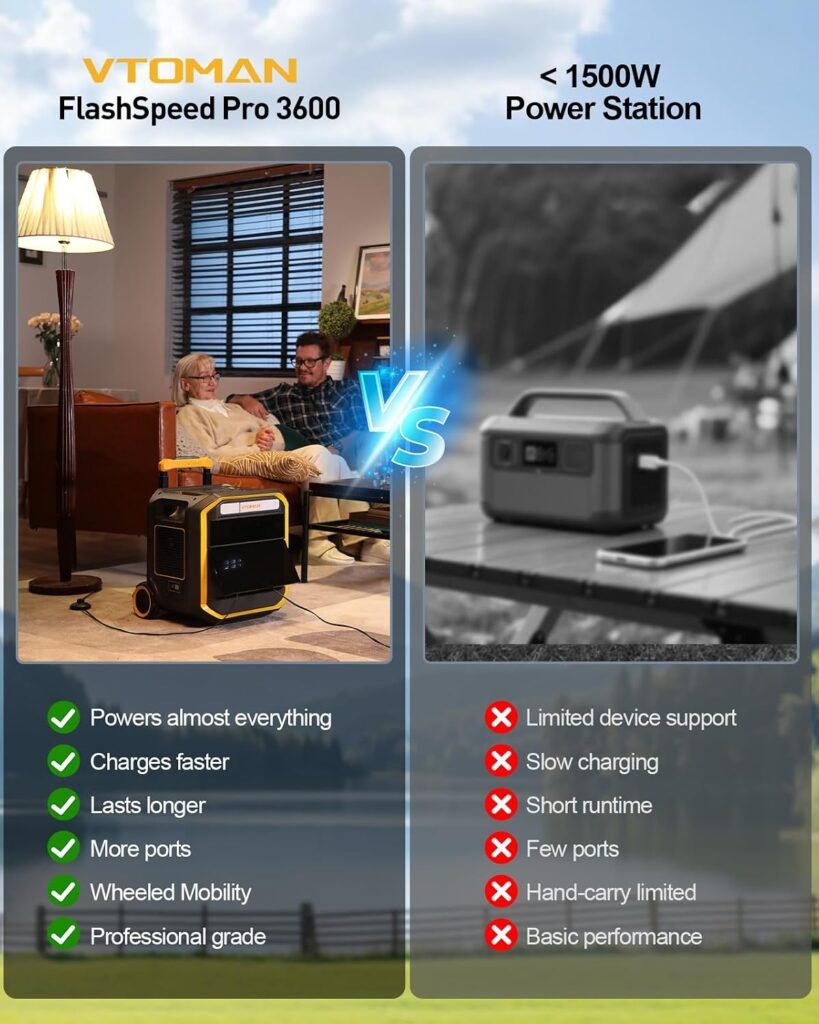
The strongest fit is a household that needs temporary support for a refrigerator, networking equipment, phones, laptops, a CPAP machine, and other moderate-to-high-demand essentials. The high inverter rating provides useful headroom, while the included solar option can help extend an outage plan when sunlight is available.
Outdoor users also have a credible reason to consider it. RV travellers, campers sharing power among several people, and mobile workers may value the combination of a large battery, high output, multiple ports, wheels, and the ability to recharge from either AC or solar. It is better suited to a base-camp or vehicle setup than to lightweight backpacking.
A smaller station is the more sensible choice for shoppers powering only phones, laptops, lights, cameras, or a small fan. Paying for high surge capability and a large inverter does not improve the experience if the normal load is only a fraction of those limits.
Poor-fit scenarios include expecting whole-home backup without professionally installed transfer equipment, carrying the station up stairs frequently, operating a high-load appliance permanently, or needing a certified medical backup arrangement. This product can support selected circuits and devices; it is not automatically a substitute for a home generator installation.
Our decision process would be:
- List the devices that must remain powered.
- Record both running and startup wattage.
- Estimate the desired runtime rather than assuming the capacity figure equals usable energy.
- Confirm where the unit will be transported and operated.
- Compare the complete package price with alternatives, including panels and batteries.
Price, Tax-Credit Claim, and Overall Value
At $1679.99, the VTOMAN FlashSpeed Pro is asking shoppers to pay for more than a battery. The package combines 3,096Wh of storage, a 3,600W inverter, a 400W solar panel, output ports, a UPS function, wheels, and LiFePO₄ chemistry. Whether that is good value depends heavily on whether we need high output and solar charging now.
A simple capacity comparison puts the price at approximately $0.54 per watt-hour ($1679.99 divided by 3,096Wh). That is only a rough comparison tool. It does not assign a separate value to the panel, inverter rating, accessories, warranty, mobility, support, or the cost of buying those items separately.
The listing states that the product qualifies for a 30% federal tax credit. We should not assume that the full credit applies automatically. Buyers need to verify current IRS rules, qualifying installation requirements, documentation, filing conditions, and personal eligibility with a qualified tax professional. The effective after-credit cost can differ substantially depending on those details.
The listing shows only units available, which is a purchasing-pressure detail rather than proof of product quality. Before placing an order, confirm the final $1679.99 price, shipping charges, seller identity, warranty terms, included accessories, and return policy. Those details can change the real value more than a small difference in the headline capacity.
Our conditional recommendation is straightforward: the VTOMAN FlashSpeed Pro is strongest for buyers who genuinely need high output, a large battery, and bundled solar charging. It is less compelling for light-duty users, frequent stair carriers, and anyone prioritising the lowest weight or lowest upfront cost.
Pros and Cons
Pros
- High 3,600W continuous output with 6,000W surge capacity
- Large 3,096Wh LiFePO₄ battery with stated long-cycle targets
- 400W solar panel included in the package
- Advertised two-hour AC recharge and up to 800W solar input
- 14 output ports and a claimed UPS transfer time below 20ms
- Integrated wheels and pull-up handle improve movement on suitable surfaces
Cons
- 83.8-pound weight makes stairs and vehicle loading difficult
- The $1679.99 purchase price is excessive for light-duty charging
- The included 400W panel cannot use the full advertised 800W solar-input ceiling by itself
- Current star rating and review count were not supplied, so customer experience cannot be independently summarised here
- UPS and tax-credit claims require individual compatibility and eligibility checks
Final Verdict
Key Takeaways
- The package combines a 3,096Wh battery, 3,600W continuous output, and a 400W solar panel at $1679.99.
- Two-hour AC charging and the claimed sub-20ms UPS function are attractive for outage preparation, but the listing does not provide independent testing.
- The 83.8-pound weight makes wheels useful, yet stairs, gravel, mud, and vehicle loading may require two people.
- The included panel does not reach the station’s advertised 800W solar-input ceiling without compatible additional equipment.
- It is worth considering for demanding backup and outdoor users, but oversized and expensive for light-duty shoppers.
Frequently Asked Questions
How long can the VTOMAN FlashSpeed Pro run a refrigerator?
There is no single guaranteed runtime because refrigerator consumption varies with compressor cycling, ambient temperature, age, and startup demand. Use the appliance’s measured wattage and allow for inverter losses rather than dividing the battery rating by the refrigerator’s running figure alone.
Does the included solar panel provide the maximum solar charging rate?
No. The package includes a 400W panel, while the station is advertised as accepting up to 800W from compatible solar equipment. Weather, shade, panel angle, cable losses, and battery conditions can also reduce actual input.
Can it power a 6,000W appliance?
The 6,000W figure is a surge rating for short startup demands. Continuous operation is limited to the published 3,600W rated output, and every appliance should be checked for both running and startup wattage.
Is the UPS suitable for a CPAP machine or medical equipment?
The product claims UPS switching below 20ms, but compatibility should be tested with the exact equipment and settings. It should not be treated as a replacement for a professionally specified medical backup system where uninterrupted operation is essential.
Is the $1679.99 price good value?
It can be reasonable for buyers who need a high-output station and a bundled 400W solar panel. It is harder to justify for phones, laptops, lights, and cameras, where a smaller and lighter station may meet the need at lower cost.