Ad Blocker Detected
Our website is made possible by displaying online advertisements to our visitors. Please consider supporting us by disabling your ad blocker.
Jackery Explorer Plus Portable Power Station Review — Ultimate Off-Grid Power?
At the time of writing, the Jackery Explorer Plus Portable Power Station is priced at $899, down from $1,059, and Amazon data shows it’s rated 4.5 out of stars from 2,300+ verified reviews. On paper, it checks a lot of boxes for 2026: 2042.8Wh capacity, 3000W pure sine wave AC output, LiFePO4 battery chemistry, 2-hour fast charging, app control, and the ability to expand all the way to 24kWh.
That sounds impressive. But is it actually worth buying, especially for RV use, home backup, or off-grid camping? We’ll break down where it shines, where buyers complain, and how it compares with competing Amazon power stations from EcoFlow and Bluetti.

Quick Verdict
The short version: the Jackery Explorer Plus Portable Power Station is one of the strongest values we’ve seen in the high-capacity category if you need serious output without stepping straight into whole-home battery pricing. At $899 versus an original price of $1,059, it lands in an appealing spot for people who want more than a basic camping unit but don’t necessarily want to assemble a complex backup system from scratch.
Amazon data shows this model is rated 4.5/5 stars from 2,300+ verified reviews, and customer reviews indicate the most common use cases are RV power, home outage backup, and extended camping or off-grid trips. The headline specs matter here: 2042.8Wh battery capacity, 3000W AC output, and expansion up to 24kWh. Those numbers put it well above entry-level portable stations and into a class that can handle refrigerators, microwaves, coffee makers, power tools, and many RV loads with more confidence.
Where does it fall short? It’s heavy at 61.5 lbs, and the solar setup is not fully ready out of the box because solar panels are optional. So if you’re expecting a featherweight grab-and-go unit, this isn’t it. Still, based on verified buyer feedback and the actual feature set, the bottom line is simple: this is one of the most versatile high-capacity power stations on Amazon, especially for buyers who want room to expand later.
- Best for: RV owners, emergency backup, serious campers, off-grid users
- Not best for: ultralight camping, occasional phone charging, tight budgets
- Standout features: 2042.8Wh, 3000W, LiFePO4, 2-hour charging, 24kWh expansion
Product Overview
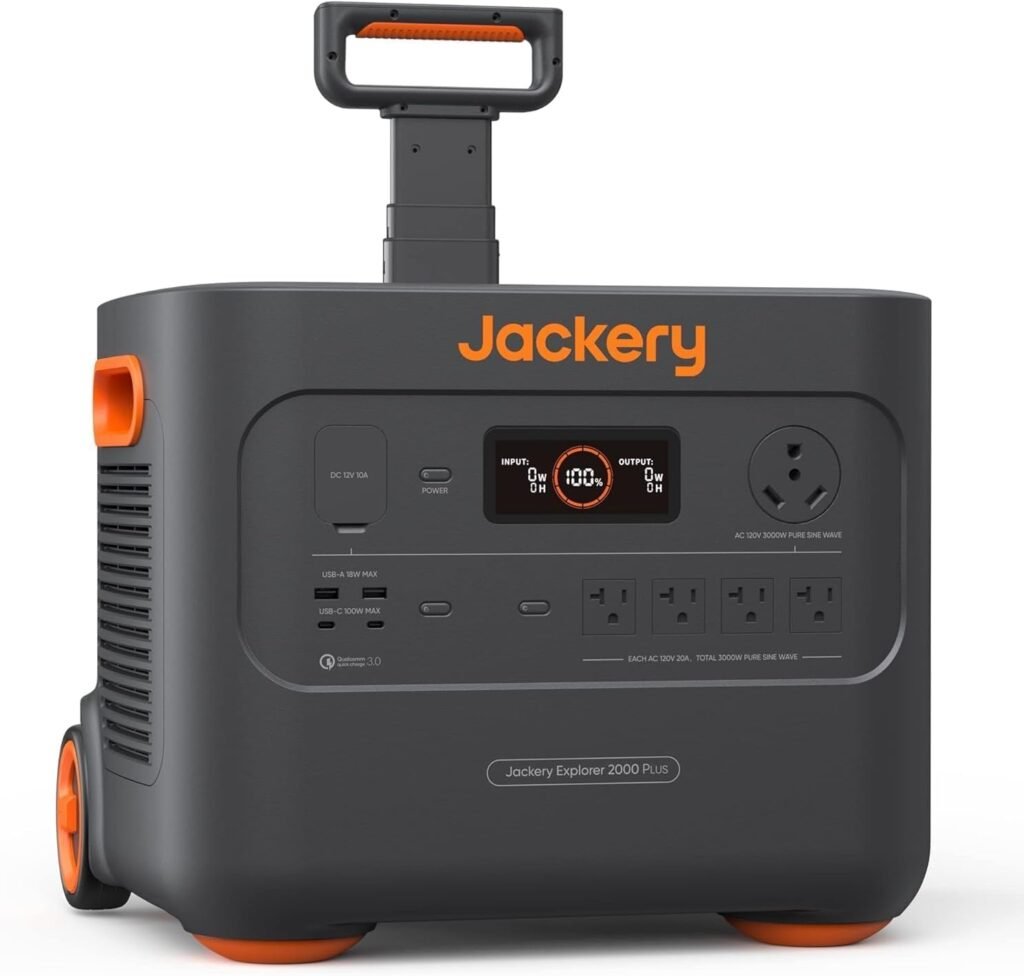
The Jackery Explorer Plus Portable Power Station is built around a 2042.8Wh LiFePO4 battery and a 3000W pure sine wave inverter. That combination is what makes it feel closer to a serious backup appliance than a simple battery box. Pure sine wave output is especially relevant if you plan to run electronics or appliances that prefer cleaner, utility-like power.
From the manufacturer’s product data, the unit is designed for both indoor and outdoor power needs, with support for heavy-load devices including air conditioners, RV systems, and home essentials. Jackery also claims whisper-quiet charging at dB, which is an underrated benefit if you’re using it overnight in an RV, cabin, or apartment during an outage. A lot of large power stations do the job; fewer do it quietly enough to live with comfortably.
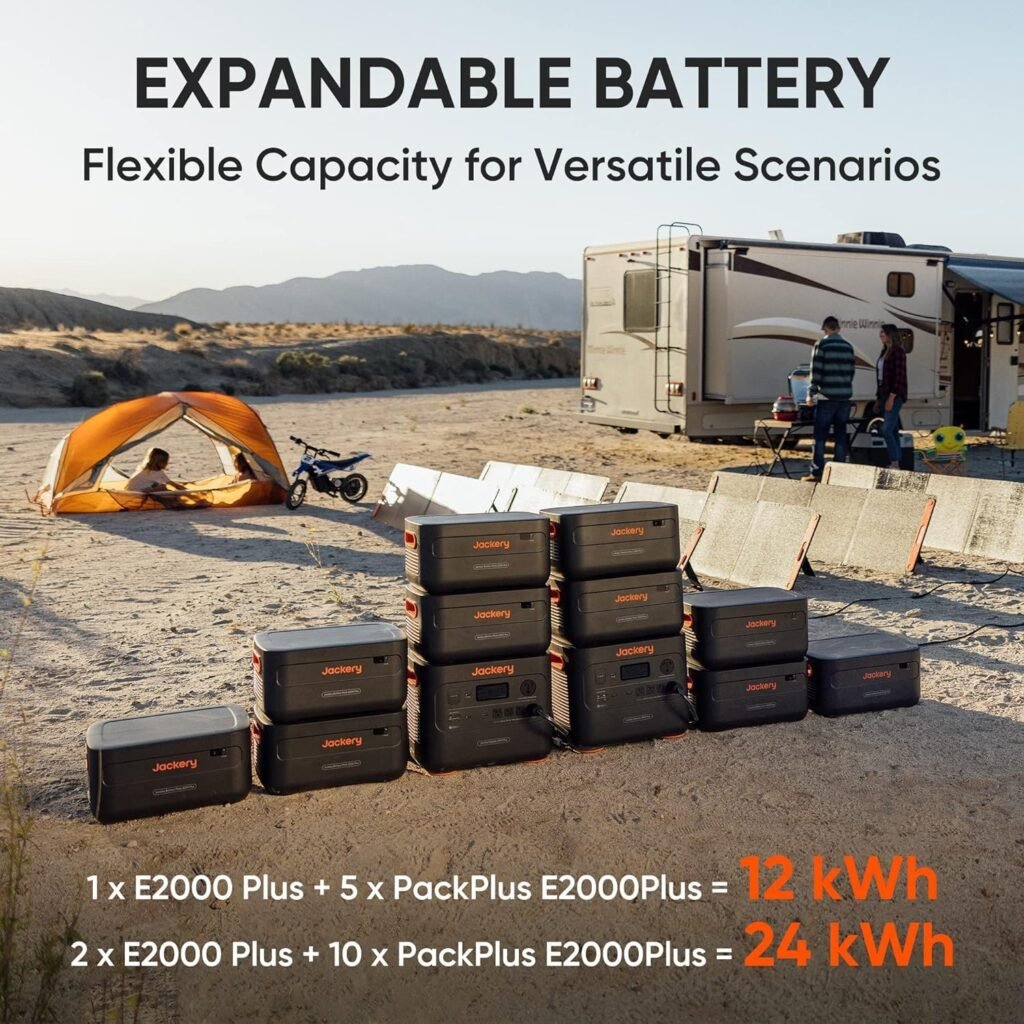
One of the biggest selling points is flexibility. You can use it as a standalone 2kWh-class power station, expand it with up to 5 additional battery packs to reach 12kWh, or connect two Explorer Plus units in parallel for up to 24kWh capacity and 6000W output. That’s a meaningful distinction because it lets buyers start smaller and scale later. For shoppers, that modular approach still feels smart.
Other important specs include:
- Battery chemistry: LiFePO4
- Claimed lifespan: up to years
- Recharge time: about hours via wall outlet or x SolarSaga 200W panels
- Connectivity: WiFi and Bluetooth app control
- Warranty: years
- In the box: power station, AC charging cable, car charging cable, user manual
Key Features Deep Dive: Jackery Explorer Plus Portable Power Station
The spec sheet is strong, but what matters is how those specs translate into real use. The Jackery Explorer Plus Portable Power Station stands out because it balances capacity, output, and expandability better than many similarly priced options. That doesn’t mean every feature is equally valuable for every buyer, though, so we’ll break them down one by one.
Power Capacity & Performance
The core numbers are 2042.8Wh and 3000W AC output. In plain English, that means it can both store a substantial amount of energy and deliver enough power for heavier appliances that smaller 500W or 1000W stations simply can’t handle. Customer reviews indicate many buyers are using it for refrigerators, coffee makers, CPAP machines, power tools, and RV equipment during trips or outages.
For buyers estimating runtime, the practical step is straightforward:
- Check the appliance wattage label.
- Divide the battery capacity by the watt draw.
- Reduce the result a bit to account for inverter losses.
For example, lower-draw devices can run for many hours, while a high-demand appliance will drain the battery much faster. That sounds obvious, but it’s where many shoppers misjudge power stations. A 3000W inverter tells you what it can run; 2042.8Wh tells you roughly how long.
Charging Options & Speed
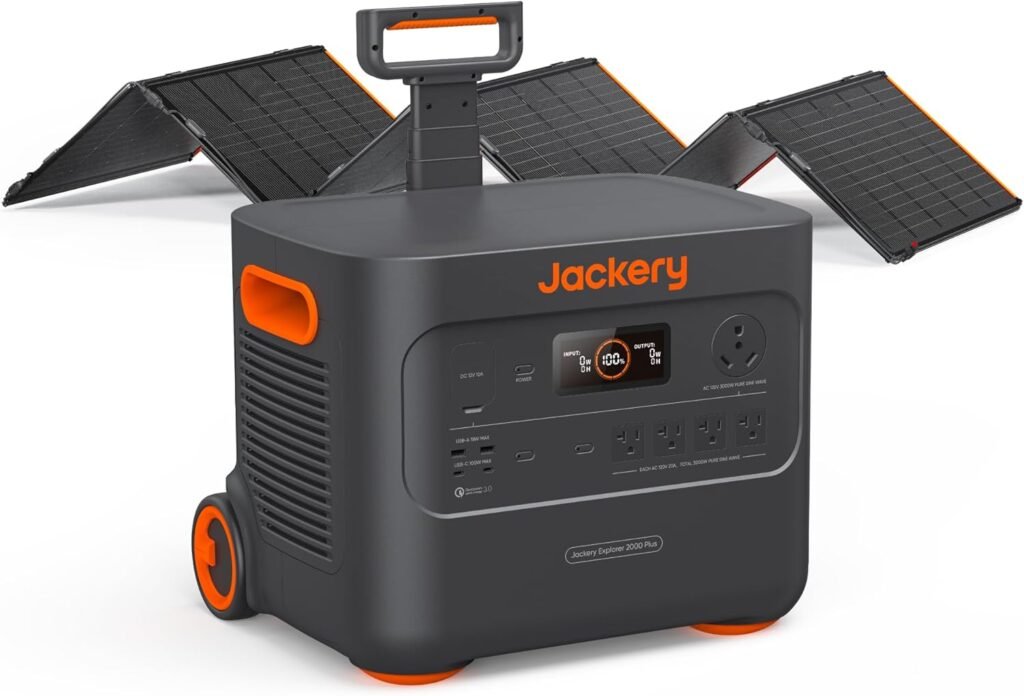
Jackery claims a 2-hour full recharge, either from a wall outlet or by pairing the unit with 6 SolarSaga 200W solar panels. That’s fast for this capacity class. Based on verified buyer feedback, fast recharge is one of the more appreciated parts of the ownership experience because it makes the unit more realistic for repeated daily use rather than just emergency storage.
The catch? Solar capability is real, but the solar panels are optional. So the advertised solar convenience comes with extra cost unless you already own compatible panels. If solar is central to your buying decision, budget for the full setup from the beginning.

Expansion Capabilities
This is arguably the feature that separates it from many rivals. One station can scale from roughly 2kWh to 12kWh with additional battery packs. Two units in parallel can reach 24kWh and 6000W output. That opens the door to larger home backup roles and more ambitious off-grid systems.
For buyers who don’t want to overspend upfront, that’s useful. You can start with one unit at $899 and then expand later if your needs grow.
Safety & Durability
The LiFePO4 battery chemistry is a major advantage because it’s generally favored for long cycle life and thermal stability compared with older lithium-ion approaches. Jackery also highlights temperature resistance, shock resistance, fire resistance, and a cooling system that improves heat dissipation efficiency by 30%. On top of that, the brand claims its ChargeShield technology boosts battery life by 50%.
Those brand claims are part of the package, but what matters more for cautious buyers is the backing: 5-year warranty coverage, which is better than many budget competitors.
Smart Features & App Control
WiFi and Bluetooth app control lets you monitor battery levels, change settings, and manage the unit remotely. That won’t matter to every buyer, but it’s genuinely helpful in RVs, garages, backup closets, and semi-permanent solar setups where the station isn’t always right next to you. Customer reviews indicate app convenience is often mentioned as a quality-of-life bonus rather than the main reason to buy, which feels accurate to us.
What Customers Are Saying
Customer review patterns are one of the clearest signals for a product like this, especially because portable power stations often reveal their strengths only after real outage use or multi-day trips. Amazon data shows the Jackery Explorer Plus Portable Power Station holds a 4.5/5 rating from 2,300+ reviews, which is a strong result for a high-ticket electronics product. Based on verified buyer feedback, most positive reviews cluster around three themes: reliability, output power, and ease of use.
Customer reviews indicate many buyers purchased it specifically for power outages and found it dependable for keeping refrigerators, fans, routers, lights, and small kitchen appliances running. Another common pattern is RV satisfaction; buyers frequently mention that the unit’s 3000W inverter gives them far more flexibility than smaller stations that can’t handle startup surges or multiple devices at once. The quiet charging claim also comes up in a positive way, particularly from users in enclosed spaces.
There are also consistent complaints, and they’re fair ones:
- Weight: at 61.5 lbs, several buyers say it’s manageable but definitely not light.
- Solar not included: shoppers expecting a ready-made solar generator package are often surprised by the added cost.
- Premium ecosystem costs: expansion batteries and solar accessories can make the total setup much more expensive than the base price suggests.
Looking at the lower-end reviews, the 1- to 3-star feedback usually doesn’t argue that the core unit is underpowered. Instead, the criticism tends to focus on logistics, expectations, or cost. Some buyers expected a more compact unit, some wished panels were bundled, and others questioned whether they needed this much capacity in the first place. That last point matters: for light users, the product can be excellent and still be the wrong buy.
Representative buyer sentiment can be summarized like this:
- “Great backup during outages; runs the essentials without drama.”
- “Excellent for RVing, but heavier than expected.”
- “Fast charging is a real plus, but solar setup costs more than the listing first suggests.”
That overall pattern feels credible. Based on verified buyer feedback, the Jackery wins on performance and flexibility, while the tradeoffs are mostly about portability and full-system cost.
Pros & Cons
The strengths and weaknesses of the Jackery Explorer Plus Portable Power Station become pretty clear once we match the specs against how people actually use it. This is not a casual gadget. It’s a serious power solution with equally serious tradeoffs.
What we like most is the way the product combines high output, large battery capacity, and modular expandability. A lot of stations do one or two of those things well. Fewer do all three while also offering LiFePO4 chemistry, app control, and a 5-year warranty. Amazon data shows that versatility is a major reason it maintains a strong average rating at this price point.
What we like less comes down to physical practicality and ecosystem cost. At 61.5 lbs, it’s portable the same way a loaded cooler is portable: technically yes, but you’ll notice it. And while the base unit at $899 looks competitive, the full off-grid experience costs more once you add solar panels or expansion batteries.
- Pros: large 2042.8Wh capacity, 3000W pure sine wave output, fast charging, expandable to 24kWh, long-life LiFePO4 battery, 5-year warranty
- Cons: heavy, solar accessories sold separately, premium total system cost, too large for basic camping needs
If your priority is maximum value for emergency backup or RV use, the pros outweigh the cons. If your priority is lightweight portability or low upfront spend, they probably don’t.
Who It’s For
This power station makes the most sense for buyers who already know they need more than a compact weekend battery. The Jackery Explorer Plus Portable Power Station is ideal for three groups in particular: off-grid enthusiasts, emergency preparedness shoppers, and RV owners. Each group benefits from a different part of the feature set.
For off-grid users, the appeal is the combination of 2042.8Wh capacity, fast recharging, and future expansion up to 24kWh. That means one unit can cover a lot of needs now, while still giving you room to build a larger system later. For home backup buyers, the key advantages are the 3000W output, LiFePO4 battery, and 5-year warranty. Customer reviews indicate many buyers specifically keep it on hand for outages, where reliability matters more than portability.
For RV owners, this model is especially compelling because it can support heavier-demand scenarios better than smaller stations. Based on verified buyer feedback, RV users often mention the ability to run multiple devices more confidently and recharge quickly between stops.
Who should skip it? Casual campers who mainly need to charge phones, lights, fans, or a laptop. Those users can spend far less and carry far less weight. If your total daily usage is modest, a lighter mid-capacity station will probably feel more sensible.
- Buy this if: you want backup for outages, RV systems, or longer off-grid stays.
- Skip this if: you want an ultralight camping companion or only power low-draw electronics.
- Think carefully if: you need solar, because the panel cost changes the value equation.
Value Assessment
At $899, the value story is stronger than it first appears. Start with a simple capacity comparison: divide the price by the battery size. On a rough basis, the Jackery Explorer Plus Portable Power Station comes out to about $0.44 per Wh using its 2042.8Wh capacity. For a premium-brand unit with a 3000W inverter, LiFePO4 battery, app control, and a 5-year warranty, that’s a competitive number.
The warranty matters more than many buyers think. A 5-year warranty spreads risk over a longer ownership period, especially important for a product that many buyers keep for emergency use rather than daily cycling. If you compare it to cheaper no-name options with shorter support windows, the Jackery’s higher initial cost often looks more reasonable. Customer reviews indicate trust in the brand and support experience is part of why buyers are willing to pay more.
There’s also a second layer of value: expansion. Since one unit can scale with battery packs and two units can reach 24kWh and 6000W output, you’re not locked into replacing the entire system if your needs increase. That can save money over time compared with buying a smaller station now and a completely different whole-home solution later.
Still, we wouldn’t call it the best value for everyone. If you’ll never use the 3000W output, never expand it, and never need outage backup, you’re paying for capability you won’t touch. But if you will use even half of what this station offers, the current Amazon price makes it look well-positioned against other premium options in 2026.
Alternatives Comparison
If you’re shopping in this category, you’re probably also looking at the EcoFlow Delta Pro and Bluetti AC300. Both are legitimate alternatives, but they serve slightly different priorities. That’s why a straight “best” label can be misleading.
Versus EcoFlow Delta Pro: the Delta Pro is a well-known premium competitor in home backup discussions. Buyers often consider it when they want a more established whole-home ecosystem with extensive accessory options. The Jackery Explorer Plus Portable Power Station, however, is compelling if you want a more approachable starting price at $899 and still care about expansion, app control, and high AC output. Based on verified buyer feedback, the Jackery feels like the easier recommendation for shoppers who want serious power without committing to a more expensive ecosystem immediately.
Versus Bluetti AC300: the AC300 is often favored by users building modular systems, but it usually appeals more to people already comfortable piecing together components. The Jackery’s advantage is simpler out-of-the-box clarity: 2042.8Wh, 3000W, app control, 5-year warranty, and a straightforward expansion path. Customer reviews indicate many buyers specifically value that simplicity.
Here’s the quick way to choose:
- Choose Jackery if you want a balanced premium unit with strong portability-for-its-class, simpler setup, and a very competitive base price.
- Choose EcoFlow Delta Pro if whole-home backup integration is your main goal and your budget is higher.
- Choose Bluetti AC300 if you prefer a more modular system approach and are comfortable comparing component bundles closely.
Final Verdict: Is the Jackery Explorer Plus Portable Power Station Worth Buying?
For the right buyer, yes. The Jackery Explorer Plus Portable Power Station is worth buying if your power needs are real, recurring, and larger than what an entry-level unit can reasonably cover. Amazon data shows it has earned 4.5 out of stars from 2,300+ reviews, and that kind of rating tends to reflect consistent satisfaction rather than hype. Based on verified buyer feedback, the strongest use cases are RV travel, emergency home backup, and off-grid power where both capacity and inverter strength matter.
What tips the scale is the total package: 2042.8Wh capacity, 3000W output, LiFePO4 battery chemistry, 2-hour charging, app monitoring, and a 5-year warranty. At $899, it’s not cheap in absolute terms, but it does look competitive against premium rivals once you compare battery size, output, and long-term flexibility.
If we were advising a shopper step by step, here’s what we’d suggest:
- Buy it if you need reliable backup for outages, RV power, or multi-device off-grid use.
- Budget for accessories if solar charging is central to your plan, since panels are optional.
- Skip it if your needs are light and occasional; you can save money and weight with a smaller station.
The practical takeaway is simple: this isn’t the cheapest portable power station on Amazon, but it is one of the better-balanced premium options. For shoppers who will actually use its capacity and output, it’s easy to justify.
Frequently Asked Questions
If we’re judging by a mix of power output, battery size, expandability, and customer satisfaction, the Jackery Explorer Plus Portable Power Station is one of the strongest Amazon options for serious users. It’s rated 4.5/5 from 2,300+ reviews, and the specs—2042.8Wh, 3000W, and expansion to 24kWh—make it especially attractive for backup power and RV use.
How long does a 3000W power station last?
It depends on the battery capacity and the appliance load. With 2042.8Wh in the Jackery Explorer Plus Portable Power Station, lower-draw devices can run for many hours, while high-demand appliances will use the battery much faster. Divide watt-hours by device wattage for a rough estimate, then subtract some overhead for efficiency loss.
Can a portable power station run a refrigerator?
Yes, many can, as long as the fridge’s startup and running wattage stay within the inverter’s limits. Since this Jackery provides 3000W AC output, it’s well-suited for many refrigerators during outages. Customer reviews indicate that refrigerator backup is one of the most common real-world uses.
Which portable power station is best for camping?
For lightweight tent camping, a smaller unit usually makes more sense. But for RV camping, overlanding, longer trips, and powering larger devices, the Jackery Explorer Plus Portable Power Station is one of the best camping-ready premium options on Amazon because of its capacity, output, and fast recharge capability.
Pros
- Large 2042.8Wh capacity with 3000W pure sine wave output handles demanding appliances better than many midrange competitors.
- Expandable from 2kWh to 24kWh, giving buyers room to build a bigger backup system over time.
- Fast charging in about hours via wall outlet or with x SolarSaga 200W panels, based on manufacturer specs.
- LiFePO4 battery chemistry plus a claimed 10-year lifespan is a major durability advantage in 2026.
- 5-year warranty and WiFi/Bluetooth app control add real long-term value and convenience.
Cons
- Heavy at 61.5 lbs, so it’s portable in the technical sense but not convenient for frequent hand-carrying.
- Solar panels are optional and not included, which raises the real entry cost if you want a full solar setup.
- Premium system pricing once expanded; the base unit at $899 is competitive, but batteries and panels add up quickly.
- More capacity than casual campers need, making it less practical for people charging only phones, lights, and small gadgets.
Verdict
The Jackery Explorer Plus Portable Power Station earns a strong recommendation for buyers who need serious backup power rather than a basic camping battery. At $899, it undercuts many premium high-capacity rivals on a cost-per-watt-hour basis, while still offering 2042.8Wh, 3000W output, LiFePO4 chemistry, app control, and expansion up to 24kWh. Based on verified buyer feedback, it’s especially worth buying for RV owners, emergency home backup shoppers, and off-grid users. If you only need to charge phones and small electronics, it’s overkill. For everyone else, it’s one of the most versatile high-capacity power stations on Amazon in 2026.